

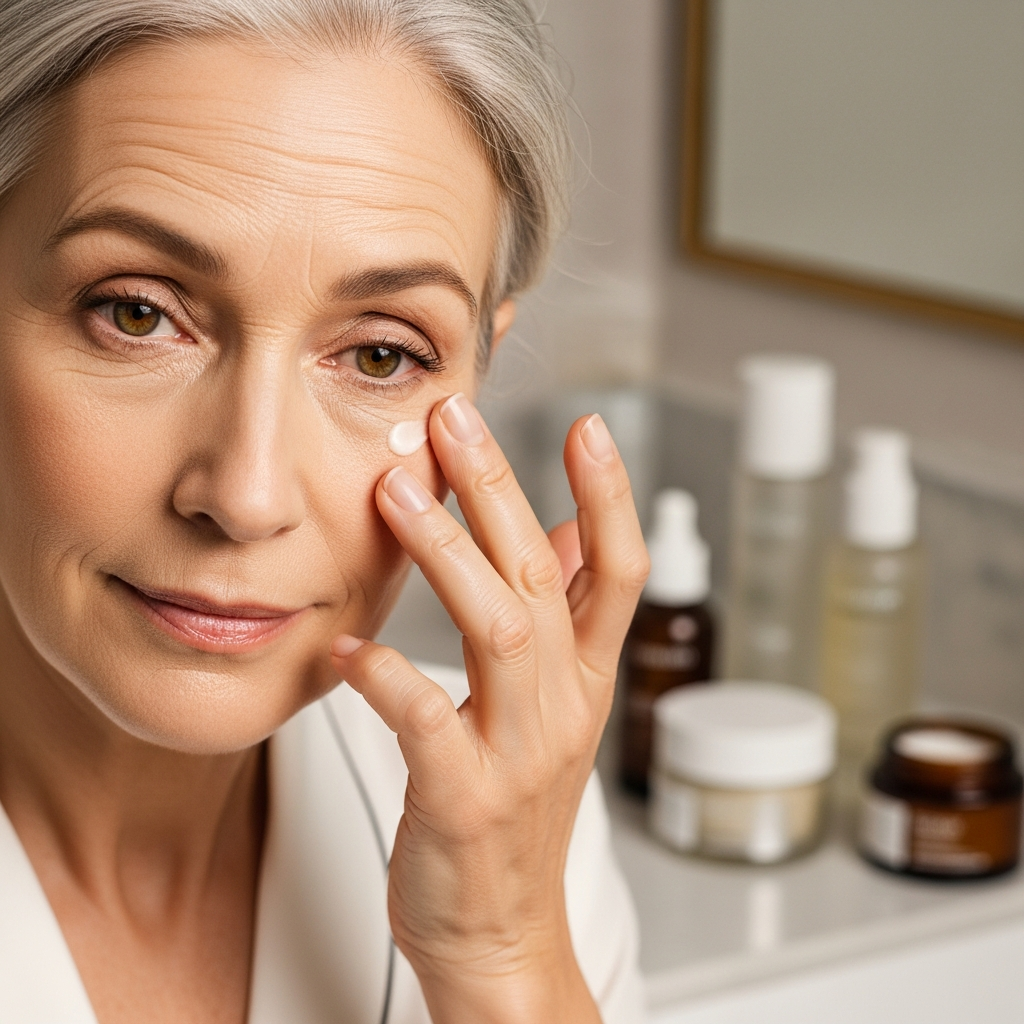
Best Eye Cream for Wrinkles Over 60 (Dermatologist Guide)
After 60, the skin around your eyes loses about 20% of its collagen each decade. The periorbital area, already the thinnest skin on your body at just 0.5mm, becomes even more fragile. Fine lines deepen into creases. Crow’s feet fan out. Dark circles settle in. And most eye creams on the market? They’re made for 30-year-olds.
I’ve spent 15+ years helping patients over 60 find eye creams that actually work on mature periorbital skin. The difference between a good eye cream and a bad one at this age comes down to three things: the right active ingredients at the right concentrations, a formula gentle enough for thinning skin, and clinical evidence that it performs on people your age (not 25-year-old test subjects).
Here’s my honest breakdown of the best eye creams for wrinkles after 60, including the specific ingredients I look for, a head-to-head comparison of four top products, and answers to the questions my patients ask most often.
Why Eye Skin Over 60 Needs Special Attention
The periorbital area ages faster than almost any other part of your face. A 2019 study published in the Journal of Clinical and Aesthetic Dermatology found that skin thickness around the eyes decreases by approximately 6% per decade after age 40. By 60, you’re working with significantly less natural cushioning.
Three factors make eye skin uniquely vulnerable after 60:
- Collagen loss accelerates. According to the American Academy of Dermatology (AAD), collagen production drops by roughly 1% per year after age 20. By your 60s, you’ve lost about 40% of your skin’s collagen.
- Sebaceous glands shrink. Fewer oil glands around the eyes mean less natural moisture. The skin becomes drier, making fine lines look deeper than they actually are.
- The dermis thins. With less structural support from elastin and collagen, the under-eye area hollows out. Dark circles appear because blood vessels show through thinner skin.
This is why you can’t just grab any “anti-aging” eye cream off the shelf. You need targeted formulations built for mature periorbital skin.
5 Ingredients Dermatologists Recommend for Eye Wrinkles After 60
Not all anti-aging ingredients are equal the eye area. Some are too harsh for thinning skin. Others don’t penetrate well enough to make a difference. Based on published clinical research, here are the five ingredients I recommend most often to my patients over 60.
1. Retinol (Vitamin A Derivative)
Retinol remains the gold standard for wrinkle reduction. A peer-reviewed study in the Archives of Dermatology showed that topical tretinoin increased type I collagen production by 80% in photoaged skin. For the eye area, lower concentrations (0.025% to 0.05%) work best because the skin is so thin.
The AAD recommends starting with a low-strength retinol and applying it every other night to build tolerance. Most patients see visible improvement in crow’s feet and fine lines within 8 to 12 weeks of consistent use.
2. Bakuchiol (Plant-Based Retinol Alternative)
If retinol irritates your eyes (and it does for about 30% of my patients over 60), bakuchiol is the alternative I reach for first. Derived from the Psoralea corylifolia plant, bakuchiol provides similar collagen-stimulating effects without the redness, peeling, or dryness.
A 2019 study in the British Journal of Dermatology compared bakuchiol and retinol over 12 weeks. Both reduced wrinkle depth and hyperpigmentation at similar rates, but bakuchiol caused significantly less scaling and stinging. For sensitive mature skin around the eyes, that tolerance profile matters.
3. Peptides (Signal Peptides and Carrier Peptides)
Peptides are short chains of amino acids that signal your skin to produce more collagen and elastin. A 12-week double-blind, placebo-controlled study found that a moisturizer containing palmitoyl-KTTKS at 3 parts per million produced a significant reduction in fine lines and wrinkles.
I like peptides for the eye area because they’re gentle enough for daily use and play well with other actives. Look for palmitoyl tripeptide-1, palmitoyl tetrapeptide-7, or acetyl hexapeptide-8 (sometimes marketed as “Argireline”) on ingredient labels.
4. Ceramides
Ceramides are lipids that make up about 50% of your skin’s barrier. After 60, ceramide levels drop significantly, which is one reason mature skin loses moisture faster. A clinical study showed that ceramide-containing cream significantly increased the water content of eyelid skin, with ophthalmologic testing confirming no adverse reactions.
Ceramides don’t reduce wrinkles directly. They do something equally important: they lock in moisture and strengthen the barrier so that active ingredients like retinol and peptides can do their jobs without causing irritation.
5. Hyaluronic Acid
Hyaluronic acid (HA) holds up to 1,000 times its weight in water. A study of 76 women ages 30 to 60 who applied low-molecular-weight HA cream twice daily for 60 days showed significant improvement in skin hydration and elasticity, with wrinkle depth decreasing by 10% to 20%.
For eye creams, I prefer formulas with multi-weight HA (both high and low molecular weight). High-molecular-weight HA sits on the surface and plumps immediately. Low-molecular-weight HA penetrates deeper for longer-lasting hydration.
Best Eye Creams for Wrinkles Over 60: Head-to-Head Comparison
I’ve tested and recommended dozens of eye creams over the years. Here are four that consistently deliver results for my patients over 60, including one from the PRO60+ line that was specifically formulated for this age group.
| Feature | PRO60+ Eye Lift | RoC Retinol Correxion | CeraVe Eye Repair | La Roche-Posay Redermic R |
|---|---|---|---|---|
| Price | $49 | $26-$30 | $17-$20 | $55-$65 |
| Key Actives | Retinol, peptides, hyaluronic acid, ceramides | Retinol, hyaluronic acid | Ceramides, peptide complex, niacinamide | Pure retinol, caffeine |
| Best For | Deep wrinkles, crow’s feet, lifting | Fine lines, dark circles | Sensitive skin, barrier repair | Stubborn wrinkles, sun damage |
| Designed for 60+ | Yes (specifically formulated) | General anti-aging | All ages | General anti-aging |
| Fragrance-Free | Yes | Yes | Yes | Yes |
| Results Timeline | 4-8 weeks | 8-12 weeks | 4-6 weeks (hydration) | 8-12 weeks |
| Ophthalmologist Tested | Yes | Yes | Yes | Yes |
PRO60+ Eye Lift and Wrinkle Repair: Built for Mature Eyes
Most eye creams on the market target women in their 30s and 40s. PRO60+ Eye Lift and Wrinkle Repair was developed specifically for adults over 60. The formula combines retinol with peptides, hyaluronic acid, and ceramides in concentrations calibrated for thinner, more sensitive mature skin.
What sets it apart from drugstore options is the multi-active approach. Instead of relying on a single ingredient, PRO60+ stacks complementary actives: retinol stimulates collagen, peptides signal repair, HA plumps, and ceramides protect the barrier. Patients I’ve recommended it to typically notice firmer-feeling skin around the eyes within 4 to 6 weeks.
RoC Retinol Correxion Eye Cream
RoC has been in the retinol space for decades, and their eye cream is a solid mid-range choice. The formula pairs retinol with hyaluronic acid and is clinically shown to reduce the look of crow’s feet. It’s widely available at drugstores for under $30.
The downside for patients over 60: the retinol concentration can cause dryness and flaking in thinner skin. I usually recommend starting with every-other-night application and pairing it with a separate ceramide moisturizer.
CeraVe Eye Repair Cream
CeraVe’s formula was developed with dermatologists and includes three essential ceramides, a peptide complex, and niacinamide. At under $20, it’s the most affordable option on this list. It’s also the gentlest, which makes it a good starting point if you’ve never used an eye cream before.
The trade-off is strength. CeraVe doesn’t contain retinol, so it won’t produce the same collagen-boosting results as retinol-based formulas. It excels at hydration and barrier repair but may not be enough on its own for deep wrinkles or significant crow’s feet.
La Roche-Posay Redermic R Eyes
La Roche-Posay’s Redermic R uses pure retinol combined with caffeine. The retinol targets wrinkles while caffeine reduces puffiness and dark circles by improving microcirculation. It’s a well-formulated product backed by a dermatology-focused brand.
At $55 to $65, it’s the priciest option on this list. The formula is effective but contains fewer supporting ingredients (no ceramides, no peptides) compared to PRO60+. For patients willing to invest, it delivers solid results on fine lines and sun-damaged skin.
How to Apply Eye Cream After 60 (Technique Matters)
The way you apply eye cream is almost as important as the cream itself. The periorbital area has fewer collagen fibers to absorb pulling and tugging, so rough application can actually cause more damage.
Here’s the technique I teach my patients:
- Use your ring finger. It applies the least pressure of any finger, which protects the thin skin around your eyes.
- Dot, don’t drag. Place small dots of cream along the orbital bone, from the inner corner under your eye to the outer corner. Then gently pat each dot until the cream absorbs.
- Follow the bone. Stay on the orbital bone (you can feel the ridge). Applying cream too close to the lash line can cause product to migrate into your eyes.
- Apply twice daily. Morning application under sunscreen protects. Evening application lets active ingredients (especially retinol) work overnight while cell turnover peaks.
- Wait 60 seconds. Let the eye cream absorb fully before applying sunscreen or makeup on top. Layering too quickly dilutes the active ingredients.
Ingredient Deep Dive: What the Clinical Research Actually Shows
Marketing claims are everywhere. Here’s what peer-reviewed research says about the ingredients that matter most for eye wrinkles over 60.
Retinol: The Collagen Rebuilder
A review published in the Journal of Cosmetic Dermatology in 2024 confirmed that retinoids remain the most evidence-backed topical ingredient for wrinkle reduction. Topical tretinoin (prescription-strength retinol) increased type I collagen production by 80% in photoaged skin in one study. Over-the-counter retinol works through the same mechanism at lower potency, typically showing visible wrinkle improvement within 12 weeks at 0.025% to 0.1% concentrations.
For patients over 60, I recommend starting at the lowest effective concentration and building up. The periorbital skin has fewer sebaceous glands, so it dries out faster with retinol. Pairing retinol with ceramides or hyaluronic acid in the same formula helps offset this dryness.
Niacinamide: The Multi-Tasker
A split-face clinical trial showed that 5% niacinamide significantly improved facial elasticity and decreased wrinkles. In a separate 8-week study, a cosmetic eye cream with niacinamide outperformed 0.02% tretinoin in tolerability while producing comparable wrinkle improvement. For patients who can’t tolerate retinol at all, niacinamide offers a gentler path to visible results.
Caffeine: The De-Puffer
A clinical study found that 3% caffeine pads significantly reduced periorbital pigmentation within one month and improved local blood circulation. Caffeine works by stimulating lipolysis (fat breakdown) in the under-eye area, reducing puffiness. It also decreases transepidermal water loss, which helps the skin barrier function.
I often recommend caffeine-containing eye creams for morning use specifically. The de-puffing effect is most noticeable when you apply it first thing in the morning, about 10 minutes before makeup.
Common Mistakes People Over 60 Make with Eye Cream
In my practice, I see the same errors repeatedly. Avoiding these mistakes can dramatically improve your results.
- Using too much product. A rice-grain-sized amount covers both eyes. More product doesn’t mean better results; it means more migration into the eyes and potential irritation.
- Skipping sunscreen. The AAD emphasizes that sunscreen with SPF 30 or higher is the single most effective anti-aging product. Without it, your eye cream fights a losing battle against daily UV damage.
- Expecting overnight results. Most anti-aging products take at least six weeks to show visible changes, according to the AAD. Some take up to three months. I tell patients to commit to 90 days before evaluating whether a product works.
- Applying retinol and acids together. Layering retinol with AHA or BHA exfoliants around the eyes can cause severe irritation, redness, and peeling. Use them on alternate nights if you need both.
- Ignoring the upper lid. Most people only apply eye cream under the eyes. The upper eyelid also thins with age. Dot a small amount along the brow bone (not directly on the eyelid) for full coverage.
When to See a Dermatologist Instead
Eye cream has limits. Some eye-area concerns are better addressed with professional treatments. Consider seeing a board-certified dermatologist if you notice:
- Deep folds that don’t respond to topicals. Injectable fillers (hyaluronic acid fillers like Restylane) can address volume loss that no cream can fix.
- Significant skin laxity. If the skin sags below the orbital bone, radiofrequency or ultrasound-based tightening treatments may be more effective than topical products.
- Persistent dark circles. Dark circles from thinning skin (visible blood vessels) differ from pigmentation-based circles. Each type responds to different treatments.
- Milia or cysts. Small white bumps near the eyes from heavy creams need professional extraction, not more product.
The AAD maintains a free resource library on anti-aging skin care that includes guidance on when professional treatment makes sense.
Building a Complete Eye Care Routine for Adults Over 60
Eye cream works best as part of a consistent routine. Here’s the order I recommend for my patients:
Morning Routine
- Gentle cleanser (no scrubbing near the eyes)
- Eye cream with peptides, HA, or caffeine for daytime hydration and de-puffing
- Moisturizer for the rest of your face
- Broad-spectrum SPF 30+ sunscreen (apply around the eye area too)
Evening Routine
- Gentle cleanser or micellar water to remove makeup
- Eye cream with retinol or bakuchiol (active treatment phase)
- Moisturizer with ceramides for overnight barrier repair
Consistency matters more than any single product. I’ve seen patients get better results from a $20 eye cream used every day for six months than from a $150 cream used sporadically.
How PRO60+ Eye Lift Compares to Prescription Options
Some of my patients ask whether they should skip over-the-counter eye creams entirely and go straight to prescription tretinoin. Here’s the honest answer: prescription retinoids work faster, but they also cause more irritation, especially around the delicate eye area.
A 2024 review in the journal Dermatologic Surgery found that over-the-counter retinol at 0.025% to 0.1% produced clinically meaningful improvement in wrinkles over 12 to 24 weeks, with significantly fewer side effects than prescription tretinoin. For adults over 60 with thin, dry periorbital skin, the gentler approach often yields better long-term compliance and results.
PRO60+ Eye Lift and Wrinkle Repair sits in a sweet spot: it uses retinol at concentrations strong enough to stimulate collagen but gentle enough for daily use on mature skin, paired with ceramides and peptides that buffer potential irritation. For most of my patients, that combination hits the right balance between efficacy and tolerance.
Frequently Asked Questions About Eye Cream for Wrinkles Over 60
What is the best eye cream ingredient for deep wrinkles after 60?
Retinol is the most evidence-backed ingredient for deep wrinkles. A study in the Archives of Dermatology showed tretinoin increased collagen production by 80% in photoaged skin. For the sensitive eye area, look for retinol at 0.025% to 0.05% paired with hydrating ingredients like hyaluronic acid and ceramides to prevent dryness.
Is bakuchiol better than retinol for mature skin around the eyes?
Bakuchiol produces similar wrinkle-reducing results to retinol with less irritation, according to a 2019 study in the British Journal of Dermatology. For patients over 60 with sensitive, thin, or reactive skin around the eyes, bakuchiol can be a better choice. If your skin tolerates retinol without redness or flaking, retinol remains the stronger option.
How long does eye cream take to work on wrinkles?
Most anti-aging eye creams need 6 to 12 weeks of consistent, twice-daily use to show visible improvement. The AAD notes that anti-aging products generally require at least six weeks, with some taking up to three months. Hydrating ingredients like hyaluronic acid can plump fine lines within days, but structural changes from retinol or peptides take longer.
Can eye cream really reduce crow’s feet?
Yes, but the degree depends on the severity. Clinical studies show that retinol-based eye creams reduce the appearance of fine crow’s feet by 10% to 20% over 8 to 12 weeks. Deeper, established crow’s feet improve with consistent use but may not disappear completely. For deep lines, combining eye cream with professional treatments like Botox or fillers gives the best results.
Should I use a separate eye cream or just my face moisturizer?
A separate eye cream is worth it after 60. The periorbital skin is about 40% thinner than the rest of your face and has fewer oil glands. Regular face moisturizers may contain fragrances or active ingredients at concentrations too high for the eye area. Eye-specific formulas are ophthalmologist tested and calibrated for this thinner, more sensitive skin.
What should I avoid in eye cream ingredients?
After 60, avoid eye creams with added fragrance (a common irritant), high-concentration glycolic acid (too aggressive for thin periorbital skin), and essential oils like citrus or peppermint (can cause stinging). Alcohol denat. High on the ingredient list is another red flag, as it strips moisture from already-dry mature skin.
Is it too late to start using eye cream at 60?
No. Research consistently shows that retinol and peptides produce measurable improvement in skin thickness, hydration, and wrinkle depth regardless of when you start. You may not reverse decades of sun damage completely, but you can meaningfully improve skin texture, firmness, and moisture levels within three to six months of consistent use.
Ready to try an eye cream specifically designed for your skin’s needs after 60? PRO60+ Eye Lift and Wrinkle Repair combines retinol, peptides, hyaluronic acid, and ceramides in a formula made for mature periorbital skin. Learn more and see if it’s right for you.