

Does Collagen Really Work for Wrinkles After 60? (What Studies Say)
Short answer: yes, collagen supplements can help reduce wrinkles after 60, but the evidence comes with serious caveats you should know about before spending your money. I’ve spent weeks reading through the actual clinical trials, and the picture is more complicated than supplement companies want you to believe.
Here’s what I found: the studies showing the biggest benefits were almost all funded by the companies selling collagen. Independent research tells a different story. Let me walk you through what we actually know.
What the Clinical Research Actually Shows
Several large reviews have pooled results from dozens of collagen trials. The numbers look promising on the surface.
A 2023 systematic review published in Nutrients (Pu et al.) analyzed 26 randomized controlled trials with 1,721 participants. The results showed that hydrolyzed collagen supplementation improved skin hydration (effect size 0.63, p < 0.00001) and skin elasticity (effect size 0.72, p < 0.00001). Supplementation lasting longer than 8 weeks produced better outcomes than shorter courses.
Another meta-analysis by de Miranda et al. (2021), published in the International Journal of Dermatology, reviewed 19 clinical trials with 1,125 participants aged 20 to 70. Their conclusion: 90 days of hydrolyzed collagen supplementation reduced wrinkles and improved elasticity and hydration compared to placebo.
A six-week randomized trial found participants taking collagen peptides saw wrinkle volume drop by 46%, wrinkle area decrease by 44%, and skin moisture increase by 34% compared to placebo. An 84-day trial showed measurable improvements in skin density and moisture within just 28 days.
Sounds great, right? Keep reading.
The Funding Problem Nobody Talks About
In 2025, researchers Seung-Kwon Myung and Yunseo Park published a meta-analysis of 23 randomized controlled trials (1,474 participants) in The American Journal of Medicine. Their findings split the collagen research community in half.
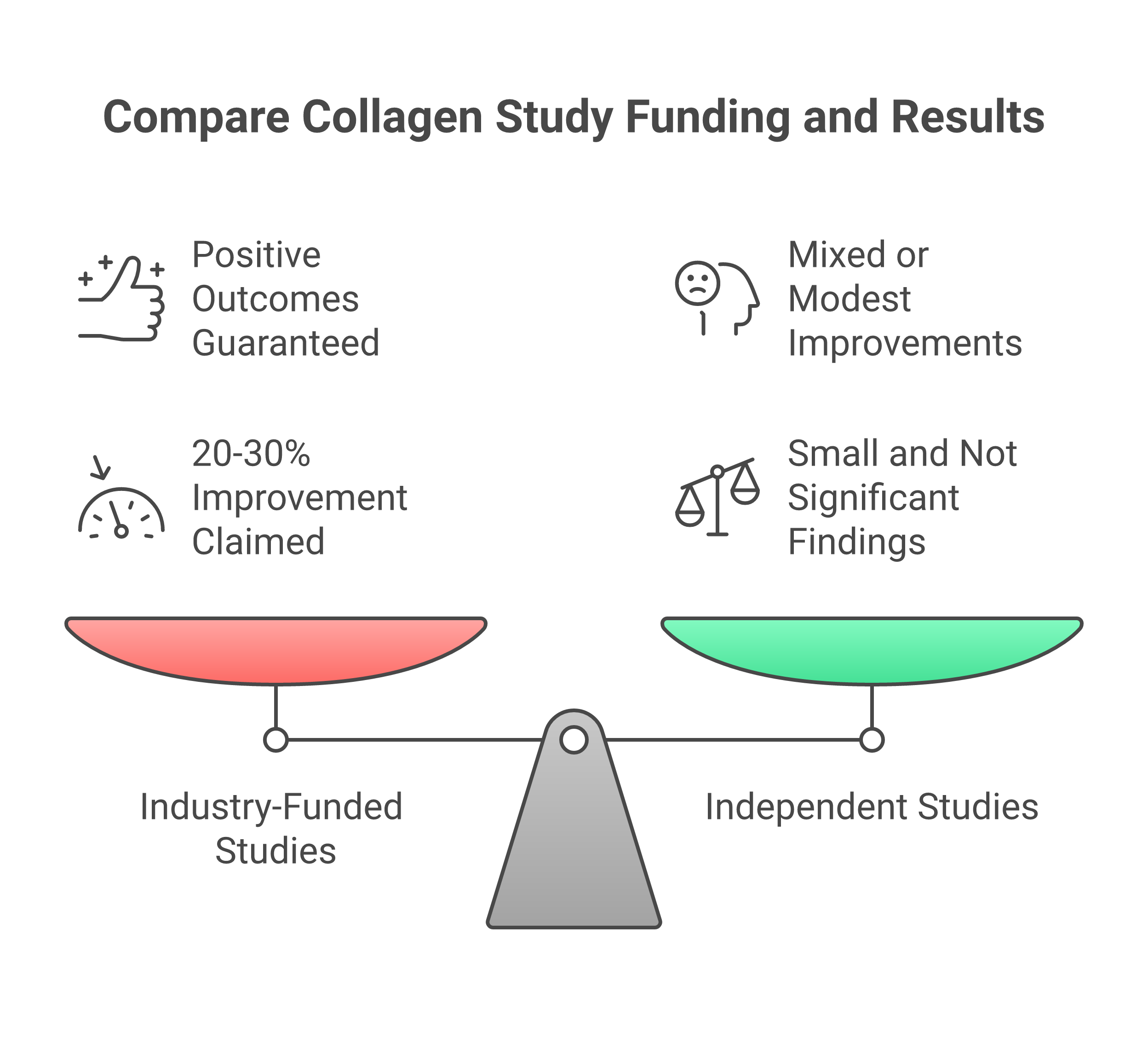
When they separated studies by funding source, the results were stark:
- Industry-funded studies showed significant improvements in hydration, elasticity, and wrinkles
- Non-industry-funded studies showed no effect on any of those outcomes
They also found that high-quality studies (scored by research design rigor) showed no significant effect in any category, while low-quality studies showed improvements in elasticity.
Dr. Maryanne Makredes Senna from Harvard Medical School confirmed this concern in an NPR interview: “High-quality studies and studies not funded by industry did not show a significant association.”
Dr. Lauren Taglia, a dermatologist at Northwestern Medicine, put it plainly: collagen supplements “could be helpful, but there’s not a ton of strong evidence to support them.”
The collagen industry pushed back. The Collagen Stewardship Alliance pointed out data errors in the meta-analysis, noting that one study listed a 0.75 g/day dose when participants actually consumed 3 g daily. BioCell Technology argued that grouping all collagen types together oversimplifies things because “collagen’s a generic term that describes a very diverse variety of different ingredients.”
These are fair criticisms. But the funding pattern remains hard to ignore.
Why This Matters More After 60
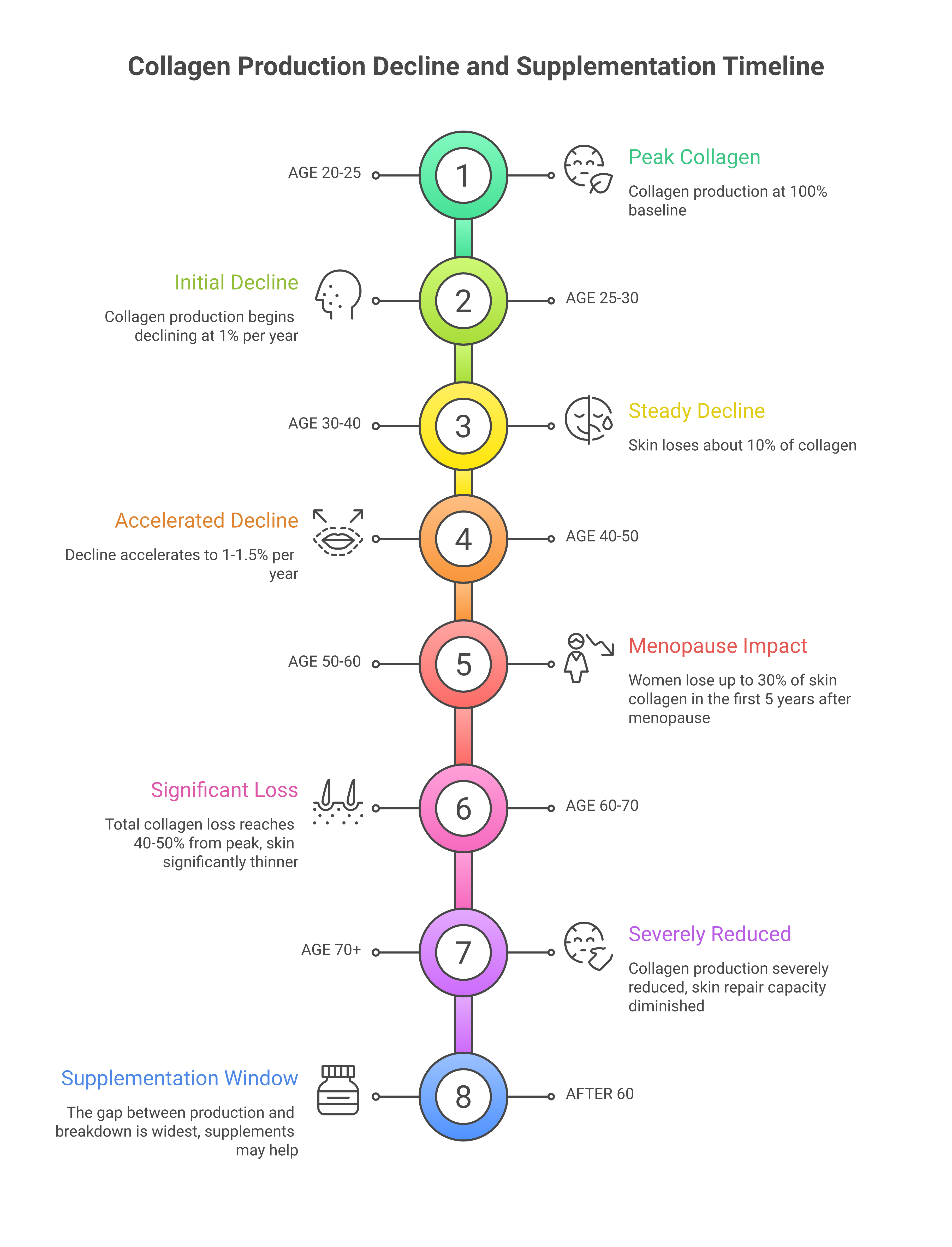
Your body produces less collagen every year starting in your mid-20s. By age 60, collagen production has dropped significantly, and the collagen you do have breaks down faster. This is one reason wrinkles deepen after 60 rather than just appearing.
Most clinical trials enrolled participants aged 20 to 70, but relatively few focused specifically on people over 60. The average participant in these studies was in her 40s or 50s. That matters because collagen supplementation after 60 may work differently than it does at 35.
Older skin has less existing collagen to build on, and the body’s ability to absorb and redirect amino acids changes with age. Harvard dermatologists Dr. Payal Patel and Dr. Maryanne Makredes Senna noted that “bodies cannot absorb collagen in its whole form” and that peptides may be redirected to cartilage, bone, or tendons rather than going to skin.
This doesn’t mean collagen can’t help after 60. It means you should set realistic expectations and pair supplementation with other proven approaches.
Types of Collagen: Which Ones Target Wrinkles?
| Type | Where It’s Found | Primary Benefit | Best For |
|---|---|---|---|
| Type I | Skin, bones, tendons | Skin firmness, wrinkle reduction | Anti-aging, wound healing |
| Type II | Cartilage | Joint support, cartilage repair | Joint pain and stiffness |
| Type III | Skin, muscles, blood vessels | Skin elasticity, hydration | Works best alongside Type I |
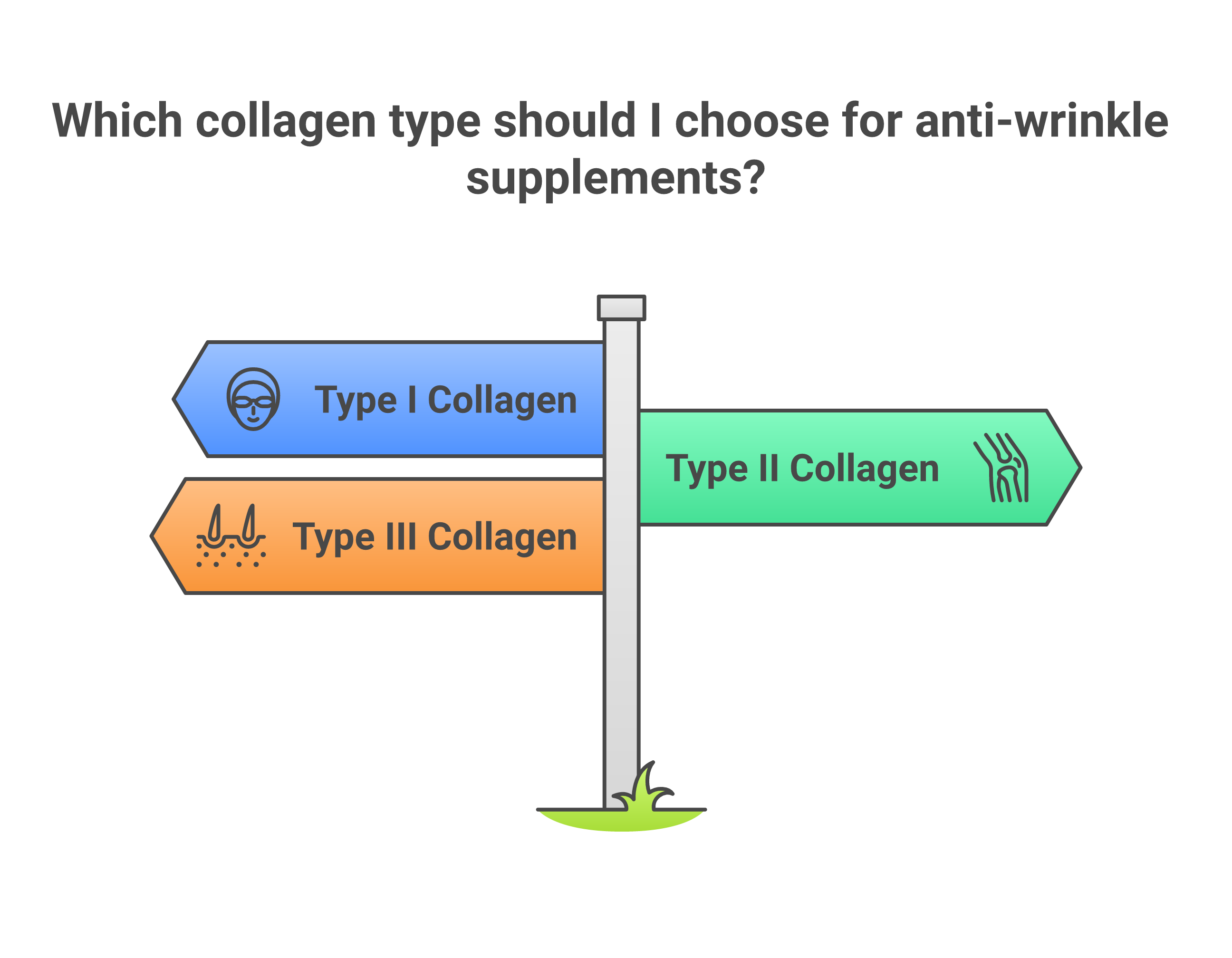
For wrinkle reduction specifically, Type I collagen is what you want. It makes up about 80% of the collagen in your skin. Type III supports elasticity and hydration. Most quality supplements contain both Types I and III, often sourced from bovine (cow) or marine (fish) collagen.
Type II collagen is a different category. It comes from chicken cartilage and targets joints, not skin. If you’re looking for wrinkle help, Type II won’t do much for you.
Dosage and Timeline: What the Studies Used
Across the clinical trials, here’s what the data shows about dosing:
- Most common effective dose: 2.5 to 10 grams of hydrolyzed collagen peptides daily
- Most frequently studied dose: 5 grams per day
- Duration for measurable results: 8 to 12 weeks minimum
- Better outcomes seen at: 90+ days of consistent use
Dr. Lauren Taglia from Northwestern Medicine noted that studies showing improvements typically required 8 to 12 weeks of daily use. Don’t expect overnight results. If you start a collagen supplement today, give it at least three months before judging whether it’s working.
The form matters too. Hydrolyzed collagen peptides (sometimes labeled “collagen peptides” or “hydrolyzed collagen”) have been broken down into smaller chains that your body can absorb more easily. Whole collagen proteins are too large for effective absorption.
Hydrolyzed Collagen Peptides vs. Whole Collagen
Not all collagen supplements are equal, and this is where a lot of people waste money.
Hydrolyzed collagen peptides are collagen proteins that have been broken down into smaller amino acid chains through a process called hydrolysis. These smaller peptides (typically 2,000 to 5,000 daltons in molecular weight) can pass through the intestinal wall and enter your bloodstream. Every major clinical trial showing skin benefits used hydrolyzed peptides.
Whole collagen (like collagen protein powder that hasn’t been hydrolyzed, or collagen creams applied topically) doesn’t work the same way. Your digestive system breaks whole collagen down into individual amino acids, and your body decides where to send them. Topical collagen can’t penetrate skin deeply enough to reach the dermis where wrinkle formation happens.
This is why your skincare routine and your supplement routine serve different functions. Topical products like retinol work on the skin’s surface and upper layers. Oral collagen peptides (if they work) deliver amino acids through your bloodstream.
What Actually Works Better Than (or Alongside) Collagen
Even collagen researchers agree: supplements shouldn’t be your only strategy. Several approaches have stronger evidence behind them.
Sunscreen. UV damage is the single biggest cause of wrinkles. Daily broad-spectrum SPF 30+ prevents new damage and lets your skin repair some existing damage. Mayo Clinic dermatologists list sun protection as the most effective anti-aging step you can take.
Retinoids. Prescription retinoids (tretinoin) and over-the-counter retinol have decades of clinical evidence showing they increase collagen production in skin, reduce fine lines, and improve skin texture. This is one of the few categories where dermatologists broadly agree on effectiveness. See our retinol vs. Collagen comparison for more detail.
Vitamin C. Your body needs vitamin C to produce collagen. A diet rich in citrus, berries, and leafy greens supports natural collagen synthesis. Some research suggests vitamin C serums applied topically can also boost collagen in the upper skin layers.
Diet and lifestyle. A Mediterranean-style diet rich in antioxidants, adequate sleep, regular exercise, and avoiding smoking all support your body’s natural collagen production. These basics outperform any single supplement.
The best results likely come from combining these approaches. Use sunscreen daily, apply retinol at night, eat well, and if you choose to add collagen peptides, treat them as one part of a complete approach to aging skin.
How to Choose a Collagen Supplement (If You Decide to Try One)
If you’ve read the research and still want to try collagen, here’s what to look for:
- Hydrolyzed collagen peptides (not whole collagen or gelatin). Check the label for “hydrolyzed” or “peptides”
- Types I and III for skin benefits. Type II is for joints
- 5 to 10 grams per serving. This falls within the range studied in clinical trials. Some products contain only 1 to 2 grams per serving, which is below the doses that showed results
- Third-party testing. Since the FDA doesn’t regulate supplements like drugs, look for NSF, USP, or ConsumerLab certification
- Minimal added ingredients. Some collagen products pack in sugars, fillers, and artificial flavors that add nothing useful
Products like PRO60+ Collagen Complete combine Types I and III hydrolyzed peptides at clinically studied doses. If you’re already investing in an anti-aging routine, adding a quality collagen supplement is a reasonable step, as long as you keep your expectations grounded in what the research actually shows.
My Honest Take
I’m not going to tell you collagen supplements are a miracle cure for wrinkles. The research doesn’t support that claim, especially after the 2025 American Journal of Medicine analysis revealed how much funding bias shapes the positive results.
But I’m also not going to tell you they’re worthless. The amino acids in hydrolyzed collagen peptides (glycine, proline, hydroxyproline) are the same building blocks your body uses to make collagen naturally. Providing more of those raw materials could help, particularly if your diet doesn’t include enough protein-rich foods.
Here’s how I think about it: collagen supplements are a reasonable addition to an evidence-based skincare and wellness routine. They’re not a substitute for sunscreen, retinol, good nutrition, and adequate sleep. If you’re doing those things already and want to add collagen, go for it. Give it 90 days, take 5 to 10 grams of hydrolyzed peptides daily, and see how your skin responds.
If you skip sunscreen and retinol but take collagen, you’re addressing maybe 10% of the wrinkle equation while ignoring the other 90%. Start with the proven basics first.
Frequently Asked Questions
How long does collagen take to work on wrinkles?
Most clinical trials showed measurable improvements after 8 to 12 weeks of daily supplementation. Some studies detected early changes in skin hydration within 4 weeks, but wrinkle reduction typically requires at least 90 days of consistent use at 2.5 to 10 grams per day.
Can you rebuild collagen after 60?
Your body continues producing collagen after 60, just at a slower rate than in younger years. Providing the raw materials (amino acids from collagen peptides, plus vitamin C) may support production. However, no supplement can fully reverse decades of collagen loss. Combining supplementation with sunscreen and retinol gives you the best chance at slowing further breakdown.
Is marine or bovine collagen better for wrinkles?
Both marine (fish-derived) and bovine (cow-derived) collagen provide Types I and III peptides that target skin. Marine collagen has a slightly smaller molecular weight, which may improve absorption. Some studies suggest marine collagen reaches skin tissue more efficiently, but head-to-head comparisons are limited. Either source can work if the product contains hydrolyzed peptides at adequate doses.
Are collagen supplements safe for people over 60?
Hydrolyzed collagen peptides are generally considered safe. Side effects reported in clinical trials were mild and rare, including bloating and a lingering aftertaste. However, if you have gout, kidney disease, or protein intake restrictions, talk to your doctor before starting. Collagen is a protein, and high-dose supplementation may not be appropriate for everyone.
Do collagen creams work for wrinkles?
Collagen molecules are too large to penetrate the skin’s outer layer (stratum corneum) and reach the dermis where wrinkle formation happens. Collagen creams may temporarily plump the skin surface through hydration, but they don’t increase collagen production. For topical wrinkle treatment, retinoids and vitamin C serums have much stronger clinical evidence.
What’s the best dosage of collagen for anti-aging?
Clinical trials showing skin benefits used doses ranging from 2.5 to 10 grams of hydrolyzed collagen peptides per day. The most commonly studied dose was 5 grams daily. Doses below 2.5 grams haven’t been well-studied for skin outcomes. Higher doses (10 to 15 grams) are sometimes recommended for joint health but haven’t shown added skin benefits over 5 grams in available research.
Should I take collagen with vitamin C?
Vitamin C is required for your body to synthesize collagen. Taking collagen peptides with vitamin C ensures your body has both the building blocks and the co-factor needed for collagen production. Some collagen supplements include vitamin C for this reason. If yours doesn’t, eating vitamin C-rich foods (citrus, bell peppers, strawberries) alongside your supplement is a practical approach.