

Collagen Peptides for Seniors: Benefits, Dosage, and What to Look For
After age 60, your body produces roughly 50% less collagen than it did in your 20s. That steady decline affects your skin, joints, bones, and muscles all at once. Collagen peptides, a hydrolyzed (pre-broken-down) form of collagen protein, can help fill that gap when taken as a daily supplement.
This guide covers what the clinical research actually shows about collagen peptides for seniors, how much to take, which types matter, and what to look for before buying.
What Are Collagen Peptides (and Why Do They Matter After 60)?
Collagen is the most abundant protein in your body. It acts as the structural framework for your skin, bones, cartilage, tendons, and gut lining. Your body makes its own collagen, but production starts declining around age 25 at a rate of about 1% to 1.5% per year. By the time you reach your 60s, that cumulative loss becomes impossible to ignore.
For women, the drop is even steeper after menopause. Research published in the American Journal of Clinical Dermatology found that women lose up to 30% of their skin collagen within the first five years after menopause, then about 2% per year after that.
Collagen peptides are collagen that has been broken down through hydrolysis into smaller chains of amino acids. These smaller molecules dissolve easily in liquids and are absorbed more efficiently than intact collagen from food sources like bone broth. That higher bioavailability is why most clinical trials use hydrolyzed peptides rather than whole collagen.
The amino acids in collagen peptides, mainly glycine, proline, and hydroxyproline, serve as building blocks your body uses to repair and maintain connective tissues. They also act as signaling molecules that can stimulate your own fibroblasts (the cells that produce collagen) to ramp up production.
Proven Benefits of Collagen Peptides for Seniors
Skin Hydration and Elasticity
Dry, thinning skin is one of the most visible signs of collagen loss. A 2020 randomized controlled trial published in Advances in Skin & Wound Care (Nomoto & Iizaka) studied 39 hospitalized adults aged 65 and older. The group receiving 10 grams of collagen peptides daily saw their skin hydration scores rise from 43.7 to 51.7 over 8 weeks (p = 0.001). Skin elasticity also improved significantly at weeks 6 and 8. The control group showed no change.
A larger 2023 systematic review and meta-analysis covering 26 randomized controlled trials and 1,721 participants confirmed that hydrolyzed collagen supplementation significantly improves both skin hydration and elasticity compared to placebo. Benefits became measurable after about 8 weeks of consistent use.
If you are already exploring skin health after 60, our guide to the best supplements for aging skin after 60 covers additional options that pair well with collagen.
Joint Comfort and Mobility
Cartilage, the cushioning tissue between your joints, is made primarily of Type II collagen. As that cartilage wears down with age, joint stiffness and discomfort follow. This is especially common in the knees, hips, and hands.
A 2023 meta-analysis published in BMC Musculoskeletal Disorders pooled data from four randomized controlled trials involving 507 patients with knee osteoarthritis. The collagen peptide groups experienced significantly greater pain relief than the placebo groups.
A separate 2025 double-blind, placebo-controlled trial tested low-molecular-weight collagen peptides specifically for knee osteoarthritis and found improvements in both pain scores and physical function over 12 weeks.
For a deeper comparison of collagen versus other popular joint supplements, see our article on collagen for joint pain over 60 vs. Glucosamine.
Bone Density Support
Bone is about 90% collagen by organic mass, so it makes sense that collagen loss contributes to weakening bones. A 2018 randomized, double-blind, placebo-controlled trial (Konig et al., Nutrients) followed 102 postmenopausal women (average age 64.3) for 12 months. The group taking just 5 grams of specific collagen peptides daily saw measurable improvements:
- Spine BMD T-score increased by +0.1 (control group decreased by -0.03, p = 0.030)
- Femoral neck BMD T-score increased by +0.09 (control group decreased by -0.01, p = 0.003)
- The bone formation marker P1NP increased significantly in the collagen group (p = 0.007)
A 4-year follow-up study on the same cohort, published in the Journal of Bone Metabolism (2021), confirmed that long-term collagen peptide supplementation sustained these bone density improvements.
This is especially relevant for women over 60 who are managing osteopenia or osteoporosis risk. Collagen peptides work best for bones when combined with calcium and vitamin D, not as a replacement for them.
Muscle Mass and Strength
Sarcopenia, the age-related loss of muscle mass and strength, affects roughly 10% to 16% of older adults worldwide. A 2015 randomized controlled trial published in the British Journal of Nutrition (Zdzieblik et al.) studied 53 elderly men with sarcopenia (average age 72.2 years) over 12 weeks of resistance training.
The group taking 15 grams of collagen peptides daily gained significantly more fat-free mass (+4.2 kg vs. +2.9 kg in the placebo group) and lost more fat mass (-5.4 kg vs. -3.5 kg). They also showed greater improvements in quadriceps strength.
The key finding: collagen peptides amplified the benefits of exercise. They did not replace it. Without resistance training, the muscle-building effect would be minimal.
Digestive Support
Collagen contains high levels of glycine and glutamine, two amino acids that support the intestinal lining. A 2022 study published in JMIR Dermatology found that 20 grams of daily collagen peptide supplementation reduced bloating by 31% over 8 weeks in healthy women.
Lab studies have shown that collagen peptides can strengthen tight junction proteins in intestinal cells, which helps maintain the gut barrier. However, direct clinical evidence for “healing leaky gut” in humans is still limited. The digestive benefits are real but more modest than the skin and joint evidence.
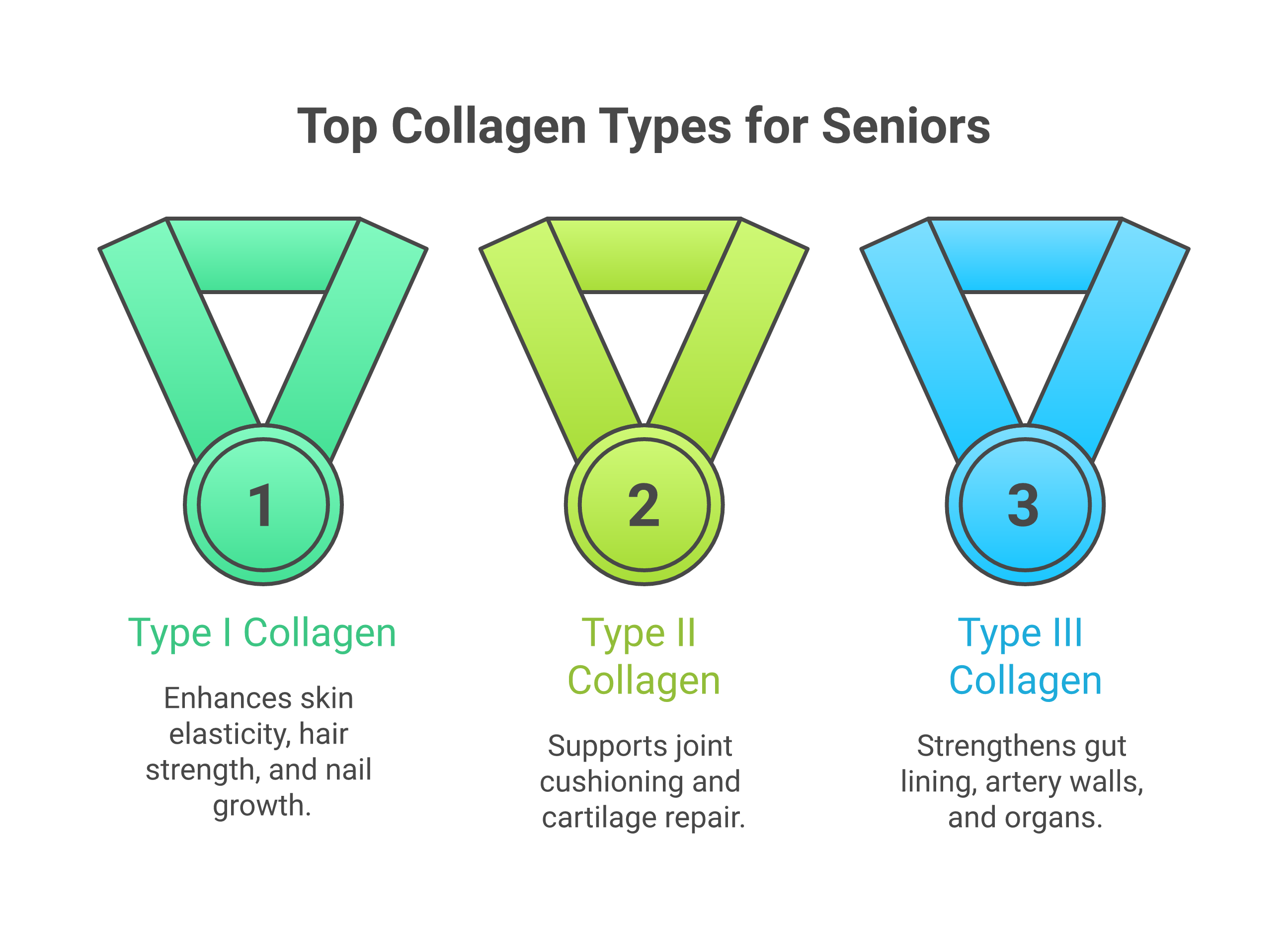
Collagen Types: Which Ones Do Seniors Actually Need?
| Collagen Type | Found In | Best For | Common Sources |
|---|---|---|---|
| Type I | Skin, bones, tendons, ligaments | Skin elasticity, bone density, wound healing | Bovine (cow), marine (fish) |
| Type II | Cartilage | Joint cushioning, reducing stiffness | Chicken sternum cartilage |
| Type III | Skin, blood vessels, organs | Skin firmness, cardiovascular support | Bovine (cow) |
| Type V | Cell surfaces, hair, placenta | Hair thickness, tissue repair | Eggshell membrane |
| Type X | Growth plates, healing cartilage | Bone formation, joint recovery | Chicken cartilage |
For most seniors, a formula that includes Types I, II, and III covers the three biggest concerns: skin, joints, and bones. Single-type supplements (like marine collagen for skin only) can work if you have one specific goal, but multi-type formulas offer broader support.
Our best collagen supplement for women over 60 guide breaks down specific products by type and formulation if you want a head-to-head comparison.
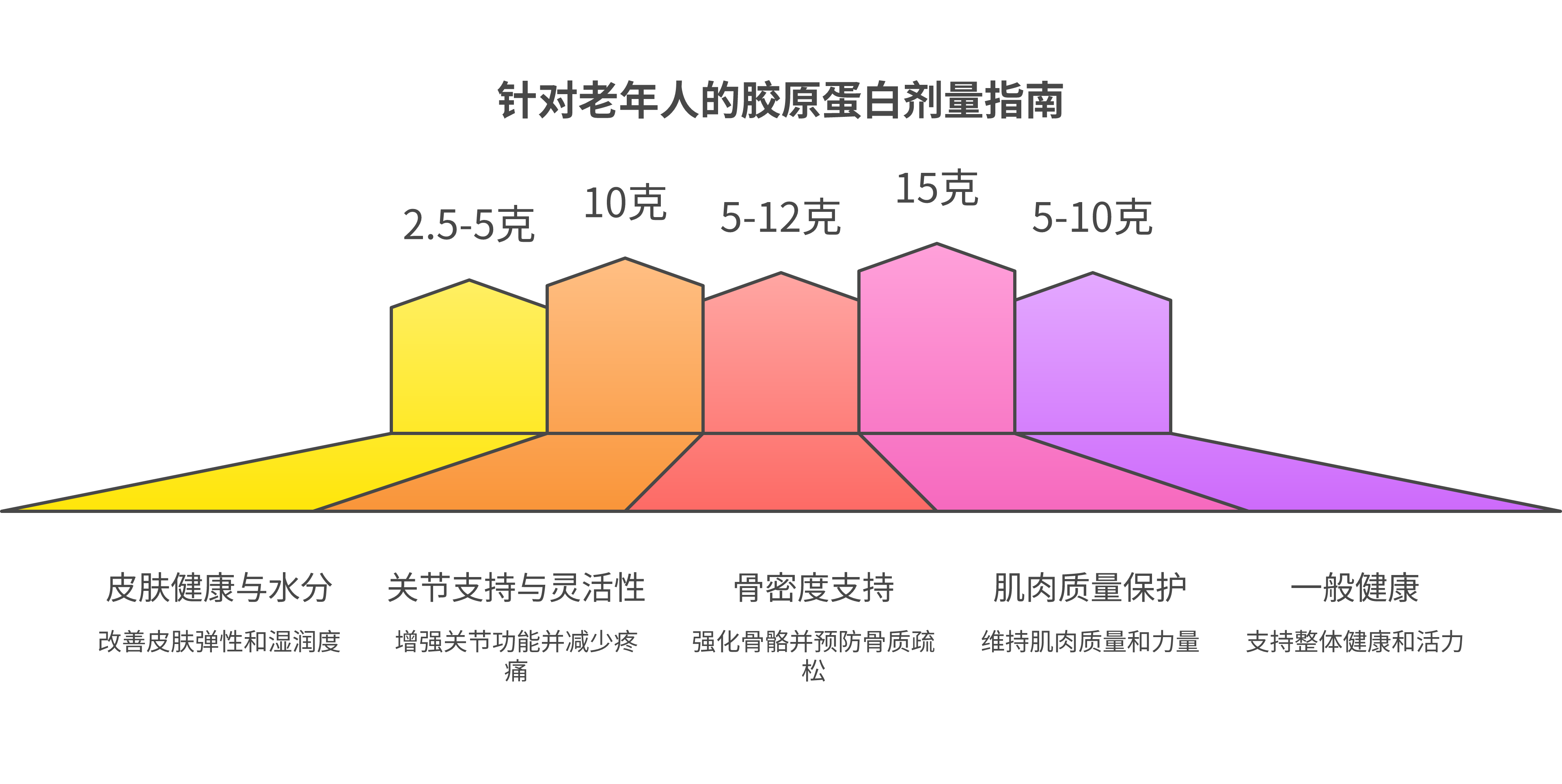
How Much Collagen Should Seniors Take Daily?
Clinical trials have tested a range of doses, and the right amount depends on your goal:
| Goal | Daily Dose | Study Duration for Results |
|---|---|---|
| Skin hydration and elasticity | 2.5 to 10 g | 4 to 8 weeks |
| Joint pain and stiffness | 5 to 10 g | 8 to 12 weeks |
| Bone density support | 5 g | 12 months |
| Muscle mass (with exercise) | 15 g | 12 weeks |
| General maintenance | 5 to 10 g | Ongoing |
A practical starting point for most seniors: 10 grams per day. This is the dose used in the Nomoto & Iizaka skin hydration trial with adults 65+, and it falls within the effective range for joints and bones too.
You can take collagen at any time of day. It mixes into coffee, smoothies, oatmeal, or water without changing the taste. Consistency matters more than timing.

What to Look for When Buying Collagen Peptides
Not all collagen supplements are created equal. Here is what separates a good product from a mediocre one:
1. Hydrolyzed Peptides (Not Gelatin)
Look for “hydrolyzed collagen” or “collagen peptides” on the label. Gelatin is a less processed form that does not dissolve well in cold liquids and has lower bioavailability. Hydrolyzed peptides are broken into smaller fragments (typically under 5,000 daltons) that your gut absorbs more easily.
2. Multiple Collagen Types
A formula with Types I, II, and III covers skin, joints, and bones. Some products add Types V and X for additional hair and bone support. Single-source marine collagen (Type I only) is fine if skin is your primary concern.
3. Third-Party Testing
Look for products tested by NSF International, USP, or other independent labs. This confirms the product contains what the label claims and screens for heavy metals, which can accumulate in collagen sourced from animal bones.
4. Clean Ingredient List
The best collagen supplements keep it simple: hydrolyzed collagen, maybe a vitamin C addition (which supports your body’s own collagen synthesis), and minimal fillers. Avoid products loaded with added sugars, artificial flavors, or unnecessary binders.
5. Adequate Dose Per Serving
If a product gives you only 1 to 2 grams per serving, you would need several servings to reach the 5 to 10 gram range supported by research. Look for products delivering at least 5 grams per serving so you are not burning through a bottle every week.
Products like PRO60+ Collagen Complete are formulated specifically for adults over 60 with multiple collagen types and clinically relevant doses per serving.
When to Expect Results (and When to Adjust)
Collagen peptides are not an overnight fix. Your body needs time to absorb the amino acids, distribute them, and use them to rebuild tissue. Here is a realistic timeline based on published clinical data:
- Weeks 1 to 3: No visible changes. Your body is absorbing and processing the peptides.
- Weeks 4 to 8: Skin hydration and texture improvements may become noticeable. The Nomoto & Iizaka trial measured significant hydration gains by week 8.
- Weeks 8 to 12: Joint stiffness and discomfort often start improving in this window. Most osteoarthritis trials show pain relief in this range.
- Months 6 to 12: Bone density changes require the longest commitment. The Konig et al. Trial measured BMD improvements after 12 months of daily use.
If you do not notice any improvements after 12 weeks at a dose of 10 grams daily, consider increasing to 15 grams or switching to a different collagen source (for example, from bovine to marine, or adding a Type II supplement). Some people respond better to specific sources than others.
Common Concerns About Collagen for Older Adults
Will It Interact With My Medications?
Collagen peptides have no known major drug interactions. However, if you take blood thinners or calcium supplements, let your doctor know you are adding collagen so they can monitor your levels. This is standard practice for any new supplement.
Can I Get Enough Collagen From Food?
Bone broth, chicken skin, and fish skin all contain collagen. But the collagen in these foods is not hydrolyzed, which means your body has to break it down further before using it. Studies comparing food-based collagen to hydrolyzed supplements consistently show better absorption with the supplement form. You can still enjoy bone broth for its other nutritional benefits, but do not count on it as your primary collagen source.
Are There Side Effects?
Side effects are uncommon. Some people report mild bloating or a slight aftertaste, especially at higher doses. In every major clinical trial reviewed for this article, no serious adverse events were linked to collagen peptide supplementation at doses up to 15 grams daily for 12 months.
Is It Worth Taking if I Am Already Over 70?
Yes. The Nomoto & Iizaka skin hydration trial included hospitalized adults aged 65 and older, and the Zdzieblik sarcopenia trial included men with an average age of 72. The benefits are not limited to younger seniors. Starting later means you have more ground to make up, but the research shows measurable improvements at any age over 60.
How Collagen Fits Into a Broader Supplement Routine
Collagen peptides work best as part of a complete daily routine, not in isolation. Here is how they complement other supplements commonly used by seniors:
- Vitamin C: Your body needs vitamin C to synthesize collagen. Taking them together supports the process.
- Vitamin D + Calcium: The Konig et al. Bone density trial showed the best results when collagen was paired with adequate calcium and vitamin D intake.
- Hyaluronic acid: Works with collagen to improve skin moisture retention. Some collagen formulas include it already.
- Omega-3 fatty acids: Support joint health through a different pathway (reducing inflammation) and complement collagen’s structural repair role.
For seniors dealing with joint discomfort specifically, our joint supplements for seniors that actually work guide covers how collagen stacks up against glucosamine, chondroitin, and other options.
And if you are looking at the full picture of aging well, you may find our does collagen really work for wrinkles after 60 breakdown useful for understanding what collagen can and cannot do for visible aging.
Frequently Asked Questions
How much collagen should a senior take daily?
Most clinical studies use between 5 and 15 grams of hydrolyzed collagen peptides per day. For general skin and joint support, 5 to 10 grams is a good starting point. If you are also trying to maintain muscle mass, doses closer to 15 grams daily have shown better results in research with older adults.
What type of collagen is best for seniors?
Type I and Type III collagen support skin elasticity, hair, nails, and bone strength. Type II collagen targets cartilage and joint health. A multi-type formula that includes Types I, II, and III covers the widest range of age-related concerns.
How long does it take to see results from collagen supplements?
Skin hydration improvements have been measured within 4 to 8 weeks in clinical trials. Joint comfort changes typically appear after 8 to 12 weeks. Bone density improvements require longer supplementation, with studies showing measurable gains after 12 months of daily use.
Can collagen peptides help with joint pain in older adults?
Yes. A 2023 meta-analysis of four randomized controlled trials involving 507 patients with knee osteoarthritis found that collagen peptide supplementation produced measurable pain relief compared to placebo. The best results occur when collagen is combined with regular movement and adequate vitamin D.
Are collagen supplements safe for seniors?
Collagen peptides have been used safely in clinical trials at doses up to 15 grams daily for 12 months with no serious adverse effects reported. Side effects are rare but can include mild bloating or a lingering aftertaste. Anyone on medication or managing a chronic condition should check with their doctor before starting a new supplement.
Does cooking bone broth give you enough collagen?
Bone broth does contain some collagen, but the amount varies widely depending on preparation. Studies have found that most commercial bone broths contain far less collagen per serving than a measured supplement dose. Hydrolyzed collagen peptides are also broken down into smaller molecules for better absorption, which whole-food collagen sources cannot match.
If you want a side-by-side look at how collagen compares to retinol for wrinkle reduction, see our retinol vs. Collagen for wrinkles comparison. And for nerve-related concerns that sometimes overlap with joint issues in older adults, our guide to nerve support supplements for seniors covers that angle.