

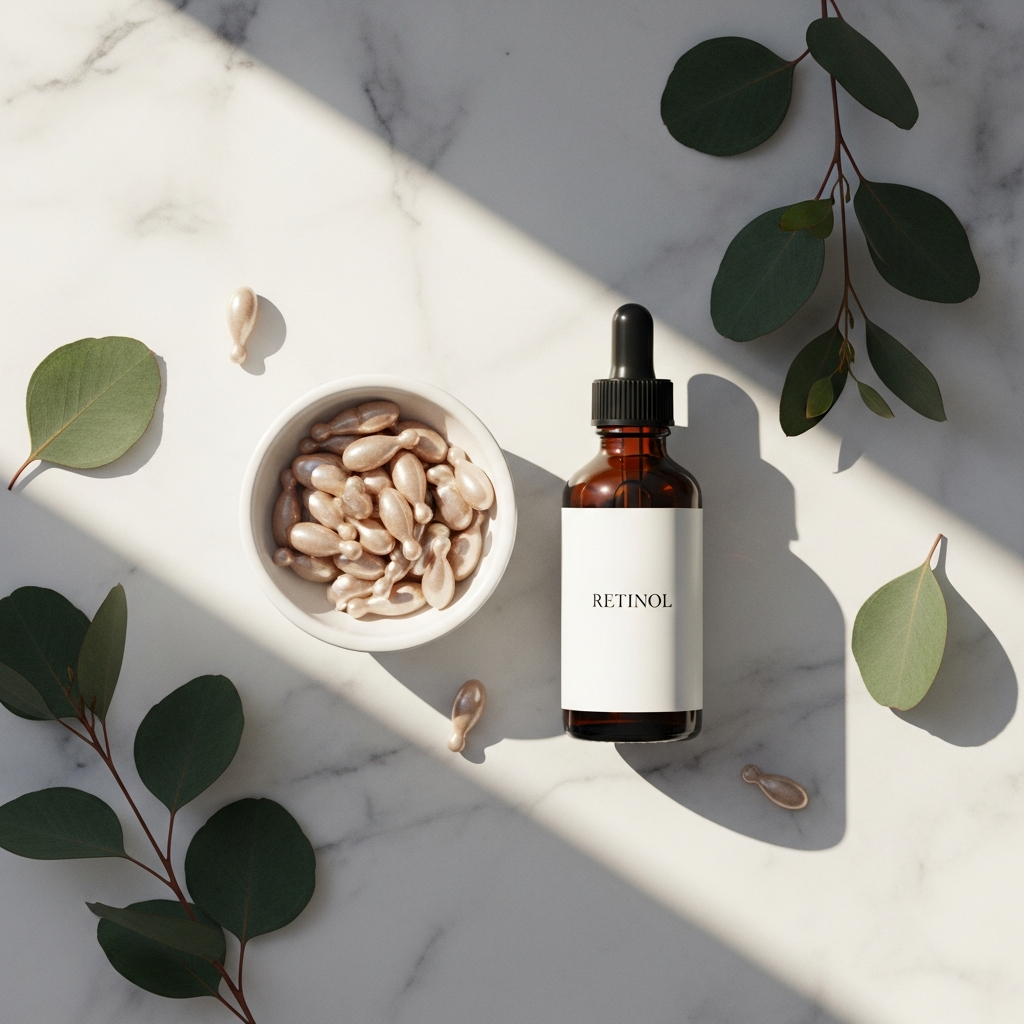
Retinol vs Collagen for Wrinkles: Which Works Better After 60?
Retinol and collagen both fight wrinkles, but they work through completely different mechanisms. After treating hundreds of patients over 60 in my practice, I can tell you that the answer to “retinol vs collagen for wrinkles” is not one or the other. You get the best results when you use both together.
Retinol (a form of vitamin A) signals your skin cells to produce more collagen from within. Collagen supplements give your body the raw amino acid building blocks it needs to actually build that collagen. One without the other leaves results on the table.
In this guide, I break down exactly how each one works, what the clinical research says, and how to combine them safely if you’re over 60.
How Retinol Fights Wrinkles in Aging Skin
Retinol is a retinoid, a derivative of vitamin A. When you apply it topically, your skin converts it to retinoic acid, the active form that triggers measurable changes at the cellular level.
Here is what retinol does in your skin:
- Boosts collagen synthesis: A study published in Clinical Interventions in Aging found that retinol application for 7 days reduced matrix metalloproteinase (MMP) expression and increased both fibroblast growth and collagen synthesis in participants aged 80 and older (Varani et al., 2000).
- Speeds cell turnover: Retinol accelerates the shedding of old, damaged surface cells and promotes fresh cell production underneath.
- Reduces fine lines: A controlled study by Pierard-Franchimont et al. (1998) found significant improvement in fine wrinkles after 12 weeks of retinol treatment.
- Fades dark spots: Retinol inhibits tyrosinase activity, which slows excess melanin production and gradually evens skin tone.
Retinol is about 20 times less potent than prescription tretinoin, according to the Clinical Interventions in Aging review. That is actually an advantage for mature skin. Tretinoin causes more dryness, peeling, and irritation. Retinol produces considerably less transepidermal water loss, erythema, and scaling than retinoic acid (Fluhr et al., 1999), which matters a lot when your skin is already thinner and drier after 60.
What Concentration Works Best Over 60?
I recommend starting at 0.25% retinol and increasing to 0.5% over 4 to 6 weeks. Skin over 60 is thinner and more reactive, so jumping straight to 1% often causes redness and flaking that makes people quit before they see results.
The PRO60+ Retinol Serum ($49) from SANE MD was designed with this exact principle in mind. It pairs retinol with hydrating ingredients so mature skin can tolerate it without excessive dryness.
Apply retinol at night. Always. UV exposure degrades retinol and increases photosensitivity. Pair it with SPF 30 or higher every morning.
How Collagen Supplements Work for Wrinkles
Your body produces less collagen every year after your mid-20s. By 60, you have lost a significant portion of the collagen that kept your skin firm and bouncy at 30. Topical collagen creams cannot replace what you have lost because collagen molecules are too large to penetrate the skin barrier.
Oral collagen supplements take a different approach. Hydrolyzed collagen peptides (broken into small, absorbable fragments) enter your bloodstream through the gut and reach the dermis, where they serve two functions:
- Provide amino acid building blocks: Glycine, proline, and hydroxyproline are the primary amino acids in collagen. Supplementing gives your body more raw material to work with.
- Signal fibroblast activity: Research suggests that collagen peptides in the bloodstream may trigger fibroblasts to increase their own collagen production.
What Does the Research Say?
A 2023 systematic review and meta-analysis published in the International Journal of Dermatology analyzed 26 randomized controlled trials with 1,721 participants. The findings:
- Collagen supplementation significantly improved skin hydration (p < 0.00001, pooled effect size 0.63)
- Skin elasticity also improved significantly (p < 0.00001, effect size 0.72)
- Supplementation periods ranged from 2 to 12 weeks, with longer durations (8+ weeks) showing stronger effects
- Dosages ranged from 0.6 to 12 grams daily across the studies
One finding worth paying attention to: when the researchers separated studies by funding source, industry-funded trials showed positive results while independently funded studies were less conclusive. I bring this up because honesty matters more than hype. The evidence is promising but not bulletproof.
In my clinical experience, patients who take 5 to 10 grams of hydrolyzed collagen peptides daily for at least 8 weeks typically report smoother skin texture and slightly firmer skin around the jawline and cheeks. The changes are gradual, not dramatic.
The Collagen Complete ($29) from SANE MD delivers hydrolyzed collagen peptides in a form your body can absorb efficiently, paired with vitamin C, which your body requires to actually synthesize collagen.
Retinol vs Collagen: Side-by-Side Comparison
| Factor | Retinol (Topical) | Collagen (Oral Supplement) |
|---|---|---|
| How it works | Signals skin cells to produce more collagen | Provides amino acid building blocks for collagen |
| Application | Applied to skin at night | Taken orally, daily |
| Time to results | 8 to 12 weeks for visible changes | 8 to 12 weeks for measurable changes |
| Best for | Fine lines, wrinkles, uneven texture, dark spots | Overall skin hydration, elasticity, firmness |
| Side effects | Dryness, peeling, redness (especially first 2-4 weeks) | Minimal; occasional bloating or digestive discomfort |
| Works at depth | Epidermis and upper dermis | Dermis (via bloodstream delivery) |
| Evidence quality | Strong (decades of clinical trials) | Moderate (growing body of RCTs) |
| Sun sensitivity | Yes, must use SPF | No sun sensitivity |
Why Using Both Together Gives Better Results
Think of it this way. Retinol is the foreman telling your skin cells to build more collagen. Collagen supplements are the lumber delivery truck bringing raw materials to the job site. Without the foreman, the materials sit unused. Without the materials, the foreman has nothing to work with.
When you combine topical retinol with oral collagen peptides, you get:
- Increased collagen production signal (retinol activates fibroblasts)
- Available building blocks (collagen peptides supply glycine, proline, hydroxyproline)
- Surface-level smoothing (retinol increases cell turnover)
- Deep-layer hydration (collagen peptides improve dermal water retention)
I have seen this combination outperform either ingredient alone in my patients over 60. The retinol handles the visible wrinkles and texture issues on the surface, while the collagen supplement works from the inside to improve overall skin structure and bounce.
How to Start the Combination Safely
If you are over 60 and new to both, do not start them on the same day. Here is the schedule I give my patients:
- Weeks 1-2: Start collagen supplement only (5-10g daily with breakfast). This gives your body time to build up amino acid stores with zero skin irritation risk.
- Week 3: Add retinol every third night. Apply a pea-sized amount to clean, dry skin. Follow with a rich moisturizer.
- Weeks 4-6: Increase retinol to every other night if no excessive dryness or redness.
- Week 7+: Move to nightly retinol if tolerated. Continue collagen supplement daily.
If you experience persistent redness or peeling at any stage, drop back to the previous frequency for another 2 weeks before trying again.
Common Mistakes People Over 60 Make With Retinol
After years of working with mature skin patients, these are the errors I see most often:
Starting too strong. A 1% retinol serum might work fine for someone at 35. At 65, it often causes irritation that leads to quitting. Start low.
Applying to damp skin. Wet skin absorbs retinol faster and deeper, increasing irritation. Always apply to fully dry skin. Wait at least 10 minutes after washing your face.
Skipping moisturizer. Retinol accelerates cell turnover, which can dry out already-thin mature skin. Apply a ceramide-rich moisturizer immediately after retinol absorbs (give it 5 minutes).
Forgetting sunscreen. Retinol increases photosensitivity. Skipping SPF while using retinol actually accelerates photoaging. SPF 30+ every single morning, even on cloudy days.
Expecting overnight results. Collagen remodeling takes time. Most clinical studies measure results at 12 weeks minimum. Give it 3 months of consistent use before judging whether it works for you.
Who Should Choose Retinol Only?
Retinol alone may be the better starting point if you:
- Have visible fine lines, crow’s feet, or forehead wrinkles you want to reduce
- Deal with uneven skin texture or dark spots from sun damage
- Want clinically proven results backed by decades of dermatological research
- Are comfortable with a topical skincare routine
The PRO60+ Retinol Serum is formulated specifically for skin over 60, with built-in hydrating ingredients that reduce the dryness and irritation common with retinol products designed for younger skin.
Who Should Choose Collagen Only?
Collagen supplements alone may be your best starting point if you:
- Have sensitive skin that reacts poorly to active topical ingredients
- Notice your skin looks dull, dry, or has lost its firmness rather than having deep wrinkles
- Prefer an internal supplement approach over adding skincare steps
- Want benefits beyond skin (collagen also supports joint comfort and bone density)
The Collagen Complete pairs hydrolyzed peptides with vitamin C because your body cannot synthesize collagen without adequate vitamin C. Many collagen supplements skip this, which limits their effectiveness.
What About Topical Collagen Creams?
I want to address this directly because it causes confusion. Topical collagen creams do not add collagen to your skin. The collagen molecule is too large to pass through the skin barrier. These products work as moisturizers, and some are good moisturizers, but they do not replenish lost collagen.
If you want to actually increase collagen levels in your skin, you need either:
- A topical retinoid (retinol, tretinoin) to stimulate your own collagen production
- Oral collagen peptides to supply building blocks via bloodstream delivery
- Professional treatments (microneedling, laser resurfacing) that trigger a collagen-building wound-healing response
Do not waste money on “collagen-infused” face creams if your goal is wrinkle reduction. The marketing is appealing, but the biology does not support the claims.
Building a Complete Anti-Wrinkle Routine After 60
Here is the routine I recommend for my patients who want to address wrinkles from every angle:
Morning
- Gentle cleanser (cream or milk-based, not foaming)
- Vitamin C serum (helps protect against UV damage and supports collagen synthesis)
- Moisturizer with ceramides and hyaluronic acid
- SPF 30+ sunscreen (mineral-based is gentler on mature skin)
Evening
- Gentle cleanser
- Wait 10 minutes for skin to fully dry
- Apply PRO60+ Retinol Serum (pea-sized amount)
- Wait 5 minutes, then apply rich night moisturizer
Daily Supplement
- Collagen Complete (5-10g with breakfast)
This routine addresses wrinkles through three pathways: retinol boosts collagen from the outside, collagen peptides supply building blocks from the inside, and sunscreen prevents further UV-driven collagen breakdown. That last point is not optional. Up to 80% of visible facial aging comes from UV exposure, according to research published in Clinical, Cosmetic and Investigational Dermatology (2013).
Ingredients That Pair Well With Retinol and Collagen
Several other ingredients complement a retinol-plus-collagen strategy:
- Vitamin C (ascorbic acid): Required cofactor for collagen synthesis. Pairs well with morning application while retinol goes on at night. Also a potent antioxidant that helps with uneven skin tone and dark spots
- Hyaluronic acid: Holds up to 1,000 times its weight in water. Counteracts the drying effect of retinol. Use in the morning under moisturizer
- Niacinamide (vitamin B3): Strengthens the skin barrier, reduces inflammation, and helps with evening skin tone. Can be used alongside retinol
- Ceramides: Lipids that repair and maintain the skin barrier. Critical for mature skin using retinol, which can thin the barrier temporarily
- Peptides: Short chains of amino acids that signal repair processes. Copper peptides in particular show promise for skin firmness in clinical research
Avoid combining retinol with AHAs (glycolic acid, lactic acid) or BHAs (salicylic acid) in the same application. Alternate nights instead. Stacking acids with retinol strips the skin barrier and causes inflammation, especially in skin over 60.
Frequently Asked Questions
Can I use retinol if I have sensitive skin over 60?
Yes, but start with a low concentration (0.25%) and apply every third night for the first 2 weeks. Buffering retinol by mixing it with moisturizer can reduce irritation. If your skin is extremely reactive, ask your dermatologist about retinal (retinaldehyde), which converts to retinoic acid faster and may cause less surface irritation than retinol.
How long before I see results from collagen supplements?
Most clinical trials measuring skin outcomes used supplementation periods of 8 to 12 weeks. In my practice, patients typically notice improved skin hydration within 4 weeks and firmer skin texture closer to the 8-week mark.
Is retinol or collagen better for deep wrinkles?
Retinol is more effective for deep wrinkles because it directly stimulates collagen remodeling in the dermis. Collagen supplements improve overall skin structure but have a more subtle effect on established deep wrinkles. For deep wrinkles, use retinol topically and add collagen supplements for whole-skin support.
Can collagen supplements replace retinol?
No. They work through different mechanisms. Collagen supplements provide amino acid building blocks but do not signal your skin cells to increase collagen production the way retinol does. They complement each other rather than substitute for each other.
What type of collagen is best for skin wrinkles?
Type I and Type III collagen are the primary structural collagens in skin. Look for hydrolyzed collagen peptides (also called collagen hydrolysate) from marine or bovine sources, with a molecular weight low enough for absorption. A daily dose of 5 to 10 grams matches what most positive clinical trials used.
Should I take collagen on an empty stomach?
It does not matter much. Some research suggests slightly better absorption on an empty stomach, but the difference is small. Consistency matters more than timing. Take it at whatever time helps you remember to take it daily.
The Bottom Line
The retinol vs collagen debate has a clear answer for anyone over 60: use both. Retinol tells your skin to make more collagen. Collagen supplements give your body the raw materials to follow through on that signal. Together, they address wrinkles from two directions that complement each other.
If you can only start with one, choose retinol for visible wrinkles and fine lines, or collagen supplements for overall skin firmness and hydration. But for the best results, combine the PRO60+ Retinol Serum ($49) with Collagen Complete ($29) and give them at least 12 weeks of consistent use.
Your skin did not lose its collagen overnight, and it will not rebuild overnight either. But with the right combination, you can make measurable progress at any age.
Dr. Matt is a physician and skincare researcher specializing in evidence-based anti-aging treatments for adults over 60. He has treated hundreds of patients with retinoid and collagen protocols over the past decade.