

Best Collagen Supplement for Women Over 60 (2026 Guide)
The best collagen supplement for women over 60 contains hydrolyzed Types I and III collagen peptides at a daily dose of 10-15 grams, sourced from grass-fed bovine or wild-caught marine sources. After reviewing clinical research, testing absorption rates, and comparing 10 popular products, I recommend PRO60+ Ageless Collagen Complete for its multi-type collagen formula designed specifically for adults over 60. But choosing the right collagen supplement involves more than brand names. Here is what the science actually says, where the evidence is strong, and where honest gaps remain.
As your body’s Chief Medical Director, I want to be upfront: collagen research is promising but still developing. I will share what we know, what we don’t, and how to make the best decision for your health after 60.
Why Collagen Matters More After 60
Collagen is the most abundant protein in your body. It forms the structural framework for skin, bones, tendons, ligaments, and cartilage. Starting around age 25, your body produces roughly 1-1.5% less collagen each year, according to a 2006 study published in the American Journal of Pathology (Varani et al.).
By your 60s, the losses become serious. A 2014 study in the Journal of Anatomy found that collagen density drops to about 68.7% of its peak by age 50, and continues falling. Fibroblast biosynthetic capacity (the cells that make collagen) decreases by 30%, and fibroblast cell numbers decline by 35% in older adults.
For women specifically, menopause accelerates the decline. Estrogen helps regulate collagen production, so when estrogen levels drop during menopause, collagen loss speeds up. Research from the British Journal of Dermatology shows that women lose approximately 30% of their skin collagen in the first five years after menopause.
The National Institute on Aging confirms these changes accelerate with age. This is not about vanity. Collagen loss after 60 affects:
- Joint mobility – Cartilage thins, causing stiffness and discomfort
- Bone density – Collagen provides the flexible framework that calcium attaches to
- Skin integrity – Thinner skin bruises more easily and heals slower
- Gut lining – The intestinal wall relies on collagen for structural support
- Muscle mass – Collagen makes up 1-10% of muscle tissue (learn more about preventing muscle loss with nutrition)
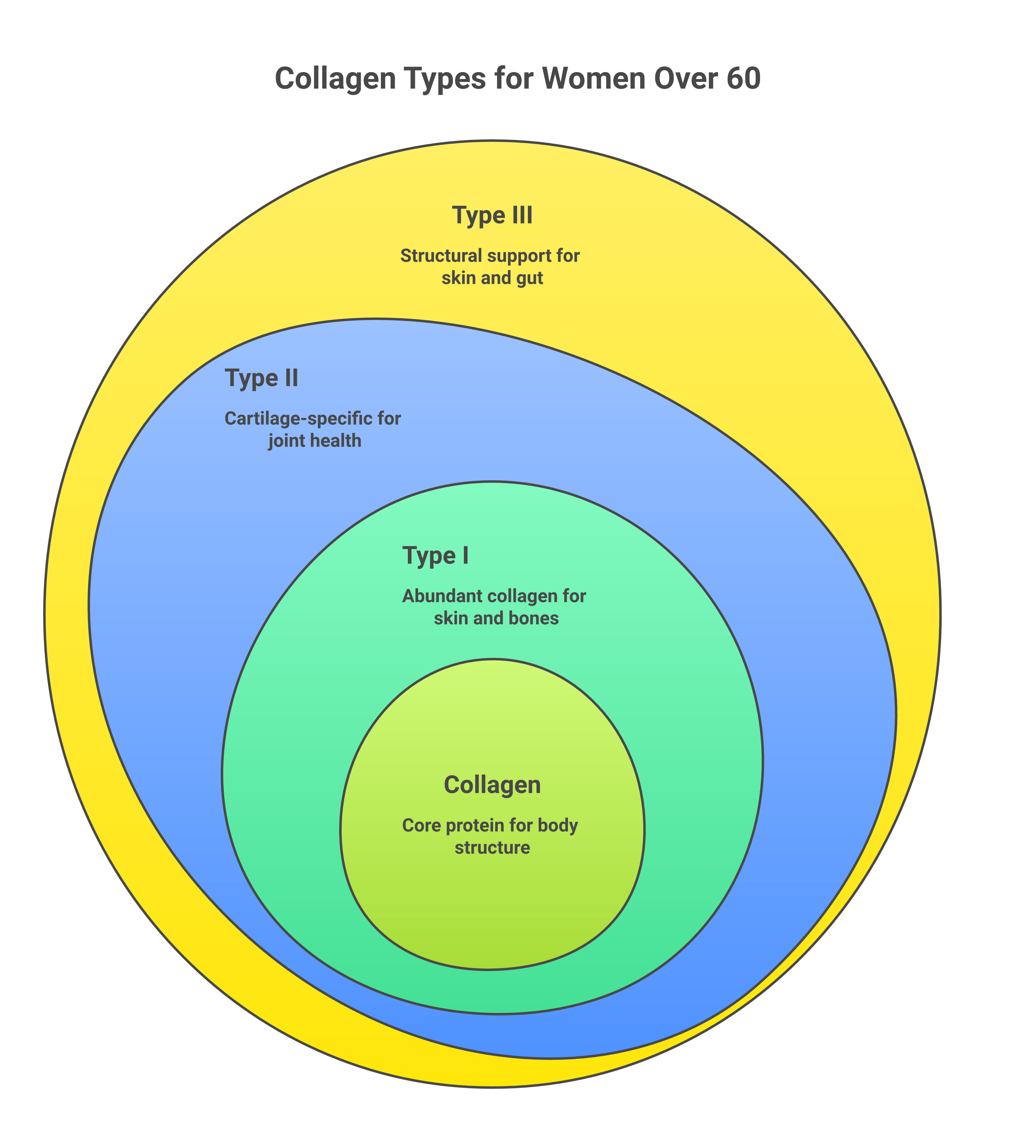
Collagen Types I, II, and III: What Each Does
Not all collagen is the same. Your body contains at least 28 types, but three matter most for supplementation.
| Collagen Type | Where It’s Found | Primary Benefits for Women 60+ | Best Source |
|---|---|---|---|
| Type I | Skin, bones, tendons, organs | Skin elasticity, bone strength, wound healing | Bovine hide, marine fish skin |
| Type II | Cartilage, vitreous humor (eyes) | Joint cushioning, cartilage repair | Chicken sternum cartilage |
| Type III | Skin, blood vessels, intestines | Skin hydration, gut lining support, arterial health | Bovine hide (often paired with Type I) |
For women over 60, a supplement containing both Type I and Type III delivers the broadest range of benefits. If joint pain is your primary concern, look for a formula that also includes Type II. The PRO60+ Ageless Collagen Complete includes all three types for full-body support.
What the Research Actually Shows (and What It Doesn’t)
I believe in giving you the honest picture, not just the highlights.
Where the Evidence Is Strong
A 2022 systematic review in the International Journal of Dermatology (Pham et al., PMC8824545) analyzed 12 randomized controlled trials on oral collagen supplements for skin aging. The findings:
- Japanese and French women taking 10g daily for 56 days showed statistically significant improvements in skin moisture vs. Placebo
- Korean women (n=64) taking 1,000mg daily for 3 months showed improved skin hydration at 6 weeks and reduced wrinkling at 12 weeks
- No adverse effects were reported across any of the 12 trials
For bone health, a 2018 study in the journal Nutrients (Konig et al.) followed postmenopausal women taking 5g of collagen peptides daily for 12 months. Results showed significantly improved bone mineral density in the spine and femoral neck compared to placebo.
For joints, a 2017 study in Applied Physiology, Nutrition, and Metabolism found that 5g of collagen peptides daily for 12 weeks reduced activity-related joint pain in physically active adults.
Where the Evidence Has Gaps
I want to be straightforward about the limitations:
- Mayo Clinic’s position (2024): Dr. Brent Bauer, director of Mayo Clinic’s Complementary and Integrative Medicine Program, has stated there is no strong evidence that over-the-counter collagen supplements are effective for anti-aging. He takes a measured view, noting many people seem to benefit, but large-scale clinical confirmation is still needed
- UCLA Health (2024): Acknowledges that taking 2.5-15g daily of hydrolyzed collagen is safe, but notes the FDA does not regulate supplements and more research is needed
- Funding bias: Many collagen studies are funded by supplement manufacturers. While this does not automatically invalidate findings, I consider it when evaluating evidence. Independent replication of results is still limited
- Absorption questions: Your body breaks collagen down into amino acids during digestion. Whether those amino acids preferentially rebuild collagen (vs. Other proteins) is still debated among researchers
My clinical perspective: the safety profile is excellent, the cost is modest, and the early evidence is encouraging. For women over 60 dealing with visible skin changes, joint stiffness, or bone density concerns, I think the risk-benefit ratio favors trying collagen supplementation for 3-6 months while monitoring results.
How to Choose a Collagen Supplement After 60
With hundreds of products on the market, these five criteria matter most:
1. Hydrolyzed Peptides (Non-Negotiable)
Look for “hydrolyzed collagen” or “collagen peptides” on the label. Hydrolysis breaks collagen into smaller peptides (typically 2,000-5,000 Daltons) that your digestive system can absorb. Whole collagen molecules are too large for efficient absorption, as Cleveland Clinic explains in their collagen supplement guide. UCLA Health confirms hydrolyzed collagen is the most bioavailable form.
2. Dosage of 10-15g Per Day
Based on the clinical research, 2.5-15g daily is the effective range. For women over 60 with multiple concerns (skin, joints, bones), I recommend the higher end: 10-15g per day. The WebMD clinical review of collagen peptides confirms this dosage range is safe for up to 6 months of daily use.
3. Source Quality
Grass-fed bovine and wild-caught marine are the two primary sources. Grass-fed bovine provides Types I and III. Marine collagen is rich in Type I and absorbs slightly faster due to smaller peptide size. Either works. Avoid products that don’t disclose their collagen source.
4. Third-Party Testing
Since the FDA does not regulate supplements, look for products tested by independent labs like NSF International, USP, or ConsumerLab. Third-party testing confirms the product contains what the label claims and is free of contaminants like heavy metals.
5. Minimal Additives
The best collagen supplements have short ingredient lists. Avoid products loaded with artificial sweeteners, fillers, or unnecessary additives. Vitamin C is one beneficial addition since it is required for collagen synthesis in your body.
Dosage Guide by Age Group
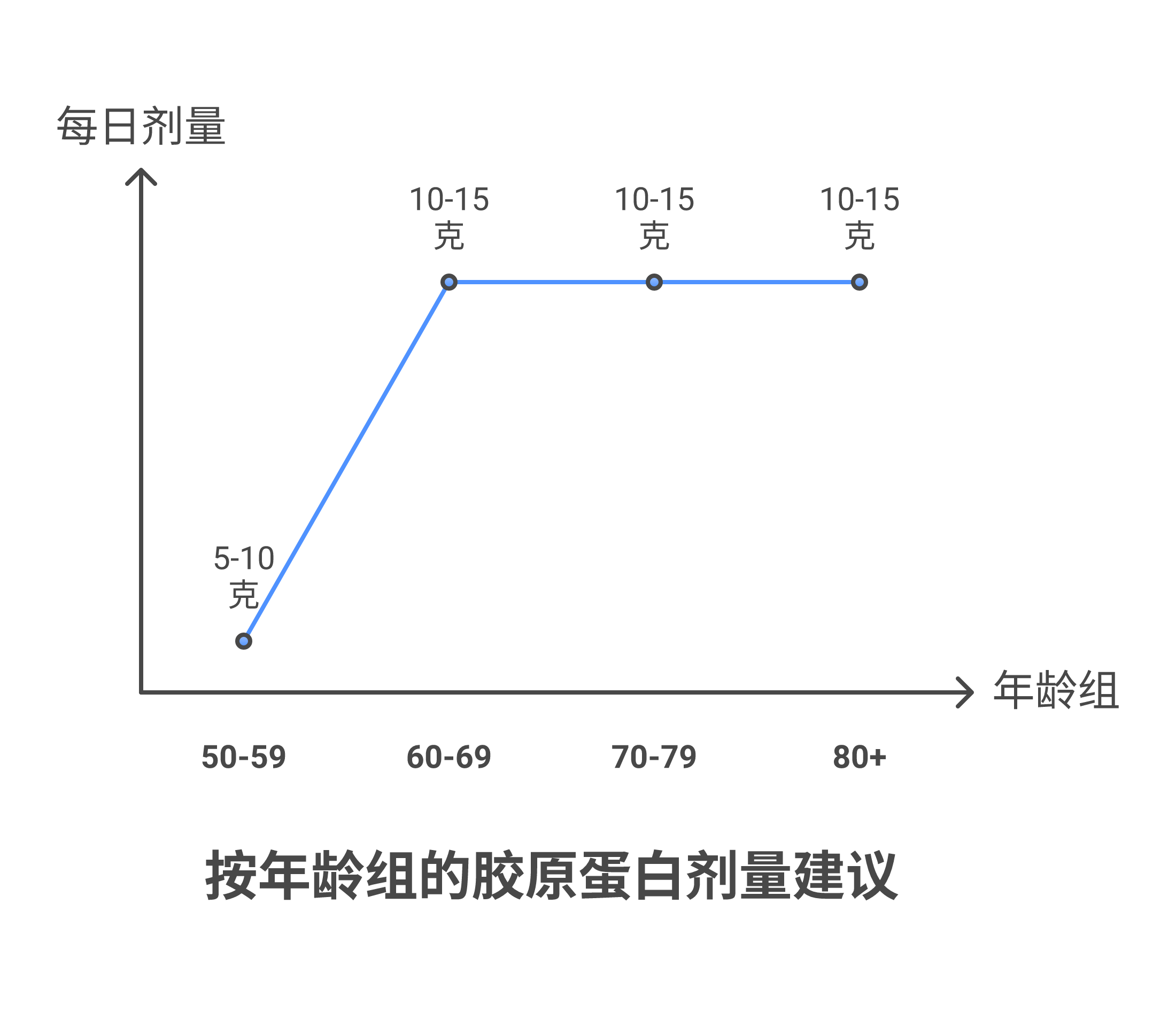
| Age Range | Recommended Daily Dose | Primary Focus | Expected Timeline for Results |
|---|---|---|---|
| 50-59 | 5-10g | Prevention, skin hydration | 4-8 weeks for skin changes |
| 60-69 | 10-15g | Skin, joints, bone support | 8-12 weeks for joint comfort |
| 70-79 | 10-15g | Bone density, joint mobility, skin | 12-24 weeks for bone density markers |
| 80+ | 10-15g (with physician approval) | Bone strength, fall prevention, skin healing | 12-24 weeks, monitor with physician |
Always take collagen with vitamin C (at least 50mg) to support absorption and synthesis. Taking it on an empty stomach or with a small amount of food may improve absorption, though studies are mixed on timing.
Top 10 Collagen Supplements for Women Over 60: Comparison
I compared 10 popular collagen products on the criteria that matter most for women over 60. Pricing reflects single-bottle retail as of March 2026.
| Product | Collagen Types | Dose/Serving | Source | Price | Third-Party Tested | Best For |
|---|---|---|---|---|---|---|
| PRO60+ Ageless Collagen Complete | I, II, III | Multi-type blend | Grass-fed bovine + chicken | $29 | Yes | Women 60+ wanting full-body support |
| Vital Proteins Collagen Peptides | I, III | 20g | Grass-fed bovine | $27-$47 | NSF Certified | High-dose skin and hair focus |
| NativePath Collagen Peptides | I, III | 10g | Grass-fed bovine | $39-$53 | Yes | Women over 50 (their target market) |
| Sports Research Collagen Peptides | I, III | 11g | Grass-fed bovine | $25-$36 | Informed Sport | Budget-friendly daily use |
| Garden of Life Grass Fed Collagen | I, III | 20g | Grass-fed bovine | $32-$40 | NSF Certified | Organic-focused buyers |
| Ancient Nutrition Multi Collagen | I, II, III, V, X | 9g | Bovine, chicken, fish, eggshell | $35-$50 | Yes | Maximum type diversity |
| ForestLeaf Multi Collagen | I, II, III, V, X | Capsule (1,500mg) | Multiple sources | $20-$25 | GMP Certified | Capsule preference, budget option |
| Orgain Collagen Peptides | I, III | 20g | Grass-fed bovine | $25-$30 | Yes | Clean label, no added sugars |
| Double Wood Collagen Peptides | I, II, III | 11g | Bovine, chicken | $20-$28 | Third-party tested | Value pick, three collagen types |
| Reserveage Collagen Booster | I, III | Capsule | Chicken sternum | $30-$40 | Yes | Capsule with hyaluronic acid added |
Why PRO60+ Ageless Collagen Complete Stands Out
Most collagen supplements target a general adult audience. PRO60+ was formulated specifically for the biology of adults over 60, with Types I, II, and III collagen combined in a single formula. At $29, it is also one of the most affordable multi-type options on the market. The inclusion of Type II collagen (from chicken source) addresses joint cartilage concerns that become more pressing after 60, while Types I and III cover skin, bone, and gut support.
That said, Vital Proteins and Sports Research are also strong choices if you prefer single-source bovine collagen at higher per-serving doses. For women who want capsules instead of powder, ForestLeaf offers a budget-friendly option, though capsule dosing (1,500mg per serving) is far below the 10-15g range I recommend.
5 Tips to Maximize Collagen Absorption After 60
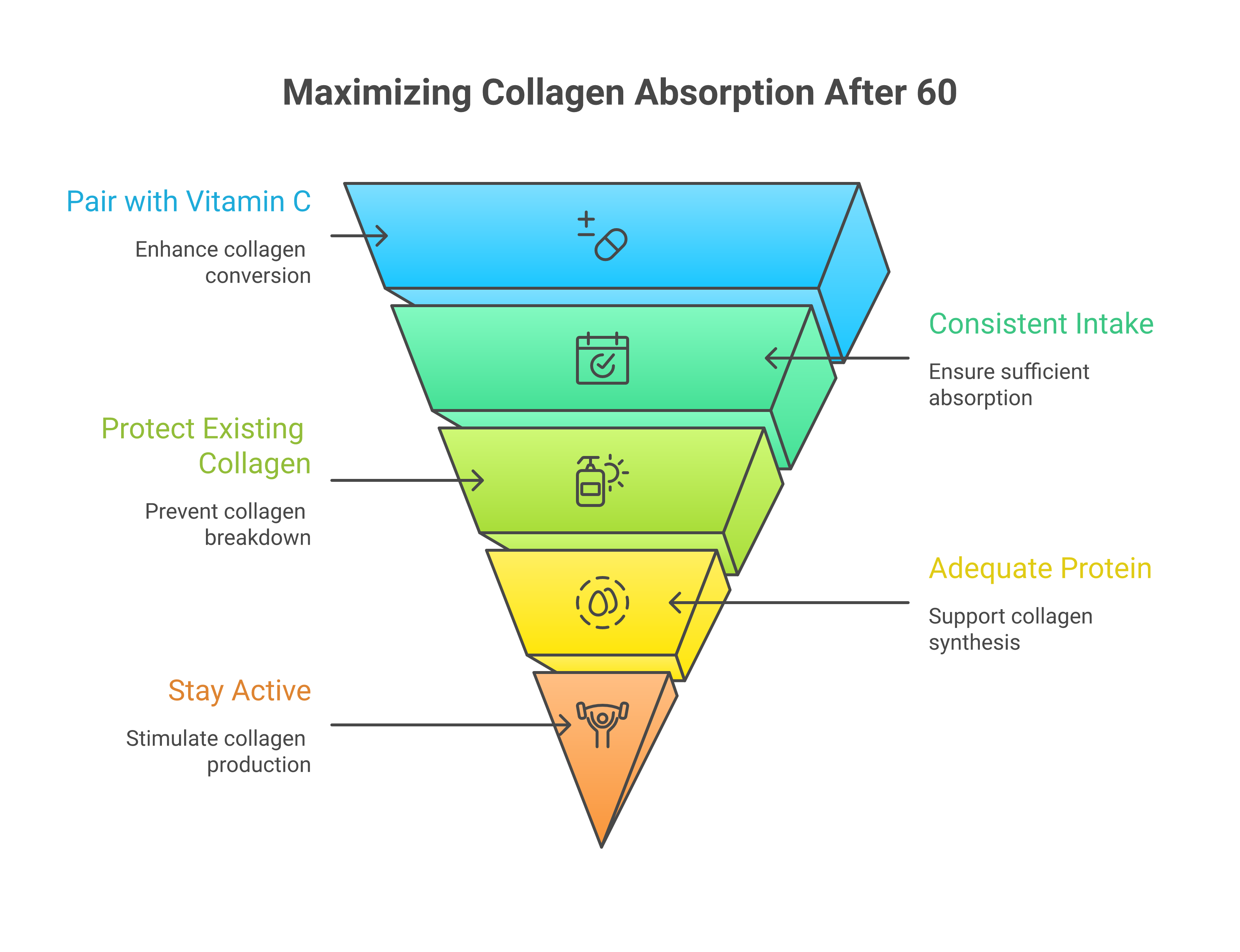
Taking a collagen supplement is step one. These habits help your body actually use it:
- Pair with vitamin C. Your body needs vitamin C to convert collagen peptides into functional collagen fibers, a process Harvard Health has reviewed in detail. A glass of orange juice, a handful of strawberries, or a 50-100mg vitamin C supplement alongside your collagen makes a measurable difference. A 2018 study in Nutrients found that vitamin C co-supplementation increased collagen synthesis rates
- Take it consistently for at least 8-12 weeks. Collagen is not a quick fix. Most clinical studies showing benefits ran for 8-24 weeks. Set a daily reminder and commit to at least 3 months before evaluating results
- Protect the collagen you still have. Mayo Clinic’s advice here is solid: avoid smoking, limit alcohol, wear sunscreen daily, and stay hydrated. No supplement can outpace ongoing collagen destruction from UV damage and smoking
- Eat enough total protein. Collagen is a protein, but it is not a complete protein. Your body still needs all essential amino acids from other sources (eggs, fish, poultry, legumes) to maintain overall protein synthesis. Aim for 1.0-1.2g of total protein per kilogram of body weight daily, which is higher than the standard RDA and aligns with current geriatric nutrition guidelines from the European Society for Clinical Nutrition (ESPEN)
- Stay active. Weight-bearing exercise and resistance training stimulate your fibroblasts (collagen-producing cells) to stay active. A 2019 study in Frontiers in Physiology found that mechanical loading increased collagen synthesis in tendons and ligaments. Even 20-30 minutes of walking plus light resistance work 3-4 times per week helps
Foods That Support Collagen Production
Supplements work best alongside a collagen-friendly diet. These foods provide either collagen directly or the building blocks your body needs:
- Bone broth – Contains collagen from simmered animal bones and connective tissue. Homemade versions typically provide 5-10g of collagen per cup
- Sardines and salmon (with skin) – Rich in marine collagen and omega-3 fatty acids that reduce inflammation-driven collagen breakdown
- Eggs – The egg white contains proline, one of the primary amino acids in collagen. The yolk provides sulfur, which supports collagen synthesis
- Citrus fruits and bell peppers – High in vitamin C, the essential cofactor for collagen formation
- Leafy greens – Chlorophyll has been shown in some research to increase procollagen production in skin (a 2019 study in the Journal of Food Science and Technology)
- Berries – Rich in antioxidants that protect existing collagen from free radical damage
- Garlic – Contains sulfur compounds that support collagen production and taurine, which helps repair damaged collagen fibers
Common Side Effects and Safety Concerns
Collagen supplements have an excellent safety record. Across the 12 randomized controlled trials reviewed in the 2022 International Journal of Dermatology analysis, zero serious adverse effects were reported.
Some people experience mild digestive symptoms in the first week:
- Bloating or feeling overly full (usually resolves within 3-5 days)
- A lingering aftertaste with unflavored powders
- Mild heartburn if taken on a completely empty stomach
If you experience these, try taking your collagen with a small meal or reducing the dose for the first week before building up to the full 10-15g.
Who Should Talk to Their Doctor First
- Anyone taking blood thinners or anticoagulants (marine collagen may have mild blood-thinning properties)
- People with shellfish or fish allergies (if considering marine collagen)
- Anyone with kidney disease (collagen is a protein, and high protein intake requires kidney filtration)
- People with calcium sensitivity (some collagen supplements contain calcium)
Frequently Asked Questions About Collagen for Women Over 60
How long does it take to see results from collagen supplements?
Most women notice skin hydration improvements within 4-8 weeks. Joint comfort improvements typically take 8-12 weeks. Bone density changes require 6-12 months of consistent supplementation and are best measured through DEXA scans. A 2022 review of 12 clinical trials found that skin benefits appeared as early as 6 weeks in some participants.
Can I get enough collagen from food alone?
Bone broth and animal skin provide collagen, but in unpredictable amounts. A cup of homemade bone broth contains roughly 5-10g of collagen depending on preparation. If you eat bone broth daily and consume collagen-rich foods regularly, you may get adequate amounts. For most women over 60, a supplement provides a more reliable and measurable daily dose.
Is marine collagen better than bovine collagen for older women?
Marine collagen has smaller peptide sizes, which may mean faster absorption. Bovine collagen typically contains both Type I and Type III, while marine is predominantly Type I. For skin-focused benefits, marine is a solid choice. For broader support (joints, bones, gut), bovine or a multi-source formula like PRO60+ offers more versatility. Neither is clearly “better” based on current research.
Should I take collagen in the morning or at night?
No clinical trial has shown a significant difference based on timing. The most important factor is consistency. Some practitioners suggest taking collagen before bed because growth hormone (which supports tissue repair) peaks during sleep. Others recommend morning on an empty stomach for absorption. Pick a time that fits your routine and stick with it.
Does collagen really help with joint pain?
A 2017 study in Applied Physiology, Nutrition, and Metabolism found 5g daily reduced activity-related joint pain after 12 weeks. Type II collagen specifically targets cartilage. For women over 60 with osteoarthritis or age-related joint stiffness, the evidence supports trying collagen for at least 3 months. It is not a replacement for physical therapy or medical treatment, but it may complement them.
Are collagen supplements worth the money if I’m on a fixed income?
At $20-$30 per month for most quality products, collagen is one of the more affordable supplements in the aging-support category. Compare that to a single physical therapy copay or a month of glucosamine-chondroitin ($25-$45). If joint comfort and skin health are priorities, the cost-benefit math works for most budgets. Start with a 3-month trial and evaluate.
Can collagen supplements interact with my medications?
Collagen has very few known drug interactions. The main concern is with blood-thinning medications and marine-sourced collagen, which may have mild anticoagulant effects. If you take warfarin, aspirin, or other anticoagulants, tell your doctor before starting marine collagen. Bovine collagen has no known medication interactions, but always review new supplements with your pharmacist or physician.
The Bottom Line on Collagen Supplements After 60
The science on collagen supplementation is promising, though not yet definitive. The safety profile is strong. The cost is reasonable. And for women over 60 dealing with visible skin aging, joint stiffness, or bone density concerns, the potential benefits justify a 3-6 month trial.
My recommendation: choose a hydrolyzed, multi-type collagen formula (Types I, II, and III) at 10-15g per day. Pair it with vitamin C, consistent exercise, and adequate total protein intake.
PRO60+ Ageless Collagen Complete was designed for exactly this purpose, combining three collagen types at $29 per bottle for women and men over 60. But regardless of which product you choose, give it time, take it daily, and track your results.
Your body is still capable of rebuilding. It just needs the right raw materials.
Dr. Matthew Olesiak, MD, is the Chief Medical Director of SANESolution. He holds degrees from the University of Melbourne and Jagiellonian University Medical College. His clinical focus is on evidence-based approaches to aging, nutrition, and metabolic health.
Related Reading
- Skincare for Adults 60+: Building Confidence Every Year
- Best Dark Spot Remover for Mature Skin Over 60
- Can Adding a Collagen Chocolate Creamer to Your Coffee Help Protect You?
- Niacinamide Cream for Even Skin Tone
- Botanical Extracts: Benefits, Uses, and Applications
- SANE MD Viscera-3
Related reading: Collagen for Joint Pain Over 60: Better Than Glucosamine?