


Best Nerve Support Supplement for Seniors (Neuropathy Relief)
If you’re over 60 and dealing with tingling, burning, or numbness in your hands or feet, you’re not alone. Peripheral neuropathy affects roughly 25-30% of adults over age 65, according to a 2019 review published in Current Pain and Headache Reports. The Foundation for Peripheral Neuropathy estimates that over 30 million Americans live with some form of the condition. As a physician who has worked with thousands of seniors struggling with nerve discomfort, I want to give you a clear, honest breakdown of the supplements that actually have clinical evidence behind them, and a few that fall short of their marketing claims.
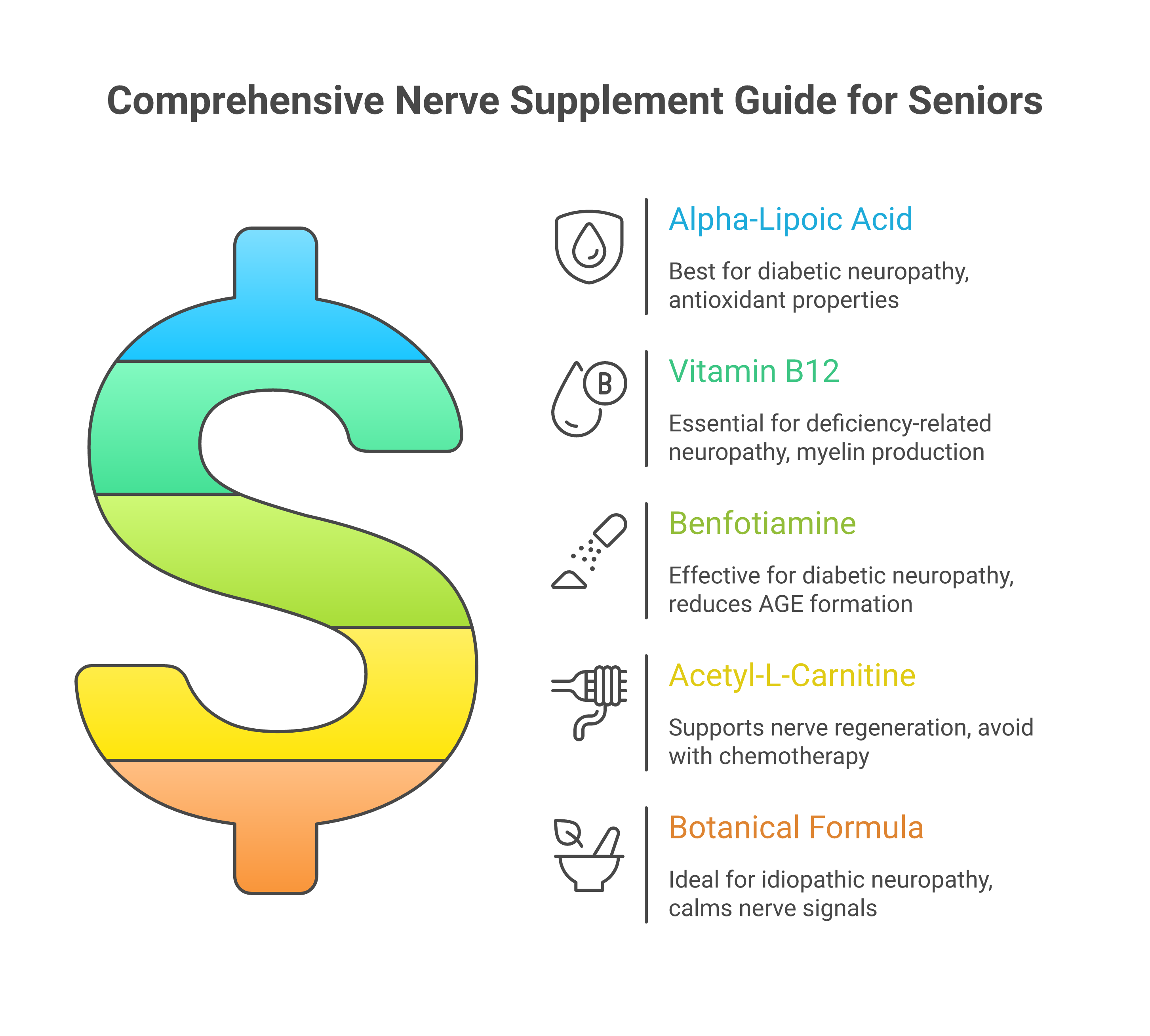
The best nerve supplements for seniors target three root causes of neuropathy: oxidative stress, inflammation, and nutrient deficiency. Alpha-lipoic acid (600 mg/day), B-complex vitamins (particularly B1 and B12), and acetyl-L-carnitine (1,000-1,500 mg/day) have the strongest clinical evidence. Botanical formulas containing corydalis, passion flower, and prickly pear offer a different approach by calming overactive nerve signals rather than trying to rebuild damaged fibers.
Why Seniors Are More Vulnerable to Nerve Damage
Aging changes how your body processes nutrients, repairs tissue, and manages inflammation. As the Mayo Clinic explains, peripheral neuropathy results from damage to the nerves outside the brain and spinal cord, and age is one of the primary risk factors. Three factors make neuropathy more common after 60:
- Reduced nutrient absorption. Stomach acid production drops with age, making it harder to absorb B12 from food. The National Institutes of Health estimates that 10-30% of adults over 50 have reduced ability to absorb food-bound B12.
- Accumulated oxidative stress. Decades of metabolic activity generate free radicals that damage nerve myelin sheaths. Antioxidant defenses weaken with age, leaving nerves more exposed.
- Medication side effects. Metformin (used by over 80 million people globally for type 2 diabetes) depletes B12 over time. Statins, certain chemotherapy drugs, and proton pump inhibitors also carry neuropathy risk.
This is why a “one supplement fits all” approach fails most seniors. The right choice depends on what’s driving your nerve symptoms.
Alpha-Lipoic Acid: The Most-Studied Nerve Supplement
Alpha-lipoic acid (ALA) has more clinical trial data behind it than any other neuropathy supplement. A 2012 meta-analysis in the International Journal of Endocrinology pooled results from four randomized controlled trials (ALADIN, ORPIL, SYDNEY, and SYDNEY 2) and found that 600 mg/day of ALA produced a statistically significant reduction in Total Symptom Scores for diabetic neuropathy.
The ALADIN trial, published in Diabetologia in 1995, tested three doses (100 mg, 600 mg, and 1,200 mg) against placebo in 328 patients. The 600 mg group had the highest response rate at 82.5%, compared to 57.6% for placebo. The 1,200 mg dose actually performed worse (70.8%) and caused more side effects like nausea.
The takeaway for seniors: 600 mg per day is the sweet spot. Going higher doesn’t help and may cause GI discomfort. ALA works best for diabetic neuropathy specifically. If your neuropathy has a different cause (idiopathic, chemotherapy-induced, or compression-related), the evidence is thinner.
Cost: Quality ALA supplements run $15-25/month for a 600 mg daily dose.
B Vitamins: Essential, But the Details Matter
B vitamins are the most commonly recommended nerve supplements, and for good reason. B1 (thiamine), B6 (pyridoxine), and B12 (cobalamin) are all directly involved in nerve function and myelin maintenance.
But here’s where most advice gets it wrong: not all B vitamin deficiencies are equal, and one B vitamin can actually cause neuropathy if you take too much.
Vitamin B12: The Priority for Seniors
B12 deficiency is the most clinically relevant for older adults. Your body needs B12 to produce myelin, the protective coating around nerve fibers. Without adequate B12, myelin breaks down and nerve signals misfire.
The standard blood test reference range (200-900 pg/mL) misses many functional deficiencies. A 2019 study in the American Journal of Clinical Nutrition found that neurological symptoms can appear at serum levels below 300 pg/mL, well within the “normal” range. Ask your doctor to check methylmalonic acid (MMA) levels, which rise before B12 drops into the overtly deficient range.
Best form for seniors: Methylcobalamin (sublingual) or cyanocobalamin injections. Oral tablets require intrinsic factor for absorption, which declines with age.
Vitamin B1 (Thiamine) and Benfotiamine
Benfotiamine is a fat-soluble form of B1 that crosses cell membranes more easily than standard thiamine. A 2008 randomized controlled trial in Experimental and Clinical Endocrinology & Diabetes found that 600 mg/day of benfotiamine for 6 weeks improved Neuropathy Symptom Scores in diabetic patients compared to placebo.
Standard thiamine supplements are water-soluble and poorly absorbed at high doses. If you’re supplementing B1 for nerve health, benfotiamine is the better choice.
The B6 Warning: More Is Not Better
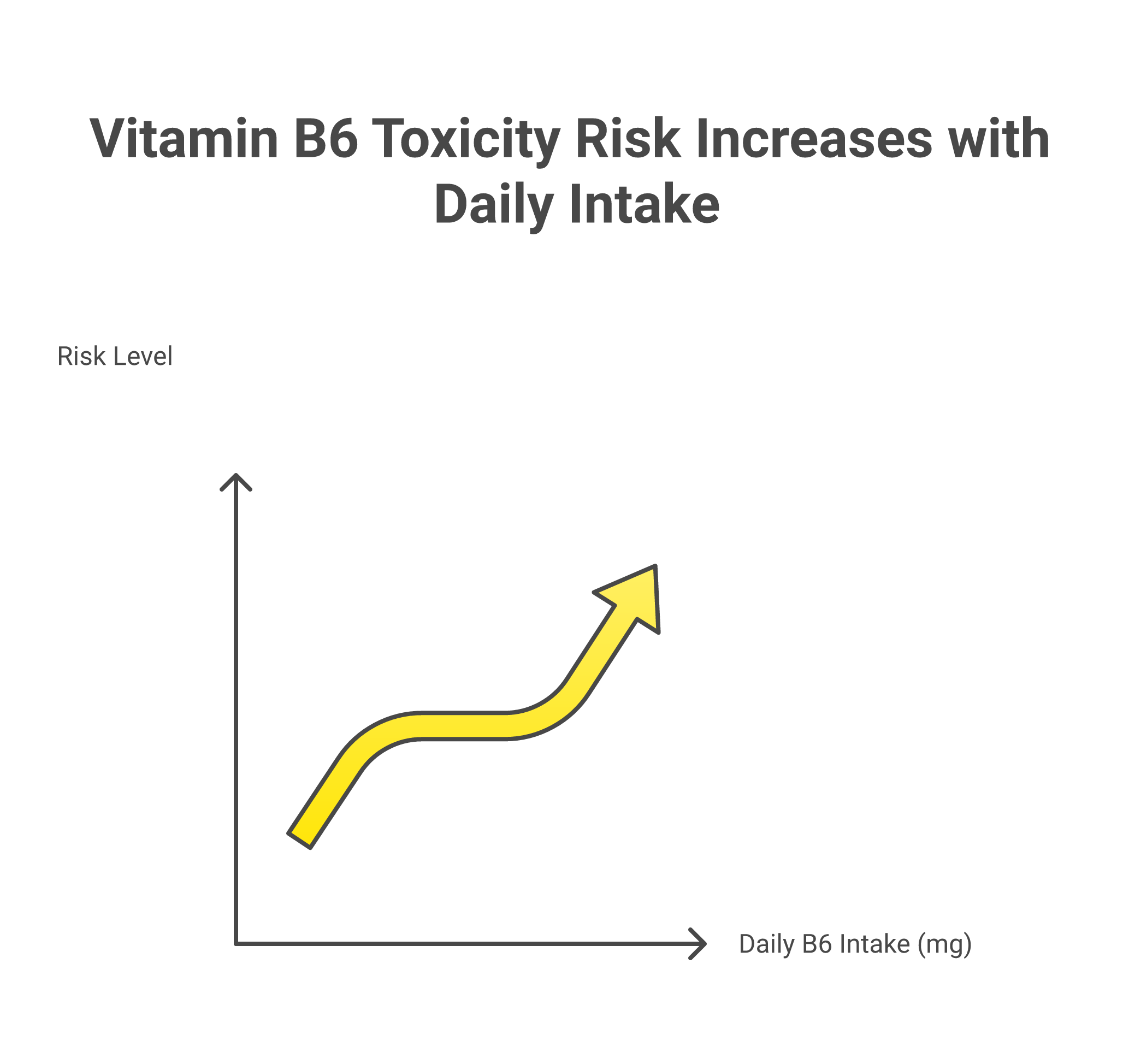
This is the safety warning most supplement companies leave out. Vitamin B6 (pyridoxine) in doses above 100 mg/day can actually cause peripheral neuropathy. The condition is called pyridoxine toxicity, and it’s well-documented.
Australia’s Therapeutic Goods Administration and the NIH Office of Dietary Supplements both set the tolerable upper limit at 100 mg/day. A 2023 systematic review in Nutrients found that some individuals developed neuropathy symptoms at doses as low as 24 mg/day with long-term use.
Many “nerve health” supplement stacks contain 50-100 mg of B6 per serving. If you’re taking multiple supplements, you could easily exceed safe levels. Check every label and add up your total daily B6 intake.
Acetyl-L-Carnitine: Promising for Nerve Regeneration
Acetyl-L-carnitine (ALC) stands out because it may actually help regrow damaged nerve fibers, not just mask symptoms. Two 52-week randomized placebo-controlled trials, published in Diabetes Care in 2005, found that 1,000 mg of ALC taken three times daily improved sural nerve fiber density and reduced pain in patients with chronic diabetic neuropathy.
A 2019 systematic review in the Journal of Pain Research confirmed that ALC reduced pain by approximately 20% compared to placebo across pooled studies, with 1,500 mg/day appearing to be the most effective dose for pain outcomes.
Important caveat: ALC did NOT help prevent chemotherapy-induced neuropathy. A randomized trial published in the Journal of Clinical Oncology found that ALC actually worsened neuropathy in women undergoing taxane-based chemotherapy. If your nerve damage is from chemo, skip this one.
Cost: $20-35/month for 1,500 mg daily.
Magnesium: Supports Nerve Function, But Won’t Fix Neuropathy Alone
Magnesium is involved in over 300 enzymatic reactions, including nerve signal transmission. A 2021 review found evidence that magnesium may support peripheral nerve regeneration, but the human clinical data for neuropathy pain relief is limited.
Where magnesium does help seniors with neuropathy: muscle cramps and sleep. Many neuropathy patients deal with both, and magnesium glycinate (the best-absorbed form for older adults) at 200-400 mg before bed can address those secondary symptoms without the grogginess of sleep medications.
Don’t expect magnesium alone to resolve tingling or burning sensations. Think of it as a supporting player, not the lead.
Botanical Nerve Formulas: A Different Approach
Not every nerve supplement tries to rebuild nerve fibers. Botanical formulas take a different strategy: calming overactive pain signals so you feel more comfortable while your body does its own repair work.
Key botanicals with traditional and emerging clinical support include:
- Corydalis (Corydalis yanhusuo). Used in Traditional Chinese Medicine for centuries. Contains dehydrocorybulbine (DHCB), which a 2014 study in Current Biology found acts on dopamine receptors to reduce inflammatory and neuropathic pain in animal models. Unlike opioids, DHCB did not produce tolerance with repeated dosing in these studies.
- Passion Flower (Passiflora incarnata). Acts on GABA receptors to calm nerve excitability. A 2020 systematic review in Phytotherapy Research confirmed anxiolytic effects, which matter because anxiety amplifies pain perception in neuropathy patients.
- California Poppy (Eschscholzia californica). A mild, non-addictive sedative that may help with the sleep disruption neuropathy causes. Not related to opium poppies despite the name.
- Prickly Pear (Opuntia ficus-indica). Contains betalains with antioxidant and anti-inflammatory properties. A 2020 study in Molecules documented its capacity to reduce oxidative stress markers.
- Marshmallow Root (Althaea officinalis). Contains mucilage compounds that may soothe irritated tissue. Less clinical data specifically for neuropathy, but a long ethnobotanical history for nerve-related discomfort.
PRO60+ Deep Nerve Renew ($39) combines all five of these botanicals in a single capsule formulated specifically for adults over 60. I helped develop this formula because I saw a gap in the market: most nerve supplements focus entirely on vitamins and antioxidants, while ignoring the nerve signal calming that many seniors need most for day-to-day comfort.
A botanical approach works differently than ALA or B vitamins. It’s not about correcting a deficiency or fighting oxidative damage. It’s about quieting the nerve signals that keep firing even after the original trigger is gone, which is common in idiopathic neuropathy (the type where no clear cause is identified, accounting for roughly 30% of all neuropathy cases).
Nerve Supplement Comparison Table
| Supplement | Best For | Clinical Evidence | Typical Daily Dose | Monthly Cost |
|---|---|---|---|---|
| Alpha-Lipoic Acid | Diabetic neuropathy | Strong (4 RCTs, meta-analysis) | 600 mg | $15-25 |
| Vitamin B12 | Deficiency-related neuropathy | Strong (well-established mechanism) | 1,000-2,000 mcg sublingual | $8-15 |
| Benfotiamine (B1) | Diabetic neuropathy | Moderate (small RCTs) | 300-600 mg | $12-20 |
| Acetyl-L-Carnitine | Diabetic neuropathy pain | Moderate (two 52-week RCTs) | 1,000-1,500 mg | $20-35 |
| Magnesium Glycinate | Cramps, sleep, nerve support | Limited for neuropathy specifically | 200-400 mg | $10-18 |
| PRO60+ Deep Nerve Renew | Nerve signal calming, comfort | Ingredient-level studies, botanical tradition | 1 capsule | $39 |
How to Choose the Right Nerve Supplement
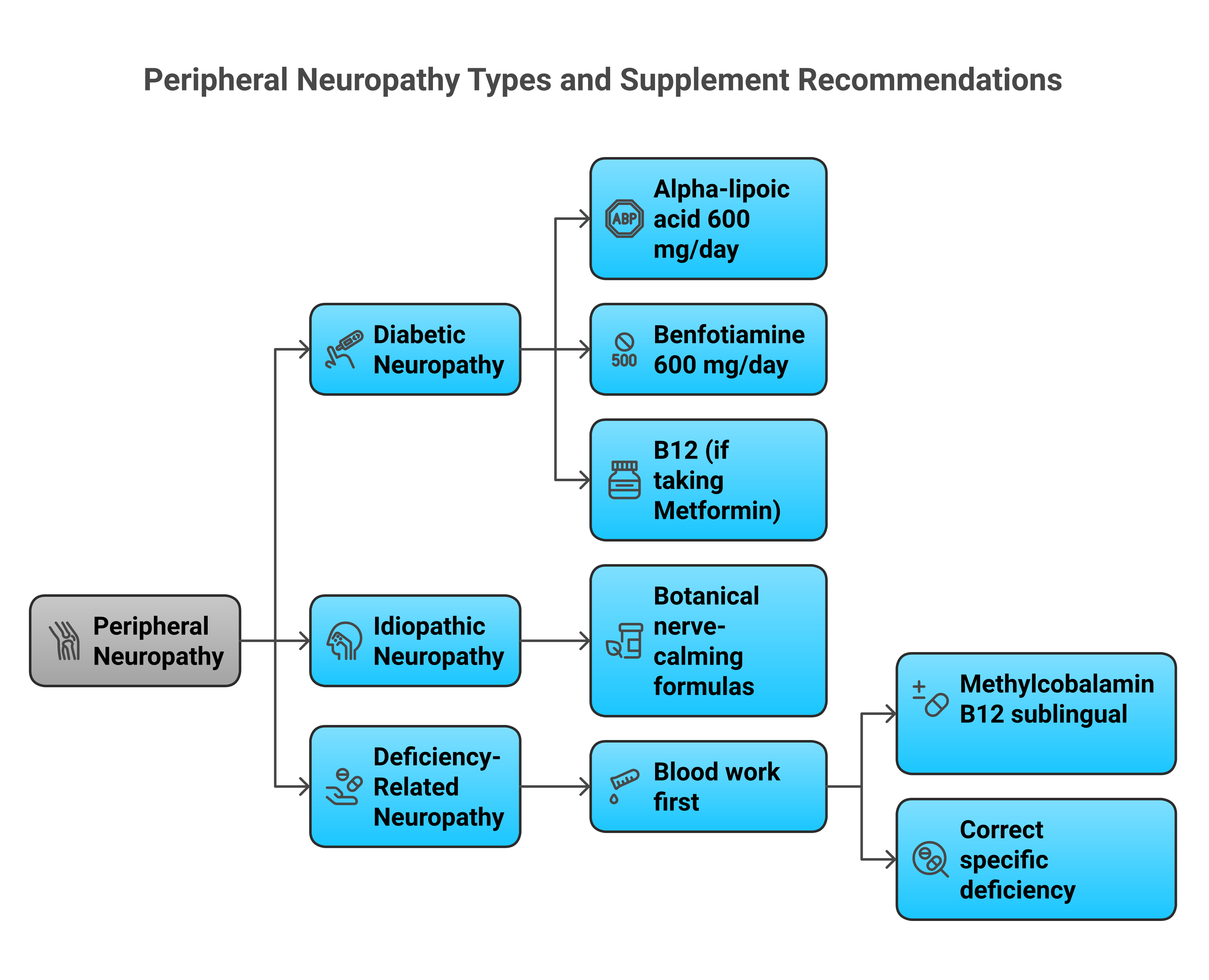
Your choice should match the cause of your neuropathy:
- Diabetic neuropathy. Start with alpha-lipoic acid (600 mg/day). Add benfotiamine if blood sugar control has been poor for years. Get B12 levels checked, especially if you take metformin.
- Idiopathic neuropathy (no known cause, roughly 30% of cases). A botanical calming approach like PRO60+ Deep Nerve Renew may be more effective here because there’s no specific deficiency to correct. The goal is managing overactive nerve signals.
- Deficiency-related neuropathy. Get blood work done. B12, folate, and vitamin D levels should be tested before you start supplementing. Correcting the deficiency often resolves symptoms within 3-6 months.
- Chemotherapy-induced neuropathy. Avoid acetyl-L-carnitine (may worsen it). Alpha-lipoic acid has limited data for this type. The Cleveland Clinic recommends working closely with your oncology team on symptom management for this type.
What to Avoid in Nerve Supplements
The supplement industry has a transparency problem. Here’s what to watch for:
- Proprietary blends. If a label says “Nerve Support Blend 500 mg” without listing individual ingredient amounts, you have no idea what dose of each ingredient you’re getting. Every ingredient should have its own dosage listed.
- Mega-dose B6. As covered above, anything over 50 mg/day of pyridoxine without medical supervision is risky for long-term use. Check all your supplements and add up total B6.
- Unrealistic claims. No supplement “cures” neuropathy. Any product claiming to “reverse nerve damage in 30 days” is misleading. Nerve fiber regrowth is a slow biological process measured in months, not weeks.
- “Doctor formulated” without naming the doctor. If a company won’t tell you who formulated their product, that claim means nothing. Every SANESolution product lists my name and credentials because accountability matters.
Combining Supplements Safely
Many seniors ask whether they can stack multiple nerve supplements. The short answer: yes, with guidelines.
A reasonable combination for diabetic neuropathy might include ALA (600 mg), benfotiamine (300 mg), B12 (1,000 mcg sublingual), and magnesium glycinate (200 mg at bedtime). Total monthly cost: roughly $45-75.
You can add a botanical formula like PRO60+ Deep Nerve Renew on top of a vitamin/antioxidant stack. Botanical nerve-calming agents work through different pathways (GABA receptors, dopamine modulation) than ALA or B vitamins, so there’s no pharmacological overlap.
What NOT to combine without medical guidance:
- Multiple B-complex supplements (B6 overdose risk)
- ALA with thyroid medication (may alter thyroid hormone levels)
- Corydalis-containing supplements with prescription pain medications or sedatives (additive sedation risk)
- High-dose magnesium with kidney disease (impaired excretion)
Always bring your full supplement list to your doctor or pharmacist. Drug-supplement interactions are underreported and can be clinically meaningful, especially in seniors taking 5+ medications.
Frequently Asked Questions
What is the best supplement for nerve pain in elderly people?
The best choice depends on the cause. For diabetic neuropathy, alpha-lipoic acid at 600 mg/day has the strongest clinical trial evidence (four randomized controlled trials). For idiopathic neuropathy with no identified cause, botanical formulas that calm nerve signals, such as those containing corydalis and passion flower, offer a different mechanism of relief. B12 supplementation is important if levels are low, which is common in adults over 65.
Do neuropathy supplements actually work?
Some do, some don’t. Alpha-lipoic acid and acetyl-L-carnitine have positive data from randomized controlled trials for diabetic neuropathy. B12 supplementation works when deficiency is the underlying cause. Many supplements on the market use ingredients with little or no human clinical data. Look for products that cite specific studies, not vague claims about “supporting nerve health.”
How long does it take for nerve supplements to work?
Most clinical trials showing benefit ran for 3-12 weeks before measuring results. The ALADIN study found ALA improvements at 3 weeks. Acetyl-L-carnitine trials ran for 52 weeks to measure nerve fiber regeneration. Don’t expect overnight results. Give any nerve supplement at least 8-12 weeks of consistent daily use before judging whether it’s working for you.
Can too much vitamin B6 cause neuropathy?
Yes. This is well-documented. Pyridoxine doses above 100 mg/day can cause sensory neuropathy, and some individuals develop symptoms at much lower doses with long-term use. The NIH tolerable upper limit is 100 mg/day, but many clinicians recommend staying below 50 mg/day for long-term supplementation. Always check total B6 intake across all supplements you take.
Is alpha-lipoic acid safe for seniors?
Generally yes, at 600 mg/day. The ALADIN trial found that 600 mg was both more effective and better tolerated than 1,200 mg. Common side effects include mild nausea and skin rash. ALA may lower blood sugar, so diabetics on insulin or sulfonylureas should monitor glucose closely when starting. Talk to your doctor if you take thyroid medication, as ALA may affect thyroid hormone levels.
What is the difference between diabetic and idiopathic neuropathy?
Diabetic neuropathy results from nerve damage caused by chronically elevated blood sugar. The mechanism is well-understood: excess glucose generates oxidative stress that damages small nerve fibers, typically starting in the feet. Idiopathic neuropathy has no identifiable cause and accounts for about 30% of all peripheral neuropathy cases. Treatment approaches differ because diabetic neuropathy responds to antioxidants (ALA) and blood sugar control, while idiopathic neuropathy often requires symptom management through nerve signal calming.
Are botanical nerve supplements safe to take with prescription medications?
Most botanical nerve supplements are well-tolerated, but interactions exist. Corydalis and passion flower both have mild sedative effects and should not be combined with prescription sedatives, benzodiazepines, or opioid pain medications without medical supervision. California poppy also has calming properties. If you take any prescription medication, bring the supplement label to your pharmacist for an interaction check before starting.
The Bottom Line
Neuropathy supplement shopping is confusing because different products target different causes. Start by identifying why your nerves are misfiring. Get blood work (B12, MMA, fasting glucose, HbA1c, vitamin D) to rule out correctable deficiencies. If testing shows a clear deficiency, supplement that specific nutrient.
If your neuropathy is idiopathic or you’ve already addressed deficiencies but still have symptoms, a botanical nerve-calming formula offers a different mechanism worth trying. PRO60+ Deep Nerve Renew was built for exactly this situation: seniors who need nerve comfort support beyond vitamins and antioxidants.
Whatever you choose, give it time, keep your doctor informed, and don’t chase miracle claims. Nerve health is a long game.
Related reading on SANESolution:
- Nerve Support: Top Supplements for Pain Relief and Healing
- Best Daily Capsule for Senior Nerve Comfort
- Corydalis Extract: Nature’s Pain-Relieving Potential
- Botanical Nerve Formula for Nerve Comfort and Relaxation
Reviewed by Dr. Matthew Olesiak, MD, Chief Medical Director at SANESolution. Dr. Olesiak is an Ivy League-trained physician specializing in integrative health solutions for adults over 60. This article was last updated in March 2026.