

Best Dark Spot Remover for Mature Skin Over 60: Dermatologist Guide
The best dark spot remover for mature skin is one that combines melanin-inhibiting actives (like alpha arbutin or niacinamide) with gentle, paraben-free cell-turnover agents suited to thinner, drier skin over 60. In my clinical experience, patients who pair a targeted dark spot corrector with daily SPF 30+ see visible fading within 8 to 12 weeks. But the wrong formula can irritate aging skin or make spots worse. This guide covers the ingredients that actually work, the ones to avoid, and a practical routine you can start today.
Age spots, also called solar lentigines, affect roughly 90% of light-skinned adults over 60, according to the American Academy of Dermatology (AAD). They form when years of UV exposure trigger melanocytes to overproduce pigment in concentrated clusters. And because cell turnover slows from roughly 28 days in your 20s to 40-60 days past age 60, that excess melanin lingers far longer than it did decades ago.
Why Dark Spots Are Harder to Treat After 60
Younger skin sheds pigmented cells faster. After 60, three changes make dark spots more stubborn:
- Slower epidermal turnover. New cells take nearly twice as long to push pigmented cells to the surface and shed them.
- Thinner epidermis. The outer skin layer loses about 6.4% of its thickness per decade after age 30 (a 2019 study in the Journal of Clinical and Aesthetic Dermatology confirmed this rate). Thinner skin means active ingredients penetrate faster, which is both an advantage and a risk for irritation.
- Cumulative photodamage. Decades of sun exposure leave behind disorganized collagen and persistent pigment deposits that surface-level creams alone may not reach.
So the best approach for adults over 60 is a two-pronged strategy: block new melanin production at the cellular level, and gently encourage turnover of already-pigmented cells. That is exactly what I recommend to my patients. Our collagen supplement guide for women over 60 covers how collagen supports skin repair and healing.
Top 5 Ingredients for Fading Dark Spots on Mature Skin
Not every brightening ingredient belongs on aging skin. Here is what the clinical evidence supports, ranked by effectiveness and tolerability for the 60+ demographic.
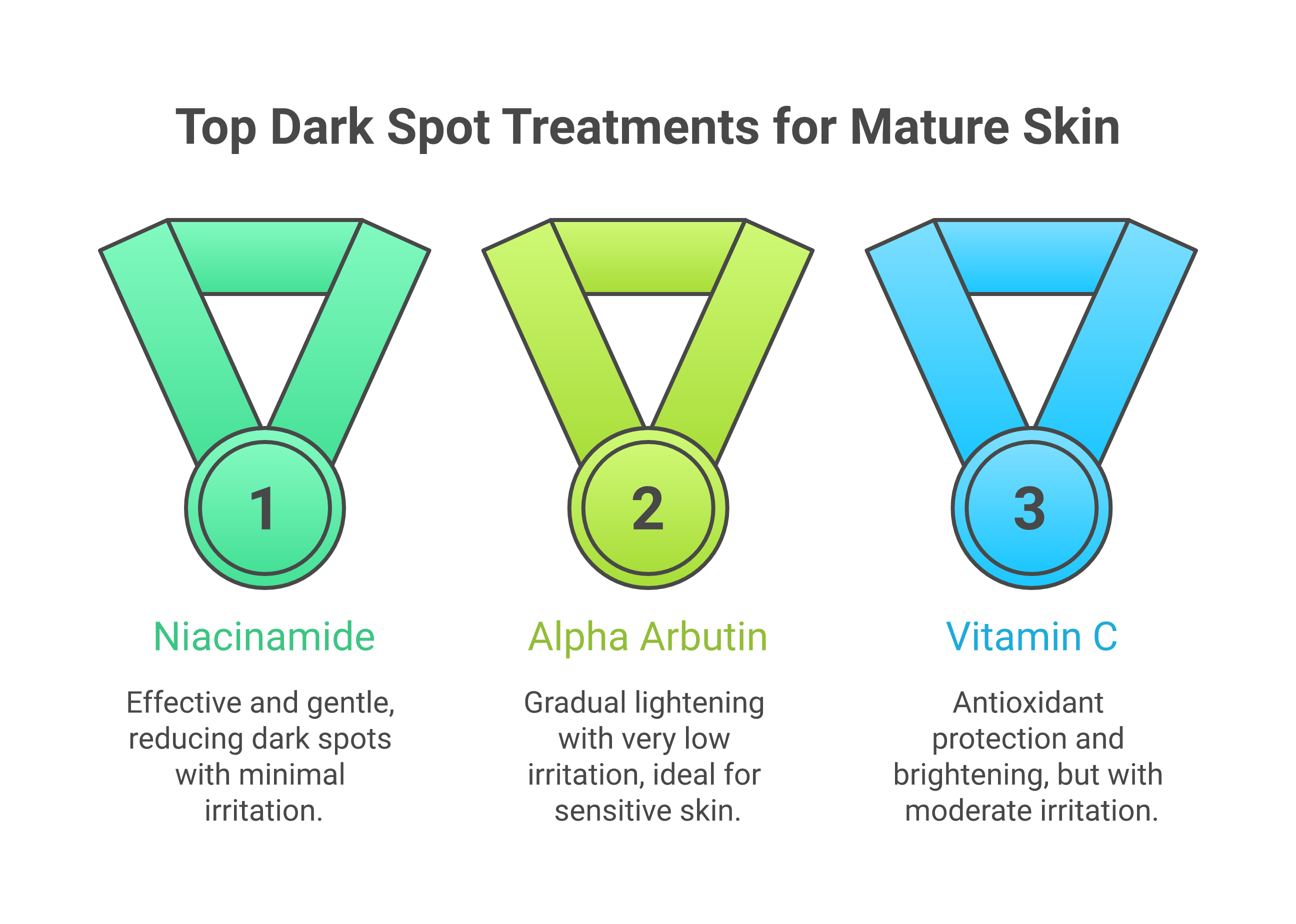
1. Alpha Arbutin (1-2%)
Alpha arbutin is a natural derivative of hydroquinone that inhibits tyrosinase, the enzyme responsible for melanin production. A 2020 study in the Journal of Cosmetic Dermatology found that 1% alpha arbutin reduced hyperpigmentation by 34% over 12 weeks. Unlike hydroquinone, it does not thin the skin further or cause rebound darkening. I consider it the single best starting ingredient for anyone over 60 because it works without irritation.
2. Niacinamide (5%)
Niacinamide (vitamin B3) blocks the transfer of melanosomes from melanocytes to keratinocytes. A 2013 study published in the British Journal of Dermatology showed that 5% niacinamide reduced hyperpigmentation by 35-68% in patients over 8 weeks. It also strengthens the skin barrier, a major benefit for mature skin that loses moisture more easily. No irritation, no sun sensitivity, and it plays well with every other active on this list.
3. Vitamin C (L-Ascorbic Acid, 10-20%)
Vitamin C is an antioxidant that interrupts melanin synthesis at multiple points. A 2017 review in the Journal of Clinical and Aesthetic Dermatology confirmed its efficacy for photodamaged skin. The catch for mature skin: L-ascorbic acid at high concentrations (above 15%) can sting or cause redness on thinner, sensitive skin. I usually recommend starting at 10% and working up. Ascorbyl glucoside is a gentler alternative if pure L-ascorbic acid proves too harsh.
4. Retinol (0.25-0.5%)
Retinol accelerates cell turnover, pushing pigmented cells to the surface faster. It also stimulates collagen, which addresses fine lines alongside dark spots. But retinol is a double-edged tool for patients over 60. Too high a concentration (1%+) on thin, dry skin leads to peeling, redness, and a compromised moisture barrier. Start at 0.25%, use it every third night, and build up over 6-8 weeks. A 2015 study in the Journal of Drugs in Dermatology confirmed that 0.5% retinol significantly improved photodamage signs in patients with a mean age of 59.
5. Tranexamic Acid (2-5%)
Tranexamic acid is a newer player in the dark spot space. It works by blocking the interaction between keratinocytes and melanocytes. A 2020 randomized controlled trial published in the Journal of the American Academy of Dermatology found that topical 5% tranexamic acid reduced melasma severity scores by 49% over 12 weeks. It is especially effective for hormonal pigmentation and does not cause photosensitivity, which makes it a strong option for mature skin.
Ingredients to Avoid or Use with Caution Over 60
Some popular brightening ingredients carry higher risk for aging skin:
- Hydroquinone (4%+ prescription strength). The AAD recognizes hydroquinone as effective, but long-term use (beyond 12 weeks) can cause ochronosis, a paradoxical permanent darkening. Short courses under dermatologist supervision are fine. Over-the-counter 2% formulas are safer but slower.
- Glycolic acid at high percentages (above 10%). Alpha-hydroxy acids exfoliate well, but mature skin with a thinner barrier can develop chemical burns from strong peels. Stick to 5-8% for daily use.
- Kojic acid. Effective but a known contact sensitizer. About 2.5% of patch-test patients react to kojic acid, according to a 2014 study in Dermatitis. If you have sensitive or rosacea-prone skin, skip it.
Ingredient Comparison Table: Dark Spot Correctors for Mature Skin
| Ingredient | How It Works | Efficacy (Clinical Data) | Irritation Risk (Over 60) | Time to Results |
|---|---|---|---|---|
| Alpha Arbutin (1-2%) | Inhibits tyrosinase enzyme | 34% reduction in 12 weeks | Very low | 8-12 weeks |
| Niacinamide (5%) | Blocks melanosome transfer | 35-68% reduction (Journal of Cosmetic Dermatology, 2011) in 8 weeks | Very low | 8-12 weeks |
| Vitamin C (10-20%) | Antioxidant, inhibits melanin synthesis | Significant improvement in photodamage | Moderate (stinging possible) | 8-16 weeks |
| Retinol (0.25-0.5%) | Accelerates cell turnover | Significant improvement at 0.5% | Moderate to high (start low) | 12-24 weeks |
| Tranexamic Acid (2-5%) | Blocks keratinocyte-melanocyte interaction | 49% reduction in melasma severity | Very low | 8-12 weeks |
| Hydroquinone (2-4%) | Directly inhibits melanin production | Most studied, gold standard | Moderate (limit to 12 weeks) | 4-8 weeks |
How to Build a Dark Spot Routine for Skin Over 60
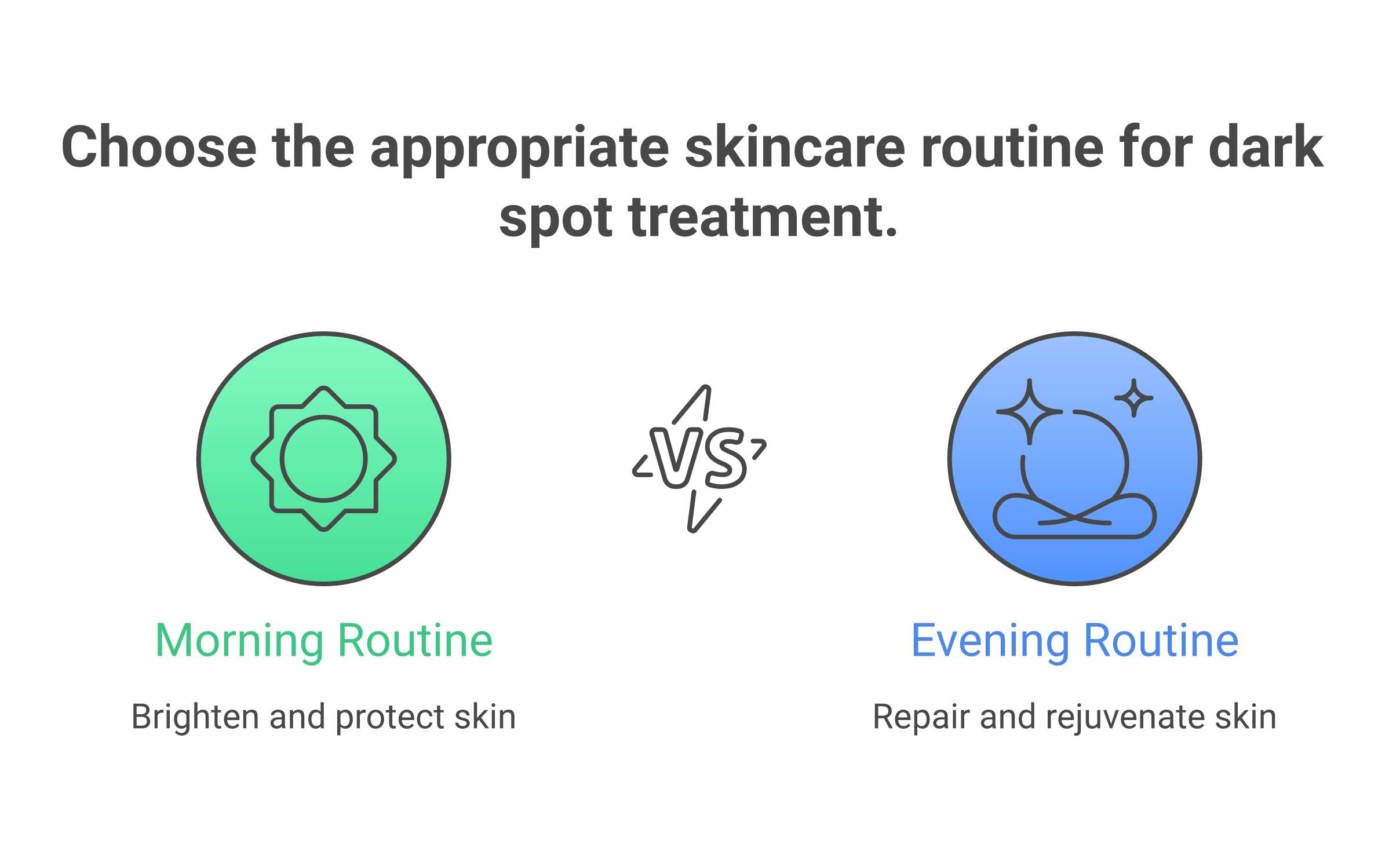
I tell my patients to keep it simple. More products do not mean faster results. In fact, overloading mature skin with actives often triggers inflammation, which can cause post-inflammatory hyperpigmentation and make spots worse.
Morning Routine
- Gentle cleanser (no foaming sulfates, which strip already-dry skin).
- Vitamin C serum (10-15%) for antioxidant protection and melanin inhibition.
- Moisturizer with niacinamide to reinforce the skin barrier and block melanosome transfer.
- Broad-spectrum SPF 30+ sunscreen. Non-negotiable. The UC Davis Health dermatology department recommends tinted mineral sunscreen for mature skin because iron oxides also block visible light, which triggers pigmentation in deeper skin tones.
Evening Routine
- Gentle cleanser (same as morning, or an oil-based cleanser if you wear makeup).
- Dark spot corrector with alpha arbutin and/or tranexamic acid. This is where a product like PRO60+ DeepRadiance Renew fits. It combines multiple melanin-targeting pathways in a single step, which simplifies the routine and reduces the chance of ingredient conflicts.
- Retinol (0.25-0.5%) every 2-3 nights once your skin adjusts. Alternate nights with your dark spot corrector if irritation occurs.
- Rich moisturizer or facial oil to lock in hydration while actives work overnight.
This routine covers all the bases: melanin inhibition (alpha arbutin, niacinamide, vitamin C), accelerated turnover (retinol), UV protection (SPF), and barrier support (moisturizer). You do not need seven separate serums.
What About Professional Treatments?
Topical products work. But if you want faster results, professional treatments can speed things up. The AAD reports that laser therapy can treat age spots in one or two sessions with longer-lasting results than topical creams alone.
Here is what the clinical data shows for each option:
- Microdermabrasion: The AAD cites a study where 40% of patients saw their age spots completely disappear with microdermabrasion alone. When combined with a chemical peel, that number rose to 50%.
- Chemical peels: In the same AAD-cited research, 47% of patients receiving a chemical peel achieved 50% fading of their age spots.
- Laser and IPL: These destroy melanin-producing cells without damaging the skin surface. One to two sessions is typical. Cost ranges from $200-$500 per session depending on treatment area.
- Cryotherapy: A dermatologist applies liquid nitrogen for 5 seconds or less, according to the Mayo Clinic. Effective for individual spots but can cause temporary darkening in darker skin tones.
I recommend topical treatment as the foundation and professional treatments as an accelerator if budget and access allow. Always start with a board-certified dermatologist evaluation, because what looks like an age spot could be actinic keratosis or melanoma.
PRO60+ DeepRadiance Renew: Why I Recommend It for Patients Over 60
Full transparency: I am the Chief Medical Director at SANESolution, and PRO60+ DeepRadiance Renew is our formulation. That said, I would not put my name on a product that did not align with the clinical evidence above.
Here is why it works for mature skin specifically:
- Multi-pathway approach. Rather than relying on a single active, PRO60+ DeepRadiance Renew targets melanin production through multiple mechanisms. This mirrors the clinical literature, which consistently shows better outcomes from combination therapy versus single-ingredient products.
- Formulated for thinner, drier skin. We avoided high-concentration acids and harsh exfoliants that younger-skin formulas rely on. The delivery system accounts for the increased penetration that comes with thinner mature epidermis.
- No hydroquinone. We specifically excluded hydroquinone to avoid the 12-week usage limit and the risk of ochronosis with long-term use.
You can learn more and order PRO60+ DeepRadiance Renew here ($49).
But regardless of which product you choose, the ingredients matter more than the brand. Look at the label. If it contains alpha arbutin, niacinamide, or tranexamic acid at clinically effective concentrations, it will work.
5 Mistakes That Make Dark Spots Worse After 60
I see these mistakes regularly in my practice:
- Skipping sunscreen. Every dark spot treatment is pointless without daily SPF 30+. UV exposure triggers new melanin production within minutes, and it undoes weeks of progress. The AAD recommends reapplying every 2 hours when outdoors.
- Using too many actives at once. Layering vitamin C, retinol, AHAs, and a brightening serum in the same routine overwhelms mature skin. The resulting inflammation creates new pigmentation. Pick two brightening actives maximum and rotate them.
- Expecting overnight results. Cell turnover at 60+ takes 40-60 days per cycle. You need at least two full cycles (8-12 weeks) of consistent use before judging whether a product works.
- Picking or scrubbing spots. Physical exfoliation (scrub brushes, apricot scrubs) creates micro-tears in thin skin and triggers post-inflammatory hyperpigmentation. Chemical exfoliation at gentle concentrations is safer.
- Ignoring the hands and chest. These areas get as much sun exposure as the face but are often neglected. Apply your dark spot corrector and SPF to hands, chest, and forearms too.
How Long Does It Really Take to See Results?
Honest answer: longer than most product labels claim.
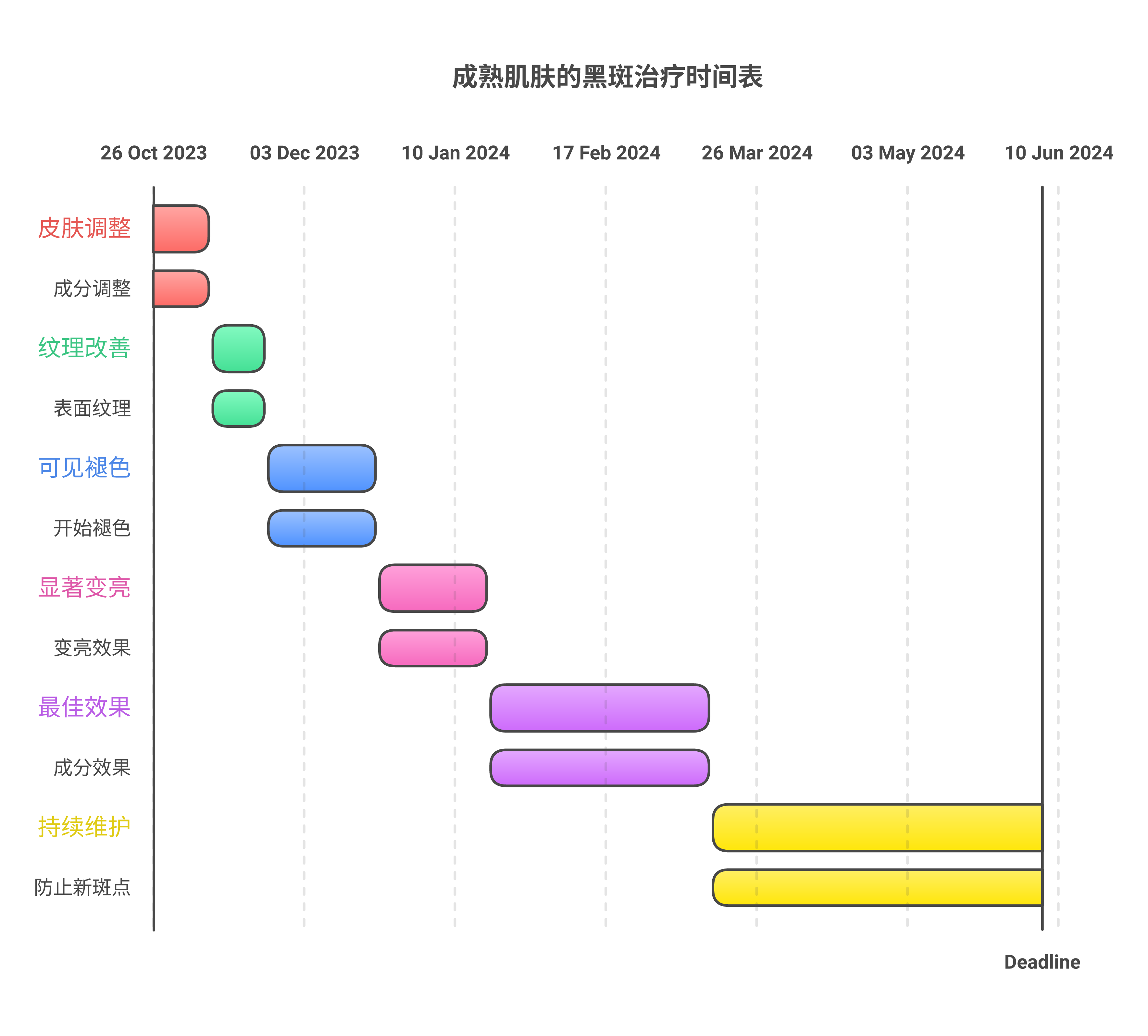
For topical treatments on skin over 60, here is a realistic timeline based on clinical data and my patient observations:
- Weeks 1-4: No visible change. The product is working at the cellular level, but pigmented cells have not yet reached the surface. Do not quit.
- Weeks 4-8: Slight softening of spot edges. Spots may appear lighter in certain lighting. Skin texture often improves before pigmentation does.
- Weeks 8-12: Noticeable fading in most patients. This is where consistent users pull ahead of those who applied sporadically.
- Weeks 12-24: Maximum results from topical treatment. Deep spots may not disappear entirely but should fade by 30-60%, depending on the ingredient and concentration.
Professional treatments (laser, cryotherapy) produce faster results, typically within 2-4 weeks of a single session. But they cost more and require a dermatologist visit.
When to See a Dermatologist Instead of Self-Treating
Not every dark spot is an age spot. The AAD recommends seeing a board-certified dermatologist if any spot:
- Has changed in size, shape, or color recently
- Has irregular or ragged borders
- Is multicolored (tan, brown, black, red, or blue in one spot)
- Is raised, bleeds, or itches
- Is new and appeared suddenly in a cluster
These could be signs of actinic keratosis (a precancerous lesion) or melanoma. A dermatologist can perform a dermoscopy or biopsy to rule out anything serious. Early detection of melanoma has a 99% five-year survival rate when caught at stage I, according to the American Cancer Society.
Frequently Asked Questions
What is the best dark spot remover for mature skin over 60?
The best dark spot remover for mature skin combines alpha arbutin, niacinamide, or tranexamic acid with gentle delivery systems designed for thinner, drier aging skin. Avoid products with high-concentration acids or hydroquinone for long-term use. PRO60+ DeepRadiance Renew was specifically formulated for adults 60 and older.
Does retinol help with age spots on older skin?
Yes, retinol at 0.25-0.5% concentration can help fade age spots by accelerating cell turnover. A 2015 study in the Journal of Drugs in Dermatology confirmed that 0.5% retinol improved photodamage signs in patients with a mean age of 59. Start at a low concentration every third night to avoid irritation on mature skin.
How long does it take to fade dark spots after 60?
Most patients see noticeable fading between 8 and 12 weeks of consistent daily use. Full results typically appear at 12-24 weeks because cell turnover slows with age (40-60 days per cycle after 60, compared to 28 days in younger skin). Professional treatments like laser can produce results in 2-4 weeks.
Is hydroquinone safe for older adults?
Hydroquinone is effective but should be used under dermatologist supervision for no more than 12 continuous weeks. Prolonged use carries a risk of ochronosis, a permanent bluish-gray discoloration. Over-the-counter 2% formulas are safer than prescription 4% for unsupervised use, but alternatives like alpha arbutin offer similar benefits without the time restriction.
Can you remove age spots at home without seeing a dermatologist?
Mild to moderate age spots can often be faded at home with consistent use of evidence-based ingredients (alpha arbutin, niacinamide, vitamin C, retinol). However, you should see a dermatologist first to confirm that your spots are benign age spots and not actinic keratosis or melanoma. The AAD recommends a professional evaluation before self-treating.
What SPF should I use to prevent new dark spots?
SPF 30 minimum, broad-spectrum (UVA and UVB protection). The UC Davis Health dermatology department recommends tinted mineral sunscreens for mature skin because iron oxides also block visible light, which can trigger pigmentation. Reapply every 2 hours when outdoors. Without daily sunscreen, no dark spot treatment will produce lasting results.
Are dark spot correctors or professional treatments better for skin over 60?
Both work, and they are not mutually exclusive. Topical correctors cost less ($30-$60 per month) and can be used indefinitely. Professional treatments (laser, chemical peels, microdermabrasion) deliver faster results but cost $200-$500 per session. The AAD notes that laser treatments can clear age spots in one or two sessions with longer-lasting results than creams alone. I recommend starting with a topical corrector and adding professional treatments if needed.
The Bottom Line
Dark spots on mature skin are stubborn, but they are treatable. The clinical evidence points to alpha arbutin, niacinamide, tranexamic acid, and low-dose retinol as the most effective and safest options for adults over 60. Avoid hydroquinone for extended use, skip harsh physical scrubs, and never skip sunscreen.
Whether you choose PRO60+ DeepRadiance Renew or another evidence-based formula, consistency is what matters most. Apply daily, protect with SPF, and give it at least 8-12 weeks. Your skin took decades to accumulate these spots. Give it a few months to clear them.
Dr. Matthew Olesiak, MD, is the Chief Medical Director at SANESolution. He specializes in evidence-based skincare for adults 60+ and formulates the PRO60+ product line.
Related reading: How to Get Rid of Dark Spots on Face After 60