

Best Supplements for Aging Skin After 60 (What Science Says)
If you’re over 60 and noticing more wrinkles, dryness, or sagging, you’re not imagining it. Collagen production drops by roughly 1% each year after age 20, and by 60, your skin has lost a significant share of the structural proteins that keep it firm and hydrated. The right supplements can help slow that decline from the inside out.
I’ve spent years reviewing the clinical research on skin-aging supplements, and the honest truth is that most “anti-aging miracle” products don’t hold up to scrutiny. But a handful of supplements do have real evidence behind them. Here’s what the science actually supports, with specific dosages, study findings, and practical advice for people over 60.
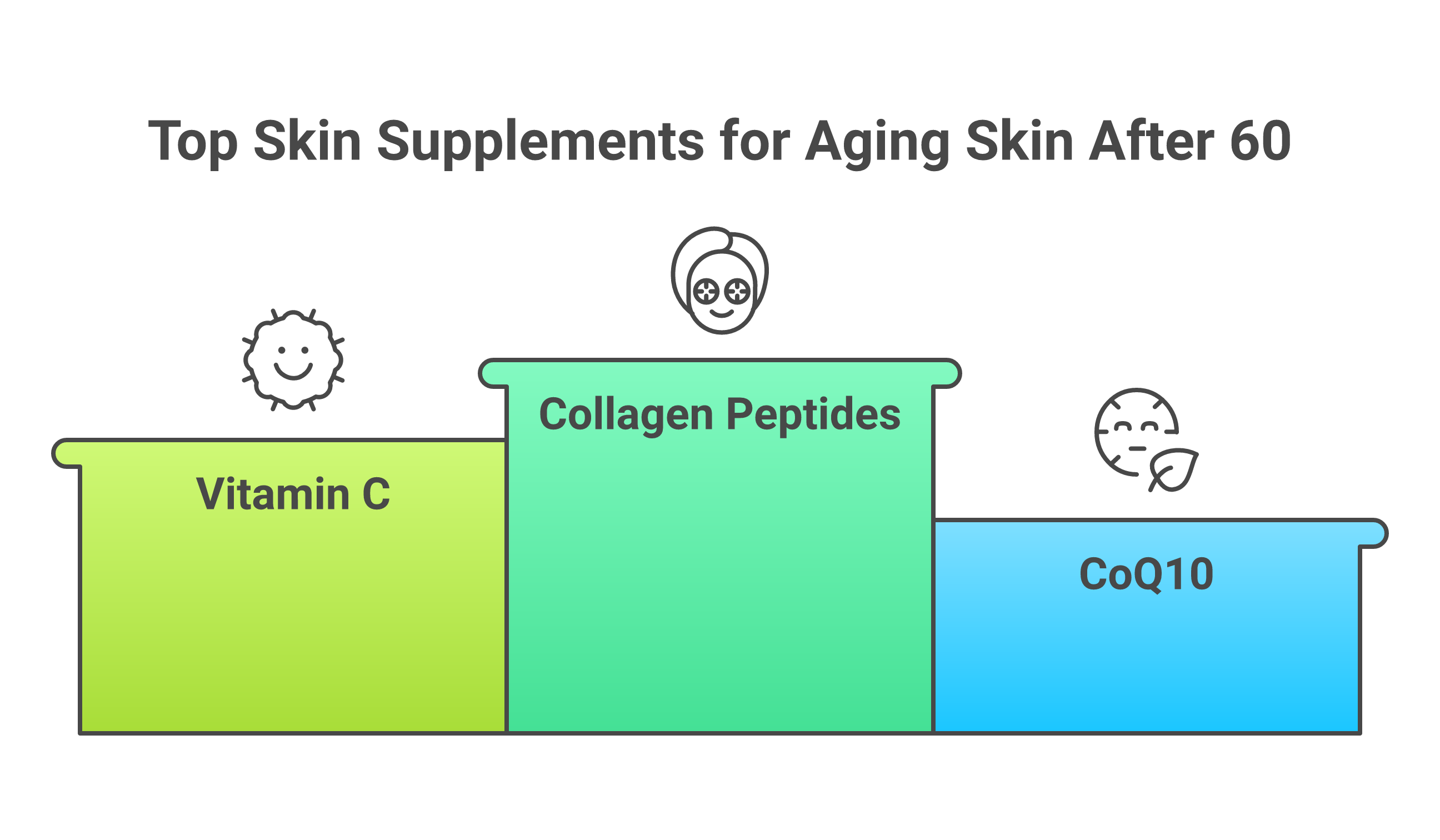
1. Collagen Peptides: The Strongest Evidence for Aging Skin
Collagen is the most abundant protein in your skin. It provides the scaffolding that keeps skin firm, smooth, and resilient. After 60, your body produces far less of it, and existing collagen fibers become fragmented.
A 2023 systematic review and meta-analysis published in Nutrients analyzed 26 randomized controlled trials with 1,721 total participants. The findings were clear: hydrolyzed collagen supplementation significantly improved both skin hydration (effect size 0.63, p < 0.00001) and skin elasticity (effect size 0.72, p < 0.00001). Fish-derived collagen showed the best results for hydration specifically.
Dosage that worked in studies: 2.5 to 10 grams per day of hydrolyzed collagen peptides, taken for 8 to 12 weeks. Most studies used the 2.5 to 5 gram range. Look for hydrolyzed or “peptide” forms, which are broken into smaller molecules your body can absorb more easily.
What to look for: Marine (fish) collagen or bovine collagen with types I and III, which are the dominant collagen types in skin. SANE’s Collagen Complete combines multiple collagen sources with vitamin C to support absorption.
One important note on the research: the 2023 meta-analysis flagged that studies funded by supplement companies tended to show stronger results than independent studies. The benefits are real, but keep your expectations grounded. You’re supporting skin health, not reversing 30 years of aging.
2. Vitamin C: The Collagen Production Catalyst
Your body cannot produce collagen without vitamin C. Period. This vitamin acts as a required cofactor in the enzymatic process that stabilizes collagen molecules. Without enough vitamin C, even the best collagen supplement won’t do its full job.
Beyond collagen synthesis, vitamin C is a potent antioxidant that neutralizes free radicals from UV exposure and pollution. A study in the American Journal of Clinical Nutrition found that higher vitamin C intake was associated with a lower likelihood of wrinkled appearance and skin dryness in middle-aged women.
Dosage supported by research: 500 to 1,000 mg per day orally. Topical vitamin C (at 5 to 10% concentration) provides direct skin benefits as well. A 5% ascorbic acid cream applied daily for 6 months significantly reduced deep wrinkles and improved texture in clinical testing.
Practical tip: Take vitamin C alongside your collagen supplement. The combination is more effective than either one alone because vitamin C directly enables the collagen-building process in your body.
3. CoQ10 (Coenzyme Q10): Cellular Energy for Skin Repair
CoQ10 is an antioxidant your body produces naturally, but levels decline steadily from your 20s through your 60s. It sits inside your mitochondria and powers the cellular energy production that skin cells need to repair and regenerate.
A 2020 randomized, placebo-controlled trial published in Nutrients tested 50 mg of water-soluble CoQ10 combined with 4,000 mg of fish collagen daily for 12 weeks in women aged 40 to 65. The treatment group saw a 16.1% increase in skin density (p < 0.005) and a 19.4% reduction in periorbital wrinkle area (p < 0.0001) compared to placebo.
Dosage from clinical trials: 50 to 200 mg per day of CoQ10 in its ubiquinol form (the active, reduced version). The water-soluble form used in studies showed better absorption than standard fat-soluble CoQ10.
Why it matters after 60: Your skin cells’ mitochondria are less efficient at producing energy as you age. CoQ10 supplementation gives those cells the fuel they need to maintain turnover and repair. A review in the Journal of Clinical and Aesthetic Dermatology (2024) confirmed that both oral and topical CoQ10 reduce oxidative stress markers in aging skin.
4. Hyaluronic Acid: Internal Hydration for Dry, Aging Skin
Hyaluronic acid (HA) is a molecule your skin produces to hold water. One gram of HA can hold up to six liters of water. But HA production drops as you age, which is a major reason skin feels drier and thinner after 60.
A 2025 randomized, double-blind, placebo-controlled trial published in Scientific Reports tested oral sodium hyaluronate at 120 mg per day for 12 weeks in 150 healthy adults. The HA group showed significant improvements in skin hydration, barrier function, and signs of aging compared to placebo.
An earlier 2023 double-blind trial confirmed these findings: oral HA significantly promoted skin hydration after 2 to 8 weeks in both younger and older participants. Skin tone improved after 4 to 8 weeks, and epidermal thickness increased at the 12-week mark.
Dosage from studies: 120 to 200 mg per day of oral hyaluronic acid. The 120 mg dose is the most commonly tested and well-supported amount.
Good to know: Oral HA won’t plump your skin the way injectable fillers do, but it does improve overall moisture levels from within. If dryness and flaking are your primary concern, this is one of the most targeted supplements you can take.
5. Curcumin (Turmeric Extract): Anti-Inflammatory Skin Protection
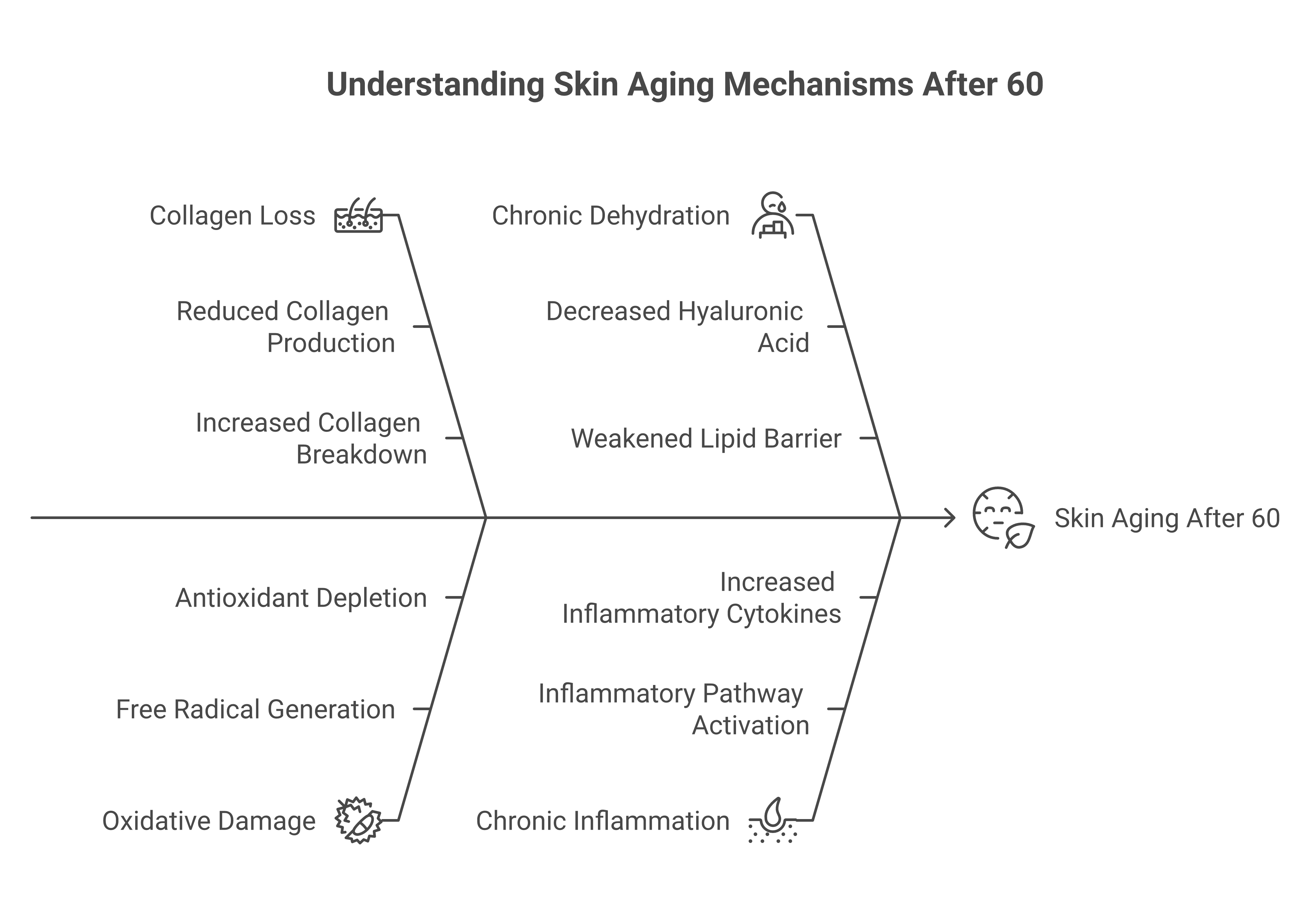
Chronic low-grade inflammation accelerates skin aging. Curcumin, the active compound in turmeric, is one of the most studied natural anti-inflammatory agents available.
A 2022 clinical trial with 60 participants tested a combination of oral curcumin (70 mg daily) plus topical curcumin cream (0.02%) for 4 weeks on photoaged skin. The combination group saw an 11.2% improvement in skin firmness (compared to 5.5% with topical alone), a 12.7% gain in elasticity, and a 16.5% reduction in forehead wrinkle volume. Collagen density also increased.
Dosage from research: 70 to 500 mg per day of curcumin extract. Standard curcumin absorbs poorly, so look for formulations with piperine (black pepper extract) or phytosome technology that increase bioavailability by 20 to 30 times.
Why seniors should consider it: Curcumin blocks elastase, an enzyme that breaks down elastin (the protein that lets skin snap back into shape). It also modulates inflammatory pathways involved in chronic skin damage. If you already take a turmeric supplement for joint health, your skin is likely benefiting too.
6. Omega-3 Fatty Acids: Skin Barrier and Moisture Support
Omega-3s (EPA and DHA) are anti-inflammatory fats that strengthen your skin’s lipid barrier, the outer layer that locks in moisture and keeps irritants out. After 60, that barrier weakens, leading to dryness, redness, and sensitivity.
Clinical trials have tested omega-3 supplementation at various dosages for skin outcomes. A trial using 1 gram of fish oil daily (460 mg EPA and 380 mg DHA) found measurable improvements in skin barrier function. Higher-dose studies (2,400 to 4,200 mg of combined EPA and DHA) showed reductions in inflammatory skin markers, though these were primarily tested in conditions like psoriasis.
Dosage supported by evidence: 1 to 2 grams of combined EPA and DHA per day from fish oil or algae-based supplements. The American Heart Association recommends at least 500 mg of EPA/DHA daily for general health, and skin benefits appear at or above that threshold.
Additional benefit: Omega-3s also support cardiovascular health and cognitive function, making them one of the most broadly useful supplements for anyone over 60.
7. Vitamin E: Fat-Soluble Antioxidant Shield
Vitamin E is the primary fat-soluble antioxidant in your skin. It sits in your cell membranes and protects them from oxidative damage caused by UV radiation and environmental pollutants.
A systematic review in Frontiers in Pharmacology (2022) examined the effects of tocotrienols (a form of vitamin E) on aging skin and found evidence of photoprotective and anti-wrinkle effects. Clinical trials using 400 IU of vitamin E daily for 8 months showed reductions in skin lesions and improvements in skin texture.
Dosage from research: 150 to 400 IU per day of mixed tocopherols or tocotrienols. The recommended dietary allowance for adults is 15 mg (about 22 IU), but studies showing skin benefits used higher supplemental doses.
A caution for seniors: Vitamin E at doses above 400 IU daily may increase bleeding risk, especially if you take blood thinners like warfarin. Stick to the 150 to 400 IU range and discuss with your doctor if you’re on anticoagulant medication.
Supplement Comparison Table: Quick Reference
| Supplement | Primary Skin Benefit | Dosage Range | Time to See Results | Evidence Strength |
|---|---|---|---|---|
| Collagen Peptides | Firmness, elasticity, hydration | 2.5-10 g/day | 4-12 weeks | Strong (26 RCTs) |
| Vitamin C | Collagen synthesis, antioxidant | 500-1,000 mg/day | 4-8 weeks | Strong |
| CoQ10 | Wrinkle reduction, skin density | 50-200 mg/day | 8-12 weeks | Moderate (small trials) |
| Hyaluronic Acid | Hydration, barrier function | 120-200 mg/day | 2-12 weeks | Moderate-Strong |
| Curcumin | Anti-inflammatory, elasticity | 70-500 mg/day | 4-8 weeks | Moderate |
| Omega-3 (EPA/DHA) | Barrier repair, anti-inflammatory | 1-2 g/day | 8-12 weeks | Moderate |
| Vitamin E | Photoprotection, antioxidant | 150-400 IU/day | 8+ weeks | Moderate |
How to Build Your Anti-Aging Supplement Stack After 60
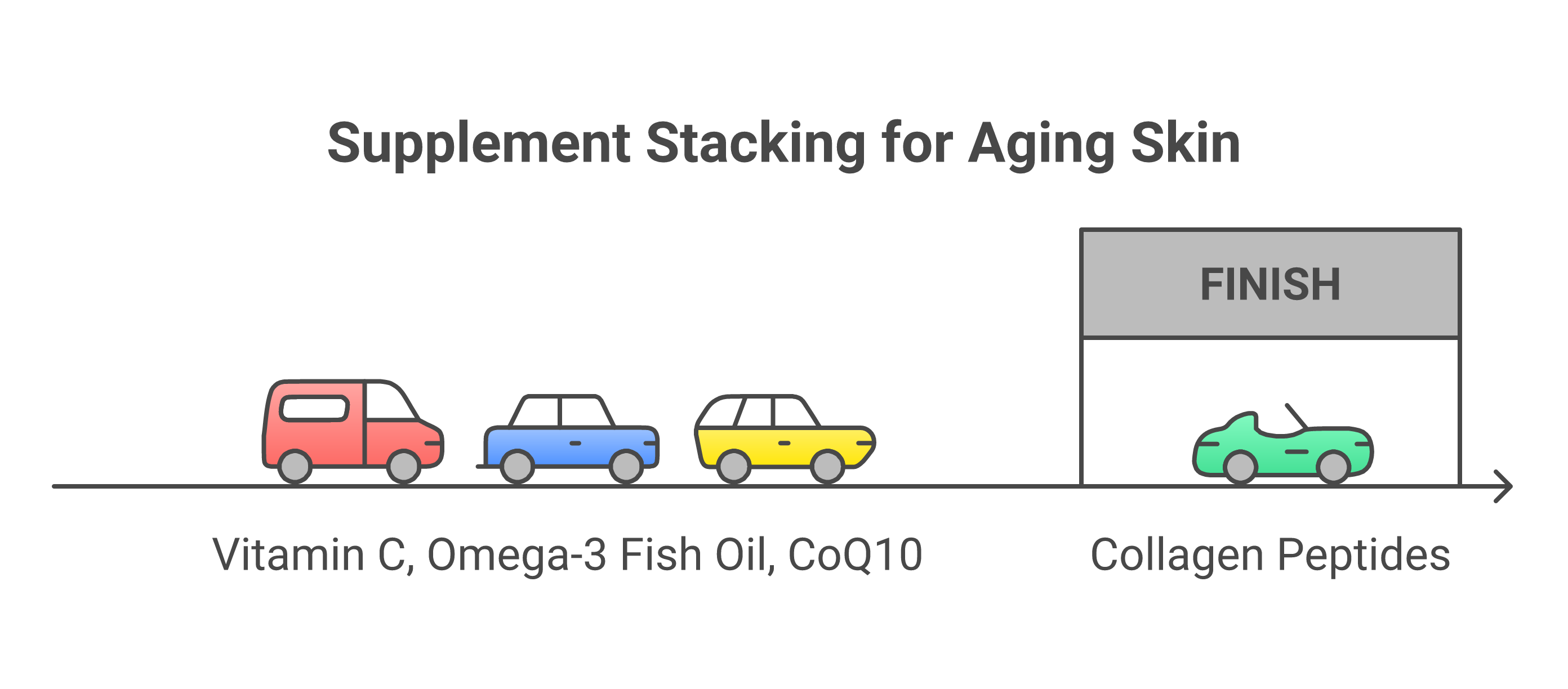
You don’t need all seven of these. Here’s how I’d prioritize based on the evidence:
Start here (best evidence, broadest benefits):
- Collagen peptides (2.5 to 5 g/day) plus vitamin C (500 mg/day). These two work together, and the collagen research is the most convincing.
- Omega-3s (1 g EPA/DHA daily). You’re likely already taking these for heart and brain health. Your skin benefits as a side effect.
Add next (targeted concerns):
- Hyaluronic acid (120 mg/day) if dryness is your biggest issue.
- CoQ10 (100 to 200 mg/day) if you’re focused on wrinkle depth and skin firmness.
Consider last (supporting role):
- Curcumin (250 to 500 mg/day with piperine) if you also have joint inflammation or redness-prone skin.
- Vitamin E (200 IU/day) if you get significant sun exposure and want extra antioxidant protection.
SANE’s PRO60+ collection includes several of these ingredients in formulations designed for people over 60. Their retinol vs. Collagen comparison is also worth reading if you’re deciding between topical and oral approaches.
What the Research Doesn’t Tell You (Yet)
I want to be straightforward about the limits of the current evidence:
- Most studies are short. The longest collagen trials run 12 weeks. We don’t have good data on what happens after a year or more of supplementation.
- Sample sizes are small. The CoQ10 trial I cited had only 31 participants who completed it. That’s promising but not definitive.
- Funding matters. The 2023 collagen meta-analysis noted that industry-funded studies showed stronger effects than independent ones. The benefits appear real, but the magnitude may be somewhat inflated.
- Supplements won’t replace sun protection. UV damage is the single biggest driver of visible skin aging. No supplement can undo the effects of skipping sunscreen.
- Individual results vary. Your genetics, diet, sun history, and overall health all influence how much benefit you’ll see.
For a complete guide to anti-aging products in your 60s, including both supplements and topical treatments, check our full shopping guide.
Topical Options That Pair Well With Supplements
Oral supplements work from the inside. Topical products work from the outside. Using both gives your skin support on two fronts.
Retinol is the gold standard topical anti-aging ingredient. It accelerates cell turnover, boosts collagen production in the skin’s outer layers, and reduces fine lines. If you’re over 60 and new to retinol, start with a low concentration (0.25 to 0.5%) and apply every other night. Our beginner-friendly retinol guide walks through the process.
Eye creams with peptides target the thinner skin around your eyes, where aging shows first. Look for products with palmitoyl peptides or ceramides. See our picks for the best eye creams for wrinkles over 60.
Dark spot treatments address hyperpigmentation, which becomes more common after 60 due to accumulated sun damage. Ingredients like niacinamide, vitamin C serums, and alpha arbutin can help even skin tone. We cover the best options in our dark spot remover guide for mature skin.
Related Supplement Guides
Explore more evidence-based supplement and ingredient guides:
- Collagen Peptides for Seniors Guide
- Does Collagen Really Work?
- Collagen vs Glucosamine
- Joint Supplements That Work
Frequently Asked Questions
What is the best supplement for aging skin after 60?
Hydrolyzed collagen peptides have the strongest clinical evidence. A 2023 meta-analysis of 26 randomized controlled trials (1,721 participants) found that 2.5 to 10 grams per day for 8 to 12 weeks significantly improved skin hydration and elasticity. Pairing collagen with vitamin C (which supports collagen synthesis) gives you the best results.
How long does it take for skin supplements to work?
Most clinical trials show measurable improvements starting at 4 to 8 weeks. Collagen peptides improved skin hydration after 4 weeks in one study. Hyaluronic acid supplements showed hydration gains within 2 to 8 weeks. Full results typically appear at the 12-week mark for most supplements.
Can you take collagen and hyaluronic acid together?
Yes. These two supplements target different mechanisms. Collagen provides structural proteins that support skin firmness, while hyaluronic acid draws moisture into skin cells. No clinical interactions have been reported, and some combination products include both ingredients.
Are anti-aging supplements safe for seniors on medication?
Most skin-focused supplements like collagen and hyaluronic acid have strong safety profiles. However, omega-3s can thin the blood and may interact with anticoagulants. Vitamin E at high doses (above 400 IU) may also increase bleeding risk. Curcumin can interact with blood thinners and diabetes medications. Always check with your doctor before adding supplements, especially if you take prescription medications.
Do collagen supplements actually reach the skin?
Research suggests they do. Hydrolyzed collagen peptides are broken down into small amino acids and dipeptides that are absorbed in the gut and distributed through the bloodstream. A 2015 study published in the Journal of Cosmetic Dermatology found that oral collagen peptide supplementation increased skin collagen density after just 4 weeks.
What vitamins help with wrinkles after 60?
Vitamin C (500 to 1,000 mg daily) supports collagen production and protects against UV damage. Vitamin E (150 to 400 IU daily) is a fat-soluble antioxidant that shields cell membranes from free radical damage. Vitamin A (as retinol, applied topically) accelerates cell turnover and reduces fine lines. Combining oral vitamins with topical retinol gives the best anti-wrinkle results.