

Skincare Routine for 60-Year-Old Woman (Step-by-Step)
A good skincare routine for a 60-year-old woman starts with a gentle cleanser, followed by a hydrating serum, targeted treatment (like retinol), rich moisturizer, and daily SPF 30+ sunscreen. At night, swap the sunscreen for a repair cream or eye treatment. Below, I walk through each step with specific product picks and the science behind why your skin needs them after 60.
Why Your Skin Changes After 60 (And What That Means for Your Routine)
Your skin at 60 is fundamentally different from what it was at 40. Collagen production drops about 1% per year starting in your mid-20s, according to research published in the American Journal of Pathology. By the time you reach 60, you’ve lost roughly 30-35% of your skin’s collagen. That means thinner skin, more visible wrinkles, and slower healing.
Estrogen levels also decline significantly after menopause. A study in the American Journal of Clinical Dermatology found that skin loses about 30% of its collagen in the first five years after menopause. This accelerates dryness, sagging, and the appearance of age spots.
Here is what you are working with in your 60s:
- Thinner skin that bruises and tears more easily
- Reduced oil production causing persistent dryness
- Slower cell turnover leading to dull, uneven tone
- Loss of fat pads under the skin, creating hollowness around the eyes and cheeks
- Accumulated sun damage showing up as dark spots and uneven pigmentation
The goal of your routine is not to fight aging. It is to support your skin’s barrier, boost hydration, and protect what you have. Every product you choose should serve one of those three purposes.
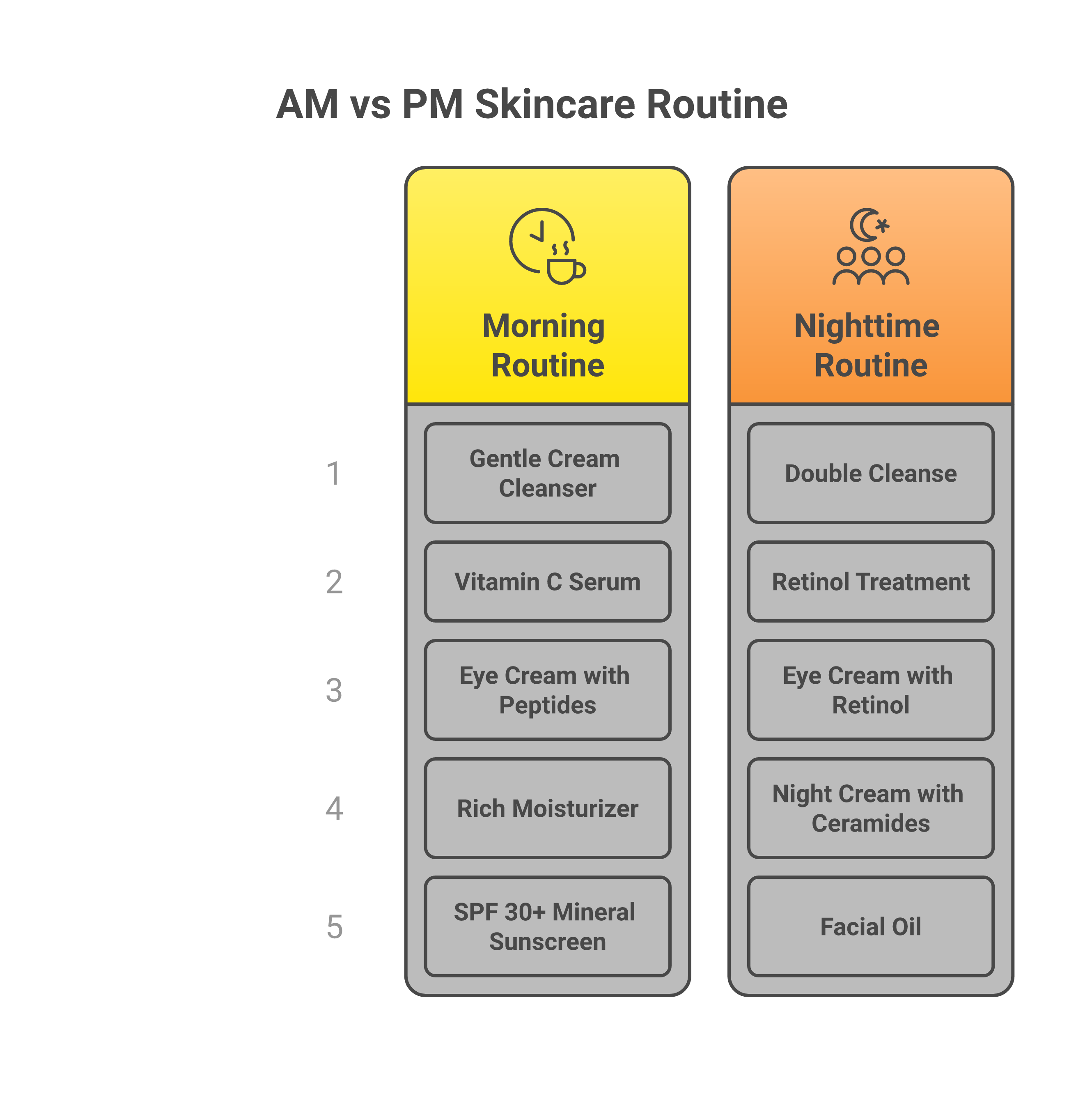
Your Complete Morning Skincare Routine (5 Steps)
Morning is about protection and hydration. You are preparing your skin to face environmental stressors like UV rays, pollution, and dry indoor air. Here is the exact order.
Step 1: Gentle Cleanser
Start with a cream or milk cleanser, not a foaming one. Foaming cleansers strip natural oils from skin that is already producing less sebum than it did a decade ago. The American Academy of Dermatology recommends using a gentle, fragrance-free cleanser for mature skin.
Look for cleansers with ceramides, glycerin, or hyaluronic acid. These ingredients clean without disrupting your skin’s moisture barrier. Avoid anything with sulfates, alcohol, or added fragrance.
How to apply: Use lukewarm water (never hot). Massage the cleanser in gentle circles for about 30 seconds. Pat dry with a soft towel. Do not rub.
Step 2: Hydrating Serum
This is the most impactful step in your morning routine. Serums contain smaller molecules that penetrate deeper than moisturizers alone. For women over 60, hyaluronic acid serums are the gold standard.
A clinical trial published in the Journal of Clinical and Aesthetic Dermatology found that topical hyaluronic acid improved skin hydration by up to 39% over 12 weeks. Participants also showed measurable improvements in elasticity and fine line depth.
I recommend applying your serum to slightly damp skin. This helps hyaluronic acid pull moisture into the skin rather than drawing it out.
Product pick: PRO60+ DeepRadiance Renew combines hydrating ingredients with dark spot correction, making it a strong multi-tasking option for morning use. If you are dealing with dark spots on your face after 60, a serum that addresses both hydration and pigmentation saves you a step.
Step 3: Eye Cream
The skin around your eyes is up to 10 times thinner than the rest of your face. It shows aging first, and it needs targeted care. A good eye cream for your 60s should contain peptides (to support collagen), caffeine (to reduce puffiness), and a hydrating base.
Apply eye cream with your ring finger using a gentle tapping motion. Your ring finger naturally applies the least pressure, which matters for delicate under-eye skin.
Product pick: PRO60+ Eye Lift & Wrinkle Repair is formulated specifically for mature skin around the eyes. For a deeper look at what to look for in an eye treatment, see our eye cream guide for women over 60.
Step 4: Moisturizer
After 60, you want a cream, not a lotion. Creams are thicker and create a better moisture barrier. The AAD recommends applying moisturizer within three minutes of washing your face to lock in hydration.
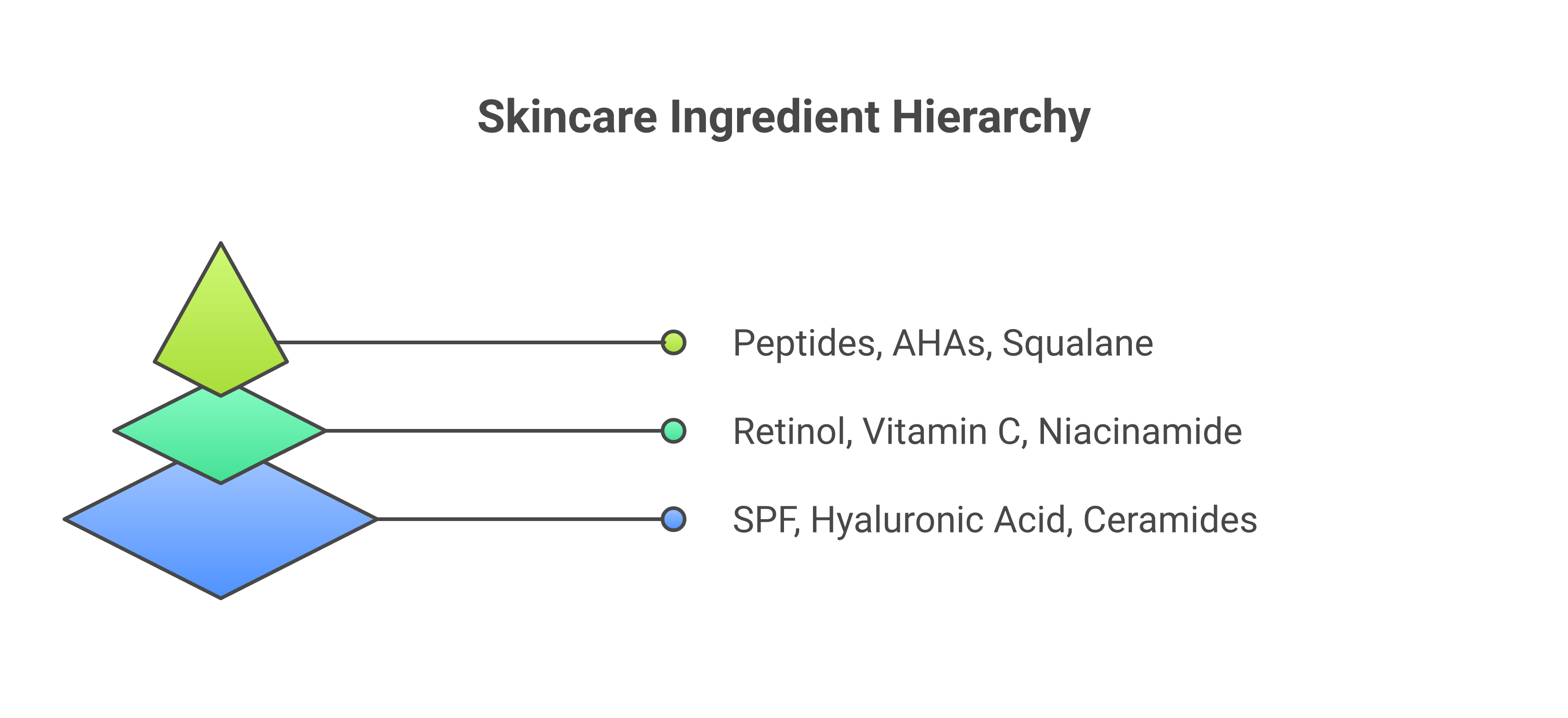
Key ingredients to look for: ceramides (rebuild the skin barrier), shea butter or squalane (deep hydration), niacinamide (strengthens skin and evens tone), and peptides (signal collagen production).
Apply to your face, neck, and chest. Your neck and decolletage age just as quickly as your face, and most women skip these areas entirely.
Step 5: Broad-Spectrum Sunscreen (SPF 30+)
This is non-negotiable. The Skin Cancer Foundation reports that daily sunscreen use reduces the risk of melanoma by 50% and squamous cell carcinoma by about 40%. UV damage does not stop accumulating just because you are older.
Choose a mineral sunscreen with zinc oxide or titanium dioxide if your skin is sensitive. Chemical sunscreens work well too, but mineral formulas tend to be gentler on mature skin. Apply a nickel-sized amount to your face and a similar amount to your neck.
Reapply every two hours if you are outdoors. If you wear makeup, SPF setting sprays or powder sunscreens make reapplication easier without ruining your look.
Your Complete Nighttime Skincare Routine (5 Steps)
Night is when your skin repairs itself. Cell turnover peaks between 11 PM and 4 AM, so what you apply before bed has more time to work. Your evening routine should focus on repair, renewal, and deep hydration.
Step 1: Double Cleanse
Start with an oil-based cleanser or micellar water to remove sunscreen, makeup, and surface pollution. Follow with your regular gentle cleanser. This two-step method ensures a clean canvas without over-stripping your skin.
If you did not wear makeup or sunscreen that day, a single cleanse is fine. The point is to remove everything without damaging your moisture barrier.
Step 2: Treatment Serum (Retinol)
Retinol is the single most studied anti-aging ingredient available without a prescription. A study published in Archives of Dermatology (JAMA Dermatology) tested 0.4% retinol on subjects with a mean age of 87 and found significant improvements in fine wrinkles after 24 weeks of use. The treatment also increased collagen production and glycosaminoglycan levels in the skin.
If you are new to retinol, start slowly. Use it two nights per week for the first month, then three nights per week, and gradually build to nightly use over 8-12 weeks. This approach minimizes irritation, flaking, and redness.
Important: Do not use retinol on the same night as glycolic acid or vitamin C serums. These combinations can cause irritation in mature skin. Alternate nights instead.
For women just starting out, check our beginner-friendly retinol guide for women over 60. And if you are wondering whether to prioritize retinol or collagen, our retinol vs. Collagen comparison breaks it down.
Step 3: Eye Cream (Night Formula)
You can use the same eye cream from your morning routine or switch to a richer formula at night. Night eye creams often contain retinol or peptide concentrations that might cause sensitivity in daylight.
Apply the same way, with your ring finger in gentle tapping motions along the orbital bone.
Step 4: Night Cream or Sleeping Mask
Your night cream should be richer than your daytime moisturizer. Look for ingredients like squalane, shea butter, ceramides, and peptides. A heavier formula is fine at night because you do not need to worry about how it layers under sunscreen or makeup.
Sleeping masks are another option for extra-dry nights or during winter months. Apply a thin layer over your night cream once or twice per week for an added moisture boost.
Step 5: Lip and Hand Treatment
Your lips and hands show age as much as your face. Apply a thick lip balm with SPF (for daytime carry) and an emollient hand cream with glycerin or shea butter. Keep both on your nightstand so this step becomes automatic.
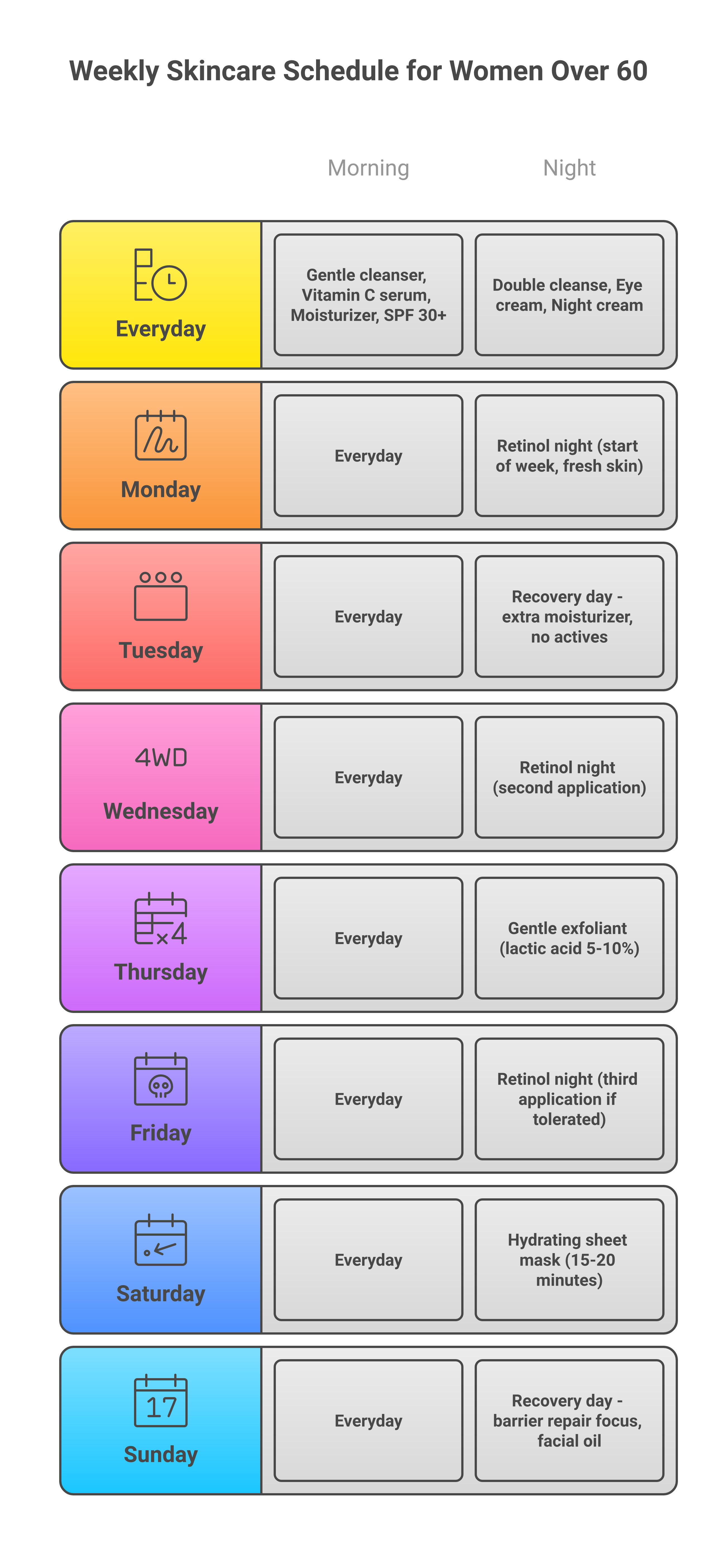
Weekly Add-Ons That Make a Difference
Your daily routine handles the basics. These weekly treatments address specific concerns that daily products cannot fully tackle.
Exfoliation (1-2 Times Per Week)
After 60, skip harsh scrubs entirely. Physical exfoliants with rough particles can create micro-tears in thinning skin. Instead, use a chemical exfoliant with lactic acid or polyhydroxy acids (PHAs). These dissolve dead skin cells without friction.
Lactic acid is particularly good for mature skin because it exfoliates and hydrates at the same time. Start with a low concentration (5-10%) and use it on a night when you are not using retinol.
Hydrating Sheet Mask (1-2 Times Per Week)
A hyaluronic acid or ceramide sheet mask gives your skin a concentrated dose of hydration. Use it after cleansing, before your serum. Leave it on for 15-20 minutes, then pat the remaining serum into your skin. Do not rinse.
Collagen Supplement (Daily)
While topical products work on the surface, collagen supplements support skin from the inside. A 2023 meta-analysis in The American Journal of Medicine reviewed randomized controlled trials and found that oral collagen supplementation improved skin hydration, elasticity, and wrinkle depth compared to placebo.
Product pick: PRO60+ Ageless Collagen Complete is designed specifically for women over 60 and targets skin, joint, and bone health. For more on choosing the right collagen, see our collagen supplement guide for women over 60.
Seasonal Adjustments: Winter vs. Summer Routine
Your routine should not stay exactly the same year-round. Your skin’s needs shift with temperature, humidity, and UV exposure levels.
Winter Adjustments
- Switch to a cream cleanser if you are using a gel. Cold air and indoor heating strip moisture quickly
- Add a facial oil as the last step in your nighttime routine (after moisturizer). Argan, rosehip, or marula oil work well for mature skin
- Use a humidifier in your bedroom. The AAD recommends keeping indoor humidity between 45% and 60% to prevent dry, itchy skin
- Apply lip balm with shea butter or beeswax multiple times daily
- Do not skip sunscreen. UV rays penetrate clouds and reflect off snow
Summer Adjustments
- Switch to a lighter moisturizer if your winter cream feels heavy or causes breakouts in humidity
- Increase SPF to 50+ and reapply every 90 minutes when outdoors
- Add an antioxidant serum with vitamin C in the morning, under sunscreen. Vitamin C provides additional UV defense and helps brighten sun spots
- Reduce retinol frequency if you are spending more time outdoors. Retinol increases sun sensitivity
- Keep a facial mist in your bag for midday hydration
Dark Spots and Uneven Skin Tone: Extra Steps
Hyperpigmentation is one of the most common skin concerns for women in their 60s. Years of sun exposure catch up, and hormonal changes from menopause can trigger melasma and age spots.
The most effective ingredients for dark spots in mature skin are:
| Ingredient | How It Works | Best For |
|---|---|---|
| Vitamin C (L-ascorbic acid) | Inhibits melanin production | Mild to moderate spots, overall brightening |
| Niacinamide | Prevents melanin transfer to skin cells | Sensitive skin, redness, uneven tone |
| Retinol | Speeds cell turnover to fade spots | Fine lines + pigmentation combo |
| Tranexamic acid | Reduces melanin clustering | Stubborn spots, melasma |
| Alpha arbutin | Blocks tyrosinase enzyme | All skin types, gentle option |
For a detailed breakdown of the best options, read our guide on the best dark spot removers for mature skin over 60.
Common Mistakes Women Over 60 Make With Skincare
After working with thousands of readers in this age group, these are the mistakes I see most often.
Using products designed for younger skin. Anti-acne cleansers, mattifying moisturizers, and high-concentration acids are too harsh for mature skin. Your products should prioritize hydration and barrier repair, not oil control.
Skipping sunscreen on cloudy days. Up to 80% of UV rays penetrate clouds, according to the Skin Cancer Foundation. Sunscreen is a daily non-negotiable, regardless of weather.
Over-exfoliating. Once or twice per week is enough after 60. Daily exfoliation damages your moisture barrier and increases sensitivity. If your skin feels tight, stinging, or red after exfoliating, you are doing it too often or using a product that is too strong.
Neglecting your neck and hands. Your face can look well-cared-for while your neck and hands tell a different story. Extend every product in your routine, including sunscreen, to your neck, chest, and the backs of your hands.
Expecting overnight results. Skin cell turnover slows significantly after 60. Most products need 8-12 weeks of consistent use before you see real changes. Stick with your routine for at least three months before deciding whether something works.
Building Your PRO60+ Routine: Product Recommendations
Here is how the PRO60+ line from SANE:MD fits into this routine. Each product was formulated for skin over 60, so you are not repurposing products made for a 30-year-old.
| Routine Step | Product | When to Use |
|---|---|---|
| Serum / Dark Spot Treatment | PRO60+ DeepRadiance Renew | Morning |
| Eye Treatment | PRO60+ Eye Lift & Wrinkle Repair | Morning + Night |
| Collagen Support | PRO60+ Ageless Collagen Complete | Daily (oral supplement) |
These products pair well with any gentle cleanser, moisturizer, and SPF 30+ sunscreen you already use. You do not need to replace your entire routine at once. Start with one product and add another every 2-3 weeks.
For the complete product lineup, see our anti-aging products shopping guide for your 60s.
What About Supplements for Aging Skin?
Topical products are only half the equation. What you put in your body affects how your skin looks and heals. Beyond collagen supplements, several nutrients support skin health from the inside:
- Vitamin C (500-1,000 mg daily): Supports natural collagen synthesis and provides antioxidant protection
- Vitamin D (1,000-2,000 IU daily): Supports skin cell growth and repair. Many women over 60 are deficient
- Omega-3 fatty acids: Support the skin’s lipid barrier and reduce inflammation
- Zinc: Supports wound healing and skin cell renewal
For a deeper look at which supplements actually make a measurable difference, read our guide on the best supplements for aging skin after 60.
Related Skincare Guides
Continue your skincare and wellness journey with these in-depth guides:
- Best Dark Spot Removers for Mature Skin
- How to Get Rid of Dark Spots After 60
- Retinol vs Collagen for Wrinkles
- Best Retinol for Women Over 60
- Best Eye Cream for Wrinkles Over 60
- Best Supplements for Aging Skin
- Does Collagen Really Work for Wrinkles?
Frequently Asked Questions
What is the best skincare routine for a 60-year-old woman?
The best routine includes five morning steps (gentle cleanser, hydrating serum, eye cream, moisturizer, SPF 30+ sunscreen) and five evening steps (double cleanse, retinol serum, eye cream, night cream, lip and hand treatment). Add weekly exfoliation with lactic acid or PHAs and a hydrating mask for extra support.
Should a 60-year-old woman use retinol?
Yes. Retinol is the most studied anti-aging ingredient available over the counter. Research published in JAMA Dermatology showed it improves fine wrinkles and increases collagen production even in elderly subjects. Start with a low concentration (0.25-0.5%) two nights per week and build slowly to avoid irritation.
How often should a woman over 60 exfoliate?
One to two times per week, using a gentle chemical exfoliant like lactic acid or polyhydroxy acids (PHAs). Avoid physical scrubs with rough particles. Over-exfoliation damages the moisture barrier and increases sensitivity in mature skin.
Is hyaluronic acid good for older skin?
Hyaluronic acid is excellent for older skin. Clinical studies show it can improve skin hydration by up to 39% over 12 weeks. It holds up to 1,000 times its weight in water, making it one of the most effective hydrating ingredients available. Apply it to damp skin for best results.
What ingredients should a 60-year-old avoid in skincare?
Avoid harsh sulfates, high-concentration glycolic acid (above 10%), denatured alcohol, synthetic fragrance, and physical scrub exfoliants. These can damage thinning skin, disrupt the moisture barrier, and cause irritation. Stick with gentle, fragrance-free formulas designed for sensitive or mature skin.
Do collagen supplements actually work for skin?
Evidence suggests they do. A 2023 meta-analysis published in The American Journal of Medicine reviewed randomized controlled trials and found that oral collagen supplementation improved skin hydration, elasticity, and wrinkle depth compared to placebo. Results typically appear after 8-12 weeks of daily use.
Should I change my skincare routine in winter vs. Summer?
Yes. In winter, switch to richer moisturizers, add a facial oil at night, and use a humidifier indoors. In summer, use a lighter moisturizer, increase your SPF to 50+, add a vitamin C serum, and reduce retinol frequency if you spend more time outdoors.