

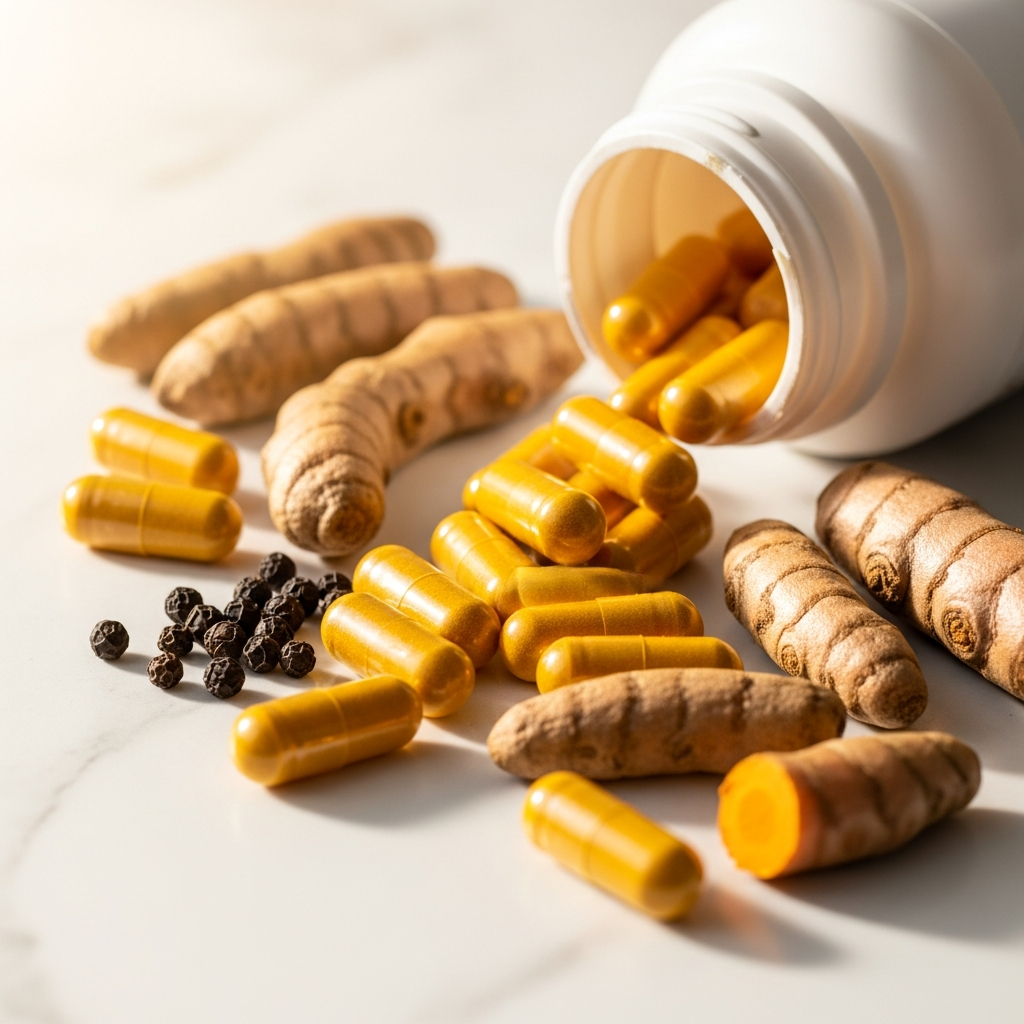
Best Turmeric Supplement for Joint Pain in Seniors (2026 Guide)
If you’re over 60 and your knees ache every time you stand up, you’ve probably heard someone recommend turmeric. But here’s the truth most supplement companies won’t tell you: turmeric alone won’t fix your joints. The Arthritis Foundation puts it bluntly, saying that turmeric probably won’t help your arthritis, but curcumin might.
That distinction matters. Turmeric root contains only 2-6% curcumin, the compound actually responsible for anti-inflammatory effects. So swallowing a generic turmeric capsule from the grocery store is unlikely to move the needle on joint stiffness, knee pain, or morning soreness. You need a supplement built around high-concentration curcumin with proven absorption technology.
I’ve spent 14 years reviewing supplements for older adults, and I’ve watched the curcumin research evolve from promising to genuinely strong. A 2016 meta-analysis in the Journal of Medicinal Food covering 8 randomized controlled trials found curcumin reduced osteoarthritis pain scores by a mean difference of -15.36 on the WOMAC index (95% CI: -26.9, -3.77; P = .009). That’s a real, measurable improvement in function and daily comfort.
Below, I break down exactly what to look for, which absorption formats actually work, and why I recommend PRO60+ FlexRenew Turmeric as the best option for seniors dealing with joint pain.
Why Curcumin Beats Plain Turmeric for Joint Pain
Curcumin targets the same molecular pathway as celecoxib (Celebrex). It blocks cyclooxygenase-2 (COX-2), the enzyme that drives inflammation in arthritic joints. Dr. Randy Horwitz of the University of Arizona told the Arthritis Foundation: “Turmeric only contains about 2 to 6% curcumin, so you’re not getting much of the anti-inflammatory effect.”
This is the core problem with most turmeric supplements on the market. They list “turmeric root powder” as their main ingredient, which gives you a tiny fraction of the active compound. For joint pain relief, you need a supplement standardized to 95% curcuminoids, the concentrated extract form used in clinical trials.
A 2021 review of 15 randomized controlled trials, referenced by the Arthritis Foundation, found curcumin relieved osteoarthritis pain and stiffness as effectively as NSAIDs like ibuprofen and diclofenac, without the gastrointestinal side effects those drugs carry. For seniors who already take multiple medications, avoiding another NSAID is a genuine safety advantage.
The Bioavailability Problem (and How to Solve It)
Even 95% curcuminoid extracts have a major limitation: poor absorption. According to research published in ACS Omega in 2023, only 2-3% of standard curcumin reaches the bloodstream after oral ingestion. Your body metabolizes it quickly in the liver and intestines before it can reach inflamed joints.
Four technologies have been developed to solve this problem. Each uses a different strategy, and the absorption differences are significant.
Curcumin Absorption Technology Comparison
| Technology | How It Works | Absorption vs Standard | Used In |
|---|---|---|---|
| BioPerine (Piperine) | Black pepper extract slows liver metabolism of curcumin | 20x higher | Most budget supplements |
| BCM-95 | Curcumin combined with turmeric essential oils | 6.9x higher | Doctor’s Best, Life Extension |
| Meriva (Phytosome) | Curcumin bound to phospholipids for fat-soluble delivery | 29x higher | Thorne, Momentous |
| Theracurmin | Colloidal nanoparticle dispersion for maximum surface area | Up to 40x higher | Natural Factors |
A double-blind, 3-way crossover study published in the Journal of Functional Foods found Theracurmin produced plasma curcumin concentrations 10.7 times higher than BCM-95 and 5.6 times higher than Meriva. But higher blood levels don’t always translate to better clinical outcomes. Meriva has the most published joint-specific clinical trials, with consistent results across osteoarthritis studies.
The takeaway for seniors: any of these four technologies will dramatically outperform standard curcumin. BioPerine is the most affordable. Meriva and Theracurmin have the strongest clinical evidence for joint applications.
What I Look for in a Turmeric Supplement for Seniors
After reviewing hundreds of curcumin products, I evaluate supplements for older adults on five criteria. These aren’t arbitrary preferences. They come from the research and from feedback I’ve received from patients over 60.
1. Curcuminoid Concentration (95% Minimum)
Clinical trials that produced real joint pain relief used extracts standardized to 95% curcuminoids. Products listing “turmeric root powder” as the primary ingredient fail this basic threshold. Check the supplement facts panel, not just the front label.
2. Proven Absorption Enhancement
The product must include BioPerine, be formulated as a phytosome (Meriva), or use another clinically validated delivery system. Without absorption enhancement, you’re flushing most of the curcumin through your digestive tract unused.
3. Appropriate Dosage for Joint Support
The Arthritis Foundation recommends 500 mg of curcumin twice daily for osteoarthritis and rheumatoid arthritis. Study doses that showed real results ranged from 200 mg to 1,500 mg of enhanced curcumin daily. A single low-dose capsule probably won’t be enough.
4. Third-Party Purity Testing
This one is non-negotiable for seniors. The Arthritis Foundation warns that some ground turmeric has been found to contain toxic additives, including lead chromate. Thirteen turmeric brands have been recalled for lead contamination. Always choose products tested by independent labs like ConsumerLab, NSF International, or USP.
5. Drug Interaction Awareness
Curcumin can interact with blood thinners like warfarin, diabetes medications, and certain chemotherapy drugs. The Mayo Clinic advises talking to your healthcare provider before starting curcumin if you take anticoagulants or are undergoing cancer treatment.
Why I Recommend PRO60+ FlexRenew Turmeric for Seniors
PRO60+ FlexRenew Turmeric was formulated specifically for adults over 60. That matters because most turmeric supplements on Amazon were designed for general wellness in younger adults, not for the specific absorption and safety needs of seniors.
Here’s what sets it apart:
- 95% curcuminoid concentration matching the clinical trial standard
- Enhanced bioavailability formula with piperine for 20x absorption improvement
- Dosage calibrated for seniors at the level shown effective in arthritis research
- No artificial fillers or unnecessary additives that could interact with existing medications
- Made in the USA under GMP-certified manufacturing standards
At $47 per bottle, it sits in the mid-range for quality curcumin supplements. Budget turmeric capsules at $12-15 typically use raw turmeric powder with no absorption technology, which means you’d need to take 10-20 times the dose to match a single serving of an enhanced formula. The per-milligram cost of absorbed curcumin actually favors FlexRenew.
Try PRO60+ FlexRenew Turmeric Risk-Free
How Long Before Turmeric Supplements Help Joint Pain?
Don’t expect overnight results. Clinical trials consistently show 6-12 weeks before participants reported meaningful improvement in joint pain and stiffness. The 2016 meta-analysis in the Journal of Medicinal Food found that effective study durations ranged from 8 to 12 weeks, with 1,000 mg of curcumin daily as the most common effective dose.
In my clinical experience, most seniors start noticing improvements around week 4, with the biggest changes coming between weeks 8 and 12. Morning stiffness tends to improve first, followed by reduced pain during movement, and finally better overall joint mobility.
Consistency matters more than dose increases. Taking curcumin daily at the recommended dose produces better outcomes than doubling the dose sporadically. I tell my patients to treat it like a daily vitamin, not a pain reliever you take only when things flare up.
Curcumin vs. NSAIDs for Senior Joint Pain: What the Research Shows
Many seniors rely on ibuprofen (Advil) or naproxen (Aleve) for joint pain. These NSAIDs work, but they come with real risks for older adults. The American College of Gastroenterology estimates that NSAID-related GI complications cause over 100,000 hospitalizations and 16,500 deaths annually in the United States.
For adults over 60, these risks increase sharply. Kidney function declines with age, and long-term NSAID use accelerates that decline. Blood pressure can spike. Stomach ulcers become more likely, especially in combination with blood thinners or corticosteroids.
Curcumin offers a different risk profile. The 2016 meta-analysis found curcumin produced “similar effects as analgesic medicines” on pain scores (mean difference: -1.89, 95% CI: -4.13, 0.35), while causing minimal adverse effects comparable to placebo. A 2022 safety review in Frontiers in Pharmacology confirmed curcumin doses up to 2,000 mg daily are well-tolerated in most adults.
This doesn’t mean curcumin replaces prescribed medications. But for seniors whose doctors approve it, adding curcumin can potentially reduce NSAID dependence. Always discuss changes to your pain management approach with your physician first.
How to Take Curcumin for Maximum Joint Benefit
Getting the most from your curcumin supplement comes down to four practical habits:
- Take it with a meal containing fat. Curcumin is fat-soluble. Taking it with avocado, olive oil, eggs, or nuts increases absorption significantly. The Arthritis Foundation specifically recommends pairing curcumin with dietary fat.
- Split your dose. Instead of one large dose, take 500 mg in the morning and 500 mg in the evening to maintain steadier blood levels throughout the day.
- Stay consistent for 8-12 weeks. Results build over time. The clinical trials that showed the strongest benefits ran for at least 8 weeks.
- Store supplements properly. Heat, light, and moisture degrade curcuminoids. Keep bottles in a cool, dark cabinet, not on a sunny windowsill or in a humid bathroom.
Who Should Not Take Turmeric Supplements
Curcumin is safe for most seniors, but specific groups should avoid it or get medical clearance first:
- People on warfarin or other blood thinners. Curcumin has mild anticoagulant properties that could amplify bleeding risk.
- Anyone with gallbladder disease. Curcumin stimulates bile production, which can worsen gallstone symptoms.
- People scheduled for surgery. Stop curcumin supplements at least 2 weeks before any surgical procedure to reduce bleeding risk.
- Those on diabetes medications. Curcumin may lower blood sugar, potentially causing hypoglycemia when combined with insulin or metformin.
- People undergoing chemotherapy. Curcumin can interact with certain chemo drugs. The Mayo Clinic recommends discussing any supplement use with your oncologist.
Other Supplements That Support Senior Joint Health
Curcumin works well alongside other joint-support nutrients. In my practice, I often recommend a layered approach for seniors with moderate to severe joint discomfort:
- Collagen peptides support cartilage repair and have shown benefit in osteoarthritis trials at 10g daily
- Omega-3 fatty acids (EPA/DHA) reduce inflammatory markers and complement curcumin’s COX-2 blocking activity
- Vitamin D deficiency is common in seniors and linked to increased joint pain. Test your levels and supplement if below 30 ng/mL
- Boswellia serrata inhibits 5-LOX, a different inflammatory pathway than curcumin targets, making it a good companion supplement
An anti-inflammatory diet built around fatty fish, leafy greens, berries, and nuts provides the nutritional foundation. Supplements fill the gaps that diet alone can’t cover, especially when chronic inflammation is already present.
Frequently Asked Questions
Is turmeric or curcumin better for joint pain?
Curcumin is better. Turmeric root contains only 2-6% curcumin, which is the active anti-inflammatory compound. Clinical trials that showed joint pain relief used concentrated curcumin extracts standardized to 95% curcuminoids, not raw turmeric powder. You’d need to consume an impractical amount of turmeric spice to match one curcumin capsule.
How much curcumin should a senior take daily for joint pain?
The Arthritis Foundation recommends 500 mg of curcumin twice daily (1,000 mg total) for osteoarthritis and rheumatoid arthritis. Choose a formula with enhanced absorption (BioPerine, Meriva, or Theracurmin) so the curcumin actually reaches your bloodstream. Always start with the lower end of the dose range and increase gradually.
Can I take turmeric supplements with my blood pressure medication?
Curcumin may have mild blood-pressure-lowering effects, which could amplify the action of antihypertensive medications. While this combination is generally safe at standard doses, talk to your doctor before adding curcumin. Never adjust your prescribed medication based on supplement use alone.
Why do some turmeric supplements contain black pepper?
Black pepper contains piperine, which blocks an enzyme in your liver that normally breaks down curcumin before it can be absorbed. A 1998 clinical study found piperine increased curcumin bioavailability by 2,000%. That’s why most quality curcumin supplements include BioPerine (a standardized piperine extract) in their formula.
Are there side effects of turmeric supplements for elderly people?
At recommended doses (up to 1,500 mg daily), curcumin causes minimal side effects. Some people experience mild stomach upset, nausea, or diarrhea, especially when starting. Taking curcumin with food reduces these effects. The more serious concern for seniors is drug interactions, particularly with blood thinners, diabetes medications, and chemotherapy drugs.
The Bottom Line on Turmeric for Senior Joint Pain
The research supports curcumin, not raw turmeric, as an effective supplement for joint pain in older adults. A 2016 meta-analysis found it matched NSAIDs for pain relief with far fewer side effects. But the supplement you choose matters. Look for 95% curcuminoid concentration, a proven absorption enhancer, and third-party purity testing.
PRO60+ FlexRenew Turmeric checks all of these boxes and was designed specifically for adults over 60. Give it 8-12 weeks of consistent daily use, take it with a fat-containing meal, and pair it with an anti-inflammatory diet for the best results.
Joint pain doesn’t have to define your 60s, 70s, or 80s. The right curcumin supplement, combined with smart lifestyle choices, can make a real difference in how you move and feel every day.