

Collagen for Joint Pain Over 60: Better Than Glucosamine?
A 2023 clinical trial published in the International Journal of Medical Sciences found that undenatured type II collagen reduced joint pain scores by 33% after 90 days, compared to just 14% for glucosamine plus chondroitin. For adults over 60 dealing with stiff knees, aching hips, or creaky shoulders, that difference matters.
I’m Dr. Matt Olesiak, and I’ve spent years reviewing the clinical evidence on joint supplements for older adults. The short answer: collagen works differently than glucosamine, targets different mechanisms, and recent research suggests it may be the better choice for people over 60. But the full picture involves understanding which type of collagen, how much to take, and what to stack it with for the best results.
Why Joint Pain Gets Worse After 60
Your body produces less collagen every year after age 25. By age 60, you’ve lost roughly 35-40% of your total collagen compared to your peak. According to the Arthritis Foundation, collagen production drops about 1% per year after age 40, and that decline accelerates in your 60s and 70s.
Osteoarthritis affects 10-15% of adults over 60, according to a 2024 meta-analysis in the Journal of Orthopaedic Surgery and Research. Women are hit harder than men, particularly after menopause when estrogen (which helps maintain collagen) drops sharply.
Here’s what actually happens in the joint: cartilage is roughly 60% collagen by dry weight. When collagen production slows, cartilage thins. Bones start grinding against each other. Inflammation ramps up. Pain follows. Glucosamine tries to address this from one angle. Collagen addresses it from a different, and arguably more direct, one.
Collagen vs. Glucosamine: What the Clinical Data Actually Shows
Glucosamine has been the go-to joint supplement for decades, but the evidence has weakened over time. A 2024 systematic review in BMC Musculoskeletal Disorders examined large randomized controlled trials and found that glucosamine and chondroitin did not significantly reduce joint pain or prevent joint space narrowing in most patients.
Collagen tells a different story. Here are the head-to-head numbers:
| Measure | Type II Collagen | Glucosamine + Chondroitin |
|---|---|---|
| WOMAC pain reduction (90 days) | 33% | 14% |
| Patient improvement rate | 68% | 37% |
| Time to noticeable relief | 30-60 days | 60-90 days |
| Mechanism | Cartilage rebuilding + immune modulation | Cartilage precursor supply |
A 2024 meta-analysis in Osteoarthritis and Cartilage reviewed the efficacy and safety of collagen derivatives for osteoarthritis and confirmed that collagen supplementation produces statistically significant improvements in both pain and functional limitation scores compared to placebo.
Which Type of Collagen Works Best for Joint Pain
Not all collagen supplements are equal. There are at least 28 types of collagen in the human body, but only a few matter for joint pain:
- Type II collagen is the primary structural protein in cartilage. This is the type with the strongest evidence for joint pain relief. A 40 mg daily dose of undenatured type II collagen (UC-II) showed significant results in multiple trials tracked by the Arthritis Foundation.
- Type I collagen is found in skin, bones, and tendons. Useful for bone density (a 2018 trial showed 5 grams daily increased bone mineral density in postmenopausal women) but less directly targeted at joint cartilage.
- Hydrolyzed collagen peptides are broken down for better absorption. A 2024 randomized, double-blind, placebo-controlled study in Joint Diseases and Related Surgery found that a combination of type I, III, and type II hydrolyzed collagen reduced osteoarthritis-related pain and improved physical function over 8 weeks.
For joint pain specifically, I recommend a supplement that includes type II collagen. Our guide to the best collagen supplements for women over 60 covers the full selection criteria in detail.
Try PRO60+ Ageless Collagen Complete
Type II hydrolyzed collagen powder designed for adults 60+. Supports joints, skin, and bone strength.
The Collagen + Turmeric + Omega-3 Stack: Why It Works
Joint pain in adults over 60 has two components: structural damage (cartilage loss) and inflammation. Collagen addresses the structural side. But to get the best results, you need to tackle inflammation too.
This is where the three-part stack comes in:
1. Collagen for Structural Repair
Type II collagen provides the raw materials your body needs to rebuild and maintain cartilage. A 2024 systematic review confirmed collagen supplementation relieves osteoarthritis symptoms with measurable improvements in functional and pain scores.
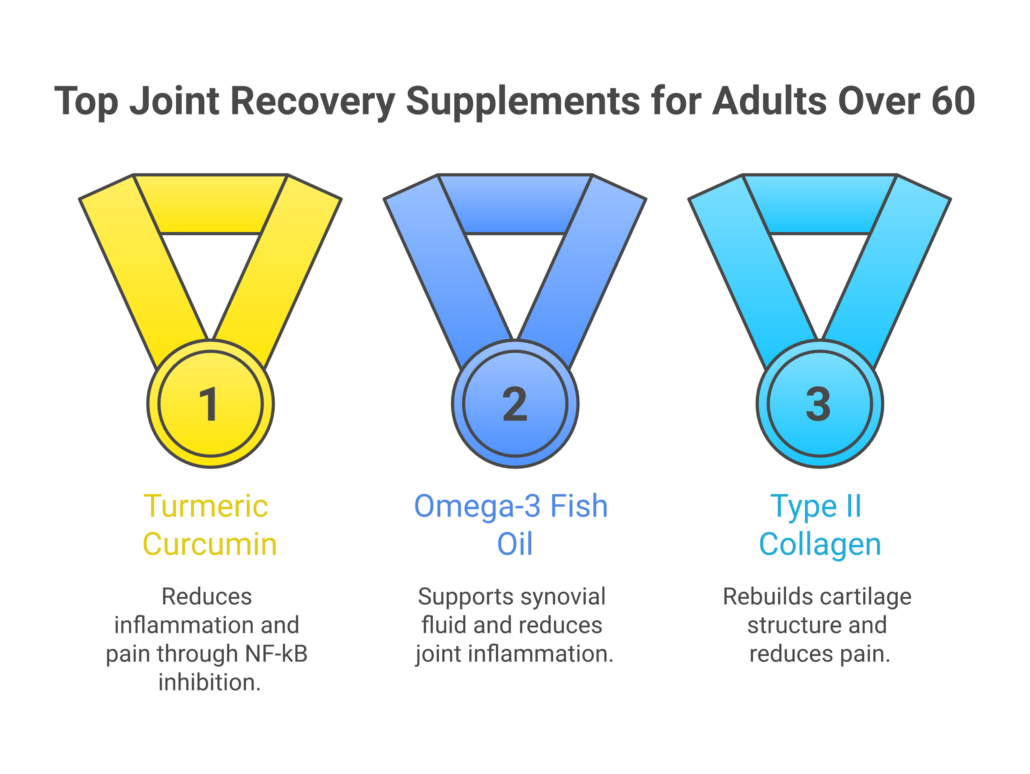
2. Turmeric (Curcumin) for Inflammation
A 2024 network meta-analysis that included 17 studies found all turmeric preparations significantly reduced WOMAC pain scores in knee osteoarthritis patients. Curcumin works by inhibiting inflammatory cytokines and suppressing NF-kB activation, the same pathway targeted by prescription anti-inflammatories like ibuprofen, but without the gastrointestinal risks that come with long-term NSAID use.
Higher curcumin doses (above 250 mg daily) produced better outcomes across multiple measures, according to a 2023 meta-analysis in Frontiers in Immunology. Look for bioavailability-enhanced formulas, since standard curcumin absorbs poorly on its own.
Add PRO60+ FlexRenew Turmeric for Maximum Joint Support
Pair collagen with curcumin for both structural repair and inflammation control. The science supports this stack.
3. Omega-3 Fatty Acids for Lubrication and Inflammation
Omega-3s (EPA and DHA from fish oil) reduce joint inflammation through a separate pathway. They also support synovial fluid production, the natural lubricant inside your joints. A daily dose of 1,000-2,000 mg combined EPA/DHA is the standard recommendation from rheumatologists for joint support.
When you combine all three, you’re addressing cartilage repair (collagen), inflammatory signaling (turmeric), and joint lubrication (omega-3). Each works through a different mechanism, so the effects add up rather than overlap.
For more on reducing chronic inflammation naturally, read our complete guide on anti-inflammatory strategies.
The Joint Recovery Stack: Collagen + Turmeric + Omega-3
I recommend this three-part approach to my patients over 60. Collagen rebuilds cartilage, turmeric controls inflammation, and omega-3s lubricate the joint capsule.
How Much Collagen Should Adults Over 60 Take
Dosing depends on the type of collagen you choose:
| Collagen Type | Daily Dose | Time to Results | Best For |
|---|---|---|---|
| UC-II (undenatured type II) | 40 mg | 30-90 days | Joint pain, cartilage repair |
| Hydrolyzed collagen peptides | 5-10 grams | 8-12 weeks | Joints + skin + bones |
| Type I/III blend | 5 grams | 12+ weeks | Bone density, skin elasticity |
Timing matters too. Take collagen on an empty stomach or with vitamin C, which helps your body synthesize new collagen. Avoid taking it with high-protein meals, since other amino acids compete for absorption.
If you’re also following a dietary plan designed for adults over 60, collagen fits easily into your morning routine mixed into coffee, smoothies, or plain water.
What About Side Effects for Older Adults
Collagen supplements have a strong safety profile. The 2024 meta-analysis in Osteoarthritis and Cartilage found no significant adverse effects in any of the collagen supplementation trials reviewed. The most commonly reported side effects are mild and temporary:
- Mild bloating or fullness (usually resolves within the first week)
- Slight aftertaste with unflavored powders
- Rare: mild heartburn with higher doses taken on an empty stomach
Compare that to glucosamine, which can interact with blood thinners (a concern for many adults over 60), and NSAIDs like ibuprofen, which carry risks of stomach ulcers, kidney damage, and cardiovascular events with long-term use.
If you’re taking blood thinners, blood pressure medications, or diabetes drugs, talk to your doctor before starting any new supplement. Collagen itself doesn’t have known drug interactions, but it’s always smart to check.
Signs That Collagen Might Work Better Than Glucosamine for You
Based on the clinical data and my experience with patients, collagen may be the better choice if:
- You’ve tried glucosamine for 3+ months without meaningful improvement
- You have knee osteoarthritis (the condition with the most collagen research)
- You’re a woman over 60 experiencing post-menopausal collagen decline
- You want to address joint pain and skin aging with one supplement
- You take blood thinners (glucosamine can interact, collagen generally doesn’t)
Glucosamine may still be worth trying if collagen doesn’t produce results after 90 days, or if your doctor specifically recommends it for your situation. Some people respond better to one over the other, and the research can’t predict individual outcomes with certainty.
Maintaining muscle mass as you age also supports joint health by reducing the load on cartilage. Collagen contributes to this because it provides glycine and proline, two amino acids that support connective tissue throughout the body.
How to Choose a Quality Collagen Supplement After 60
The collagen supplement market hit $2 billion in annual U.S. Revenue, according to the Arthritis Foundation. That kind of money attracts low-quality products. Here’s what to look for:
- Third-party testing: Look for NSF, USP, or independent lab verification on the label. Without it, you can’t confirm what’s actually in the bottle.
- Type II collagen inclusion: If your primary goal is joint pain, the supplement must contain type II collagen, not just types I and III.
- Hydrolyzed or undenatured form: Both work, through different mechanisms. Hydrolyzed absorbs faster. Undenatured (UC-II) works through immune modulation at lower doses.
- Clean sourcing: Grass-fed bovine, wild-caught marine, or chicken cartilage are the standard sources. Avoid products that don’t disclose their source.
- No unnecessary fillers: Artificial sweeteners, colors, and excessive additives don’t belong in a supplement for adults focused on health.
PRO60+ Ageless Collagen Complete meets all five criteria and was formulated specifically for adults over 60 who need joint, skin, and bone support in one product.
An Anti-Inflammatory Diet Amplifies Results
Supplements work better when your overall diet supports the same goals. An anti-inflammatory diet reduces the baseline inflammation that accelerates cartilage breakdown. Key foods to prioritize:
- Fatty fish (salmon, sardines, mackerel): natural omega-3 source, 2-3 servings per week
- Berries and cherries: anthocyanins that reduce inflammatory markers
- Leafy greens: vitamin K for bone metabolism, vitamin C for collagen synthesis
- Bone broth: contains natural collagen, glycine, and glucosamine from animal connective tissue
- Nuts and seeds: magnesium and vitamin E, both linked to lower joint inflammation
Foods to reduce or avoid: processed sugar (drives IL-6 inflammation), refined carbohydrates, excessive alcohol, and vegetable oils high in omega-6 fatty acids. These foods create an inflammatory environment that works against your supplements.
For a complete eating plan for adults 60 and older, our senior diet guide covers protein targets, meal timing, and hydration strategies tailored for aging joints and muscles.
Frequently Asked Questions
Is collagen or glucosamine better for knee pain over 60?
Based on current evidence, type II collagen produces larger pain reductions than glucosamine for knee osteoarthritis. A clinical trial showed collagen reduced WOMAC pain scores by 33% versus 14% for glucosamine plus chondroitin over 90 days. That said, individual responses vary, and some people benefit from both.
How long does collagen take to work for joint pain?
Most clinical trials show improvements between 30 and 90 days. UC-II collagen at 40 mg daily often produces noticeable relief within 30-60 days. Hydrolyzed collagen peptides at 5-10 grams daily typically take 8-12 weeks for measurable improvement.
Can you take collagen and glucosamine together?
Yes. They work through different mechanisms, so taking both is safe. A 2025 study in Joint Diseases and Related Surgery examined a combination product containing both collagen and glucosamine sulfate and found positive outcomes for pain and function. However, starting with collagen alone for 90 days gives you a clearer picture of its individual effect.
What is the best type of collagen for osteoarthritis?
Undenatured type II collagen (UC-II) has the most direct evidence for osteoarthritis specifically. A 40 mg daily dose is the clinically studied amount. Hydrolyzed type II collagen peptides also show benefits at higher doses (5-10 grams daily) and offer the added advantage of supporting skin and bone health at the same time.
Does collagen help with hip pain in seniors?
The majority of clinical trials focused on knee osteoarthritis, so the evidence is strongest there. However, the mechanism (cartilage repair and immune modulation) applies to all synovial joints, including hips. Anecdotally, patients report hip pain improvement on the same timeline as knee pain improvement.
Are there any drug interactions with collagen supplements?
Collagen supplements have no widely documented drug interactions. This is an advantage over glucosamine, which can interact with warfarin and other blood thinners. Still, always inform your doctor about any supplements you take, especially if you’re on multiple medications.
The Bottom Line
For adults over 60 with joint pain, the clinical evidence increasingly favors collagen over glucosamine. Type II collagen specifically targets cartilage repair, the core issue behind osteoarthritis pain. When combined with turmeric for inflammation and omega-3s for joint lubrication, the results are stronger than any single supplement alone.
Start with a quality type II collagen supplement, give it a full 90-day trial, and consider adding turmeric if inflammation is a major part of your pain picture. Track your morning stiffness, walking comfort, and stair-climbing ability week by week. Most people notice meaningful changes by week 6 to 8.
Also take a look at how collagen in your daily coffee can make supplementation even easier, and explore our broader wellness strategies for adults 60+ for a full-picture approach to aging well.