

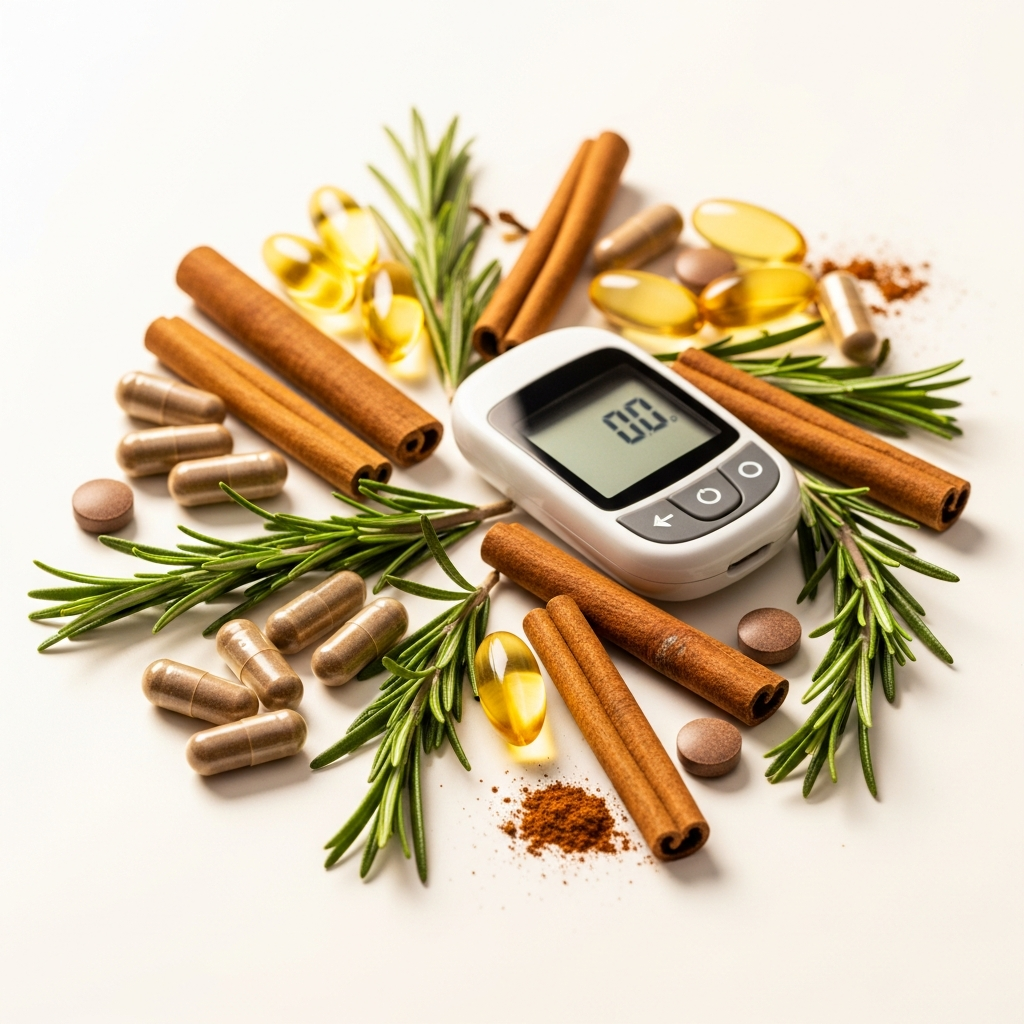
Natural Blood Sugar Support Supplements: An Evidence-Based Guide
If you or someone you care about is working to maintain healthy blood sugar levels, you’ve likely come across dozens of supplements promising to help. The reality? Most of those promises outpace the science behind them. But a few natural compounds do have real clinical evidence worth examining.
I want to be direct about something before we go further. The American Diabetes Association’s position is clear: dietary supplements are not proven to manage diabetes on their own. No pill replaces medication prescribed by your doctor, and no supplement substitutes for the basics of diet, exercise, and sleep. What I’ll cover here are compounds that may offer complementary support alongside those fundamentals (similar to how a well-structured diabetic diet works best with medical oversight), based on published clinical trials and meta-analyses.
Medical Disclaimer: This article is for educational purposes only and does not constitute medical advice. Always consult your physician or endocrinologist before adding any supplement to your routine, especially if you take diabetes medications. Supplement-drug interactions can cause dangerous drops in blood sugar (hypoglycemia).
Why Lifestyle Comes First (and Supplements Come Second)
Before spending a dollar on any supplement, the evidence strongly favors three free interventions:
- Regular physical activity: A 2023 Cochrane review of 168 trials found that structured exercise reduced HbA1c by 0.45% in people with type 2 diabetes. That’s comparable to some medications.
- Dietary changes: Reducing refined carbohydrates and increasing fiber intake (an approach central to the setpoint diet for reversing diabetes) to 25-35 grams daily (the ADA recommendation) has shown consistent blood sugar improvements across dozens of randomized controlled trials.
- Quality sleep: A 2024 analysis published in Diabetologia found that adults sleeping fewer than 6 hours per night had a 28% higher risk of developing type 2 diabetes compared to those sleeping 7-8 hours.
Only after these foundations are solid does it make sense to consider supplements. Think of them as the 10-15% edge on top of the 85-90% that lifestyle provides.
Berberine: The Strongest Evidence in the Supplement Category
Berberine is an alkaloid found in plants like goldenseal, barberry, and Oregon grape. It has been used in traditional Chinese medicine for centuries, but the modern clinical evidence is what makes it stand out from other blood sugar supplements.
What the Research Actually Shows
A 2022 systematic review and meta-analysis published in Frontiers in Pharmacology, covering 37 randomized controlled trials, found that berberine reduced fasting plasma glucose by 0.82 mmol/L (roughly 14.8 mg/dL). The same analysis showed HbA1c reductions averaging 0.63%.
A separate 2024 meta-analysis in Frontiers in Pharmacology confirmed these findings. Berberine alone lowered fasting glucose by 0.59 mmol/L, and when combined with standard oral diabetes medications, the reduction increased to 0.99 mmol/L.
For context, metformin (the most commonly prescribed first-line diabetes drug) typically reduces HbA1c by 1.0-1.5%. Berberine’s 0.63% average reduction is modest by comparison, but it’s real and statistically significant across multiple independent analyses.
The “Nature’s Ozempic” Trend
You may have seen berberine called “Nature’s Ozempic” on social media. Dana Ellis Hunnes, PhD, MPH, RD, a senior clinical dietitian at UCLA Health, has cautioned against this comparison. In a UCLA Health article, she said: “There needs to be more gold-standard, randomized, controlled clinical trials to understand the true potential of berberine.”
The comparison to Ozempic (semaglutide) is misleading. Ozempic works through GLP-1 receptor agonism and produces average weight loss of 15-20% of body weight and HbA1c reductions of 1.5-2.0%. Berberine’s effects are far more modest. That doesn’t mean berberine is worthless. It means the marketing has outrun the data.
Dosage and Safety
Most clinical trials used berberine at doses of 900-1,500 mg per day, split into two or three doses taken with meals. The safety profile is generally favorable. The 2024 meta-analysis found that berberine did not significantly increase the incidence of adverse events or hypoglycemia risk compared to placebo.
Common side effects include mild gastrointestinal symptoms: diarrhea, constipation, gas, and stomach pain. Starting at a lower dose (500 mg/day) and increasing gradually can reduce these effects.
Drug interactions to discuss with your doctor: Berberine may interact with metformin, statins, blood thinners, and CYP3A4-metabolized drugs. If you take any prescription medication, talk to your prescriber before starting berberine.
Chromium: Modest Benefits for Some, Not All
Chromium is a trace mineral involved in insulin signaling. The most studied form is chromium picolinate, and the evidence is decidedly mixed.
Clinical Evidence
The ADA reviewed the chromium evidence in its 2015 Standards of Medical Care and concluded that “evidence is insufficient to support routine use of micronutrients, such as chromium, to improve glycemic control in diabetic patients.” That assessment was based on low-quality evidence across studies.
A study published in Diabetes Care (an ADA journal) found that chromium picolinate supplementation at 1,000 mcg daily lowered HbA1c by 0.6% in people with type 2 diabetes. That’s a meaningful reduction, but not all studies have replicated it.
Where chromium may be most helpful: in people who are chromium-deficient. The NIH Office of Dietary Supplements notes that chromium deficiency can impair glucose tolerance. If your diet lacks chromium-rich foods (broccoli, grape juice, whole grains, meat), supplementation might fill a nutritional gap rather than provide a pharmacological effect.
Dosage and Safety
Clinical trials have used 200-1,000 mcg of chromium picolinate daily. Doses up to 1,000 mcg have been shown to be safe in multiple studies. The typical recommended dose is 200-500 mcg daily.
Cinnamon: Promising for Fasting Glucose, Less Clear for HbA1c
Cinnamon is probably the most widely discussed blood sugar supplement, and the research is more interesting than you might expect from a kitchen spice.
Clinical Evidence
A 2019 review and meta-analysis of 18 studies found that cinnamon supplementation reduced fasting blood sugar by an average of 19.26 mg/dL. That’s a clinically noticeable drop.
A 2023 dose-response meta-analysis of 24 randomized controlled trials, published in Phytotherapy Research, confirmed significant reductions in both fasting blood sugar and HbA1c. The HbA1c effect was modest (standardized mean difference of -0.26) but statistically significant.
The catch: earlier analyses, including a 2012 Cochrane Review, found no significant effect on HbA1c. The inconsistency likely comes from differences in cinnamon type (Cassia vs. Ceylon), dosage, study duration, and participant characteristics.
Cassia vs. Ceylon: Does the Type Matter?
Most studies used Cassia cinnamon (the common grocery store variety). Ceylon cinnamon (“true cinnamon”) has less coumarin, a compound that can cause liver problems at high doses. If you plan to take cinnamon supplements long-term, Ceylon is the safer option. A 2023 clinical study found that 600 mg of Ceylon cinnamon daily for 60 days significantly reduced the inflammatory marker IL-6.
Dosage and Safety
Study doses have ranged from 250 mg to 6 grams daily, with most positive results at 1-6 grams over 4-16 weeks. The main safety concern with Cassia cinnamon is coumarin content (potential liver toxicity at high doses over long periods). Ceylon cinnamon avoids this issue.
Alpha-Lipoic Acid (ALA): Strong for Neuropathy, Moderate for Blood Sugar
Alpha-lipoic acid is an antioxidant produced naturally in the body. It’s been studied for both blood sugar control and diabetic neuropathy (nerve pain in the hands and feet).
Clinical Evidence for Blood Sugar
A 2022 dose-response meta-analysis published in Endocrine Connections found that ALA supplementation had a J-shaped effect on HbA1c, with the greatest reduction at 300 mg daily. For fasting plasma glucose, 600 mg daily showed the largest improvements. A 2019 meta-analysis of 31 trials found an average HbA1c decrease of 0.35%.
An 8-week randomized controlled trial with 57 participants found that 300 mg of ALA daily reduced fasting blood glucose from 185 mg/dL to 156 mg/dL, a statistically significant 29 mg/dL drop.
Where ALA Really Shines: Diabetic Neuropathy
The NIH’s National Center for Complementary and Integrative Health (NCCIH) notes that ALA “might be helpful for reducing pain associated with diabetic neuropathy.” This is where the evidence is strongest. Oral doses of 600-1,800 mg daily have improved neuropathy symptoms in multiple trials. If you have diabetic nerve pain, ALA is worth discussing with your doctor for that reason alone.
Dosage and Safety
For blood sugar support: 300-600 mg daily. For neuropathy: 600-1,800 mg daily. ALA is generally well-tolerated, with mild gastrointestinal side effects at higher doses.
Other Supplements with Emerging Evidence
Magnesium
A 2006 meta-analysis of 9 randomized controlled trials (370 participants) found magnesium supplementation improved fasting blood sugar by 0.56 mmol/L. Magnesium is involved in insulin secretion, binding, and activity. Many adults are magnesium-deficient, which can also affect cholesterol levels. The typical study dose was 360 mg daily for 4-16 weeks.
Probiotics
A 2016 meta-analysis found that probiotic supplementation significantly decreased both fasting blood glucose and HbA1c. A separate 2015 analysis found an average HbA1c reduction of 0.81%, which would be clinically meaningful if confirmed in larger trials. Multi-strain probiotics taken for 8 weeks or longer showed the best results. Gut health and blood sugar regulation are closely connected, and an anti-inflammatory diet supports both.
Nigella Sativa (Black Seed)
Three systematic reviews and meta-analyses have found that black seed (powder at 1 gram twice daily, or oil at 450 mg three times daily) significantly reduces fasting blood sugar. A 2016 review of 1,531 participants found significant fasting glucose reductions across 13 of the included studies.
Fiber Supplementation
A meta-analysis of 15 randomized controlled trials found that fiber supplements (average 15 grams daily) produced a significant HbA1c improvement of 0.26%. Psyllium fiber showed the strongest results in people already being treated for type 2 diabetes. The ADA recommends 25-35 grams of fiber daily from all sources. High-fiber diets also help manage high blood pressure, another common concern for people with blood sugar issues.
What to Look for in a Blood Sugar Support Supplement
If you decide to try a supplement after talking to your doctor, here’s how to evaluate products:
- Third-party testing: Look for USP, NSF, or ConsumerLab verification seals. Supplements are not regulated like prescription drugs, and product quality varies widely.
- Transparent ingredient labels: The exact dose of each active ingredient should be listed. Avoid “proprietary blends” that hide individual amounts.
- Clinically studied doses: Compare the product’s dosing to what the research actually used. Many products underdose key ingredients.
- No miracle claims: Any product claiming to “cure” or “reverse” diabetes is making illegal health claims. Walk away.
Products like SANE MD PRO60+ Blood Sugar Reviver ($59) combine multiple evidence-backed ingredients into a single daily supplement. When evaluating any multi-ingredient formula, check whether each individual component is dosed at levels consistent with the clinical research above.
The Bottom Line: Realistic Expectations
Here is what the clinical evidence actually supports:
- Berberine has the strongest supplement evidence, with fasting glucose reductions of roughly 15 mg/dL and HbA1c reductions of about 0.6% across multiple meta-analyses. Dose: 900-1,500 mg/day.
- Cinnamon may reduce fasting blood sugar by about 19 mg/dL. HbA1c effects are less consistent. Dose: 1-6 grams/day (Ceylon preferred).
- Alpha-lipoic acid offers modest blood sugar benefits (HbA1c reduction ~0.35%) and stronger evidence for diabetic neuropathy. Dose: 300-600 mg/day.
- Chromium may help those who are deficient, with some studies showing HbA1c reductions of 0.6%. Dose: 200-1,000 mcg/day.
- Magnesium, probiotics, and fiber round out the evidence-backed options with modest but real effects.
None of these are replacements for your doctor’s treatment plan. All of them work best when combined with a diet low in refined carbohydrates, regular exercise, quality sleep, and stress management. For more on the connection between blood sugar and body weight, see our guide on supplements that help prevent diabesity. If you are managing prediabetes, our article on natural remedies for prediabetes covers additional strategies. Start with your lifestyle. Then, if appropriate, add supplements as that complementary 10-15% edge.
If you’re interested in exploring a supplement that combines several of these evidence-backed ingredients, learn more about SANE MD PRO60+ Blood Sugar Reviver here.
Frequently Asked Questions
Can supplements replace diabetes medication?
No. The ADA and every major medical organization agree that supplements are not proven to replace prescription diabetes medications. Some supplements may offer complementary support alongside your treatment plan, but you should never stop or reduce medication without your doctor’s approval.
What is the most evidence-backed natural supplement for blood sugar?
Berberine has the largest body of clinical evidence among natural blood sugar supplements. A 2022 meta-analysis of 37 trials found it reduced fasting glucose by 0.82 mmol/L and HbA1c by 0.63% on average. Cinnamon and alpha-lipoic acid also have meaningful (though smaller) evidence bases.
Is berberine really “Nature’s Ozempic”?
That comparison overstates berberine’s effects. Ozempic (semaglutide) reduces HbA1c by 1.5-2.0% and body weight by 15-20%. Berberine reduces HbA1c by about 0.6% with minimal weight effects. Both affect metabolic pathways, but berberine’s impact is far more modest. UCLA Health’s Dana Ellis Hunnes, PhD, has specifically cautioned against this comparison.
Are blood sugar supplements safe to take with metformin?
Some supplements, particularly berberine, may have additive effects with metformin and could increase the risk of hypoglycemia or gastrointestinal side effects. Always consult your prescribing physician before combining any supplement with diabetes medication.
How long do blood sugar supplements take to work?
Most clinical trials ran for 4-16 weeks before measuring outcomes. Berberine studies typically showed effects within 8-12 weeks. Cinnamon studies ranged from 4 to 16 weeks. Don’t expect overnight results, and monitor your blood sugar regularly with your doctor during any supplement trial.
Should I choose Ceylon or Cassia cinnamon for blood sugar?
Most blood sugar research used Cassia cinnamon, so the evidence base is stronger for that variety. However, Cassia contains higher levels of coumarin, which can stress the liver at high doses over long periods. If you plan to supplement with cinnamon long-term (beyond 4 months), Ceylon cinnamon is the safer choice despite having a smaller evidence base.